A $1.9 Million Portfolio at 75: The Withdrawal Order That Keeps RMDs From Triggering IRMAA
At 75, a $1.9 million portfolio and a mandatory IRS withdrawal create a collision course with Medicare surcharges that can cost thousands a year, and the order you tap your accounts determines whether you walk away unscathed.

This post may contain links from our sponsors and affiliates, and Flywheel Publishing may receive compensation for actions taken through them.
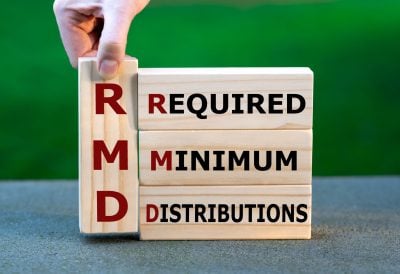
A $1.9 million portfolio at 75 is comfortable until the required minimum distribution (RMD) hits. RMDs are the amount the IRS forces you to withdraw each year from pre-tax retirement accounts. At 75, that distribution can push modified adjusted gross income (MAGI) across an Income-Related Monthly Adjustment Amount (IRMAA) threshold, which raises Medicare Part B and Part D premiums. The order in which you draw from taxable, tax-deferred, and Roth buckets determines whether that happens.
How the IRMAA Cliff Works
The two-year lookback complicates planning. The Social Security Administration uses the tax return from two years prior to set today’s premium. A Roth conversion or large capital gain taken this year appears in Medicare premiums two years later. That lag is why you must plan sequencing decisions before RMDs begin.
Withdrawal Order That Manages MAGI
The standard framework at 75 assumes three buckets: a taxable brokerage account, a traditional IRA or 401(k), and Roth accounts. RMDs are mandatory from the traditional side. Everything else is discretionary.
- Take the RMD first. As Suze Orman put it, “Whether you take RMDs or you give them away through a QCD, you have to do that before you can convert.” The distribution is not optional. What you control is what you layer on top of it.
- Fund the rest of the spending from taxable accounts. Long-term capital gains and qualified dividends are taxed at preferential rates, and only the gain portion of a sale counts as income. With the 10-Year Treasury yield near 5% and the federal funds upper bound near 4%, short taxable bonds and T-bills can service annual spending without adding a full dollar of ordinary income for each dollar withdrawn.
- Use Roth withdrawals as the MAGI safety valve. Roth distributions are not counted in MAGI. If a lumpy expense would push you over an IRMAA bracket, a Roth withdrawal covers it without triggering the cliff.
QCDs, Conversions, and Asset Location
A qualified charitable distribution (QCD) sends money directly from an IRA to a qualified charity. It satisfies the RMD but never enters adjusted gross income (AGI). For a charitably inclined retiree, this is the cleanest IRMAA tool available.
Roth conversions work best in years before RMDs begin, when taxable income is lowest. Clark Howard’s guest advisor outlined a listener plan to convert $90,000 while staying inside the 24% bracket, using the earlier window to shrink the future RMD base. For 2026, the 24% bracket runs to $105,700 for singles and $211,400 for joint filers, and the standard deduction is $16,100 for singles and $32,200 for joint filers. At 75, the conversion window is narrower, but partial conversions still lower future RMDs.
When Paying the Surcharge Is Right
Avoiding IRMAA is not always the goal. Paying a surcharge on a larger, better-diversified portfolio can beat contorting a withdrawal plan around brackets. A recent 24/7 Wall St. analysis found that $122,000 in 401(k) withdrawals can layer on roughly $42,000 in IRMAA surcharges, but that math only justifies action when the alternative preserves the same after-tax outcome (we cataloged IRMAA and the other premium traps retirees miss in a free Medicare guide). If a life-changing event such as retirement, loss of a spouse, or work stoppage reduces income, Form SSA-44 lets you appeal the surcharge based on current income rather than the two-year-old return.
What to Do Next
- Pull your projected 2026 MAGI and compare it against the $109,000 single and $218,000 joint thresholds. Every subsequent decision follows from how much headroom you have.
- If you give to charity, route this year’s RMD through a QCD before writing a check from a taxable account.
- Model a Roth withdrawal as your year-end MAGI safety valve. Also plan for the 2027 Social Security COLA tracking near 3.1%, which will lift benefit income and MAGI at the same time.
Contact [email protected] for any questions or corrections.
David Beren has been a Flywheel Publishing contributor since 2022. Writing for 24/7 Wall St. since 2023, David loves to write about topics of all shapes and sizes. As a technology expert, David focuses heavily on consumer electronics brands, automobiles, and general technology. He has previously written for LifeWire, formerly About.com. As a part-time freelance writer, David’s “day job” has been working on and leading social media for multiple Fortune 100 brands. David loves the flexibility of this field and its ability to reach customers exactly where they like to spend their time. Additionally, David previously published his own blog, TmoNews.com, which reached 3 million readers in its first year. In addition to freelance and social media work, David loves to spend time with his family and children and relive the glory days of video game consoles by playing any retro game console he can get his hands on.