The 80 Acres His Father Farmed Sold for $600,000. Two Years Later, Medicare Decided He Was Rich.
Selling inherited farmland felt like a clean break, a one-time conversion of property into retirement cash. Two years later, a letter arrived from Social Security, and the math behind it traced all the way back to a decision his father…

This post may contain links from our sponsors and affiliates, and Flywheel Publishing may receive compensation for actions taken through them.
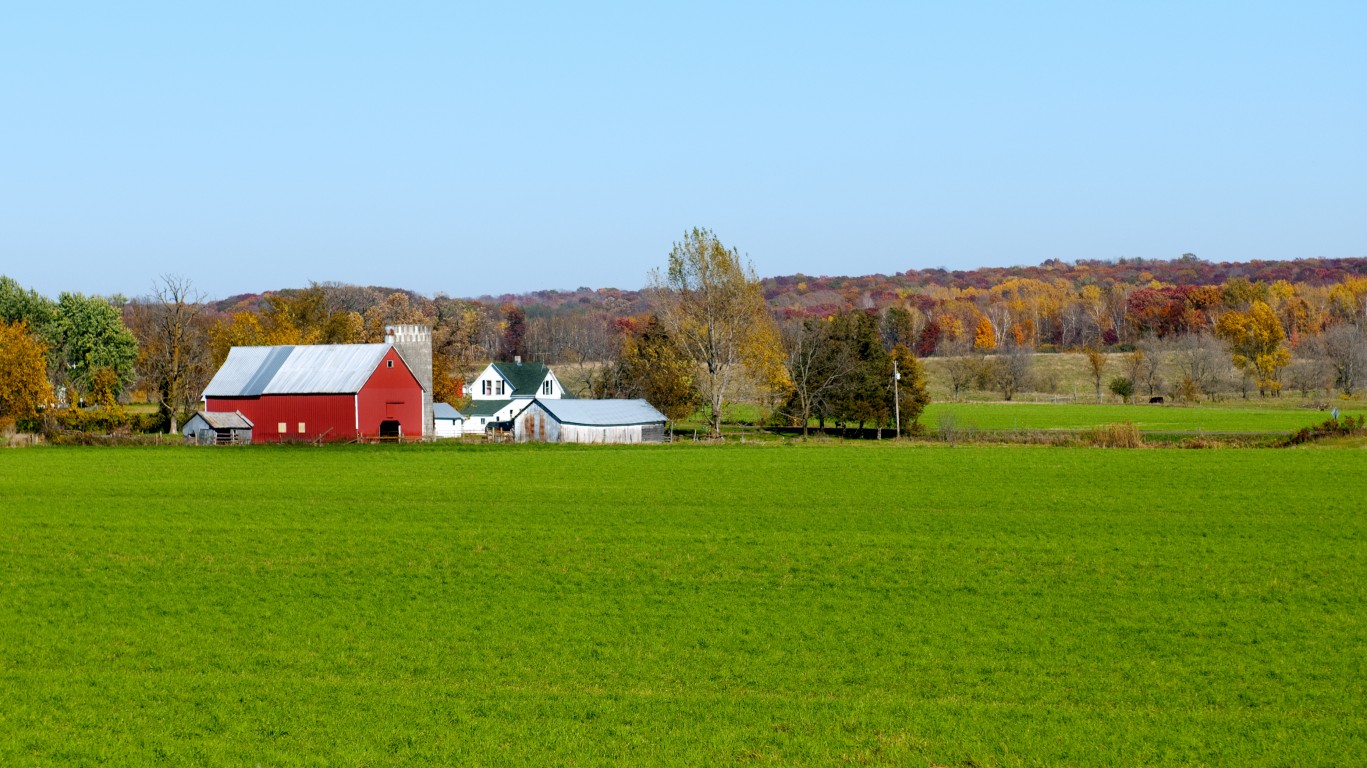
A man in his late sixties in central Iowa sold 80 acres of cropland in the spring of 2024. His father had farmed it for decades and deeded it to him years before his death. One check for $600,000, and a plan to shore up retirement. Then, in November 2025, the Social Security Administration mailed him a letter setting his 2026 Medicare premium at more than three times the standard rate. The land sale felt like a clean, one-time conversion of property into cash. Medicare’s formula saw something else entirely: a large taxable gain that had been quietly building for years.
The mechanism is the Income-Related Monthly Adjustment Amount, or IRMAA, and its two-year lookback. Medicare generally bases each year’s surcharge on the tax return filed two years earlier. His 2024 return is what drives what he pays in 2026.
How One Sale Becomes a Year of Higher Premiums
For IRMAA, modified adjusted gross income (MAGI) equals adjusted gross income (AGI) plus tax-exempt interest. Taxable capital gains land squarely inside that calculation. The $600,000 sale price does not automatically count as $600,000 of income. The taxable gain is generally the sale proceeds minus basis, selling expenses, and other applicable adjustments. His father’s lifetime gift is the crucial detail.
Gifted property generally carries over the donor’s original basis. If his father’s adjusted basis was $80,000, the son could face a gain approaching $520,000 before expenses. That figure is far larger than it would have been under a different transfer strategy. Had he inherited the land after his father died, it generally would have received a new basis tied to its value at the date of death, potentially shrinking the gain substantially. A transfer decision made years earlier is what opened the Medicare trap.
Add Social Security, a pension, and investment income, and his 2024 MAGI clears $500,000 as a single filer. That puts him in the top 2026 IRMAA tier. The standard Part B premium is $202.90 per month. At $500,000 or more, it rises to $689.90. Part D adds another $91 monthly surcharge on top of his drug-plan premium. Together, IRMAA costs him $578 more each month, roughly $6,935 for the year.
Even the first tier stings. A single filer with MAGI just above $109,000 pays $284.10 for Part B, while someone at or below that line pays $202.90. That $81.20 monthly difference compounds to approximately $975 in additional annual Part B costs, plus the Part D surcharge. The most recent Iowa State University Land Value Survey put the statewide average at $11,549 per acre as of November 2025, up slightly from $11,467 in 2024, meaning the $600,000 sale reflects land priced well below the state average. That still generated a gain large enough to trigger the highest IRMAA bracket.
The Appeal the Land Sale Does Not Support
Form SSA-44 allows someone to request a lower IRMAA after certain life-changing events reduce household income. Qualifying events include retirement or reduced work, marriage, divorce, a spouse’s death, certain pension changes, and the involuntary loss of income-producing property. A voluntary land sale is not a qualifying event. Neither is a one-time capital gain by itself, even one this large. Filing Form SSA-44 solely because the sale will not recur generally will not eliminate the surcharge.
That does not mean every IRMAA notice must be accepted without review. If the SSA used incorrect tax information, if the return was amended, or if a separate qualifying life event reduced income, the beneficiary can request reconsideration. The better news is that the surcharge typically lasts only one year. His 2025 return controls his 2027 premiums. If that return shows ordinary retirement income below the IRMAA threshold, the premium should fall accordingly.
One lingering risk remains. Investing the $600,000 in taxable bonds, certificates of deposit, or dividend-paying stocks can generate enough recurring income to keep MAGI elevated. The land gain disappears from the return, but the capital it produced keeps working its way into the calculation year after year.
What to Do Before the Land Sells
When the sale has not yet closed, a tax professional should evaluate two separate deferral options. The traditional route is an installment sale under IRC Section 453, which spreads gain recognition across multiple years in proportion to payments received. That arrangement must be structured before closing. It can reduce the annual MAGI spike, though spreading the gain may also produce smaller IRMAA surcharges over several years rather than one large one.
A newer option, created by the One Big Beautiful Bill Act signed on July 4, 2025, established IRC Section 1062. That provision lets sellers of qualified farmland to qualified farmers elect to pay the resulting capital gains tax in four annual installments rather than all at once. It applies to sales in tax years beginning after July 4, 2025, and proposed IRS regulations issued September 28, 2026 provide additional guidance on the election. Unlike a Section 453 installment sale, Section 1062 does not require the buyer to make deferred payments, making it usable even in an all-cash transaction. There is a critical IRMAA wrinkle, however: Section 1062 defers the tax payment, not the gain recognition. The full gain still enters MAGI in the year of sale, so the IRMAA surcharge would remain even for sellers who elect the installment treatment. Both options carry conditions that require careful review before closing.
Shifting a December closing into January does not divide the gain. It simply moves the taxable event, and the corresponding IRMAA year, forward by twelve months.
Once the sale closes, the useful moves narrow considerably. Confirm the basis and all selling expenses, harvest available capital losses, and avoid unnecessary IRA withdrawals in the same tax year. Someone age 70.5 or older who gives to charity may also consider qualified charitable distributions, which satisfy charitable goals without adding the distribution to adjusted gross income. The real surprise is not that Medicare “taxes” the land. It does not. The surprise is that Medicare reads the taxable gain embedded in a decades-old property decision and converts it into a higher premium two years down the road.
Editor’s note: This article corrects the effective date of IRC Section 1062 from “tax years beginning after December 31, 2025” to “tax years beginning after July 4, 2025,” per the One Big Beautiful Bill Act and IRS Form 1062 instructions. It also adds a clarification that Section 1062 defers only tax payment, not gain recognition, so the IRMAA surcharge would still apply to eligible sellers. Iowa farmland price data has been updated to reflect the 2025 Iowa State University Land Value Survey figure of $11,549 per acre.
Contact [email protected] for any questions or corrections.
Gerelyn Terzo is the author of dividend investing handbook "Dividend Investing Strategies: How to Have Your Cake & Eat It Too." A veteran financial journalist, she covers agri-finance for outlets like Global AgInvesting and the broader stock market and personal finance for 24/7 Wall Street. She began at CNBC and later helped launch Fox Business in New York. Gerelyn currently resides in Woodland Park, Colorado and dabbles in nature photography as a hobby.