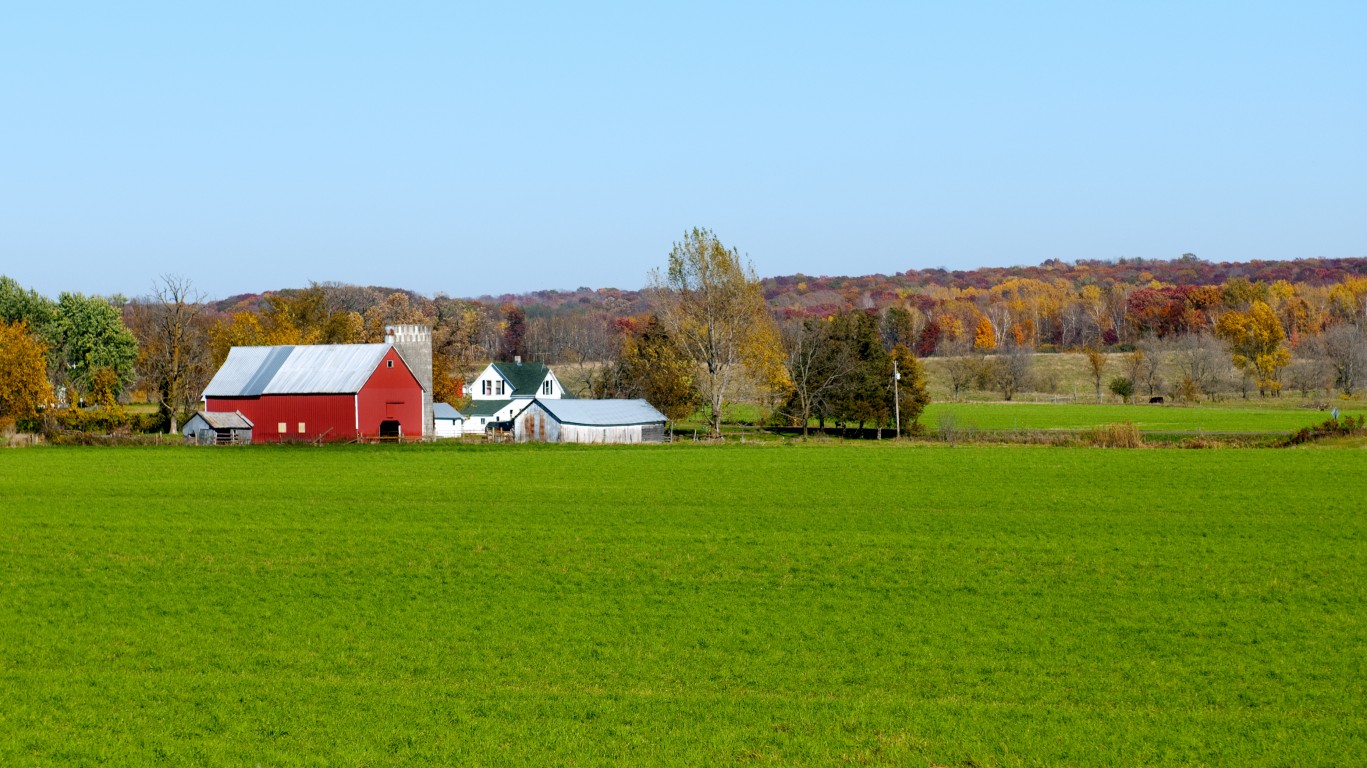
He Sold His Father’s 80 Acres for $600,000. Two Years Later, Medicare Hit Him With Nearly $7,000 in Extra Premiums
Selling inherited farmland feels like a clean financial win until Medicare sends a bill two years later that nobody saw coming. The timing of a family gift versus an inheritance can quietly determine whether that sale costs thousands more than…


A $600,000 land sale is not $600,000 of income. But when a low carryover basis creates a large taxable gain, Medicare’s two-year IRMAA lookback can turn one transaction into a year of much higher Part B and Part D costs.
Editor’s note: This article was updated with 2024 Iowa State University farmland values and September 2026 IRS guidance on IRC Section 1062. Section 1062 can spread payment of the federal income tax attributable to a qualifying farmland sale over four years, but it does not spread recognition of the gain itself and therefore does not, by itself, reduce Medicare IRMAA.
A Land Sale Can Hit Medicare Two Years Later

A retired landowner can sell property, pay the tax bill, move on with life, and then get another surprise two years later. Medicare’s income-related monthly adjustment amount, better known as IRMAA, generally uses tax information from two years before the premium year. That means a large taxable gain reported on a 2024 return can raise 2026 Part B and Part D costs.The key is that IRMAA follows modified adjusted gross income, not whether the income was recurring or whether the person still has the money. A one-time land sale can therefore create one expensive Medicare year long after the closing papers are filed away.
The $600,000 Sale Price Is Not $600,000 of Income

Medicare does not simply treat the entire $600,000 check as income. For tax purposes, the important number is the taxable gain. That generally starts with the selling price and subtracts the owner’s adjusted basis, along with selling expenses and other applicable adjustments.If the land sells for $600,000 and the owner’s adjusted basis is $80,000, the gain could approach $520,000 before selling expenses and any other basis adjustments are considered. That gain flows into adjusted gross income. For IRMAA, Social Security then adds tax-exempt interest to AGI to arrive at the modified adjusted gross income used for the Medicare surcharge calculation.
The Gift From His Father Is Where the Basis Trap Begins

The father’s decision to deed the land to his son during his lifetime matters enormously. Property received as a gift generally carries over the donor’s adjusted basis for purposes of calculating gain, although special rules can apply in some situations. Decades of appreciation can therefore follow the property straight into the recipient’s tax return.In this hypothetical, an $80,000 carryover basis against a $600,000 sale creates a very large potential gain. The son may feel as though he simply converted family land into retirement cash. The tax code sees the appreciation that accumulated above basis, and Medicare later sees that taxable gain inside the income figure used for IRMAA.
Inherited Land Often Gets a Very Different Basis

Had the father kept the property until death and the son inherited it, the result could have been dramatically different. Inherited property generally receives a basis tied to fair market value at the date of death, subject to exceptions and special estate-tax rules. If the land were already worth something close to $600,000 at that point, a later sale near that value might produce a much smaller taxable gain.That does not mean gifting land during life is always a mistake. Estate, gift, income-tax, Medicaid, and family considerations can point in different directions. It does mean that transferring highly appreciated property before death can create a carryover-basis consequence that may show up years later in places families never expected, including Medicare premiums.
A $520,000 Gain Can Reach the Top 2026 IRMAA Tier

For 2026, a single Medicare beneficiary reaches the highest standard IRMAA tier at modified adjusted gross income of $500,000 or more. The standard Part B premium is $202.90 per month. At the top tier, total Part B rises to $689.90 per month, an additional $487. Someone with Medicare prescription drug coverage also owes a $91 monthly Part D IRMAA on top of the plan’s own premium.Combine those two surcharges and the extra cost is $578 per month, or $6,936 over 12 months. A hypothetical $520,000 gain from the land sale could cross that threshold on its own before considering other taxable retirement income.
Even the First IRMAA Tier Is a Noticeable Jump

The top bracket gets attention, but a much smaller income overage can still cost real money. In 2026, a single filer with modified adjusted gross income of $109,000 or less pays the standard $202.90 Part B premium. Move above $109,000 and up to $137,000, and Part B rises to $284.10 per month.That first step adds $81.20 a month for Part B. If the beneficiary also has Part D coverage, the first-tier Part D IRMAA adds another $14.50 per month. Together, that is $95.70 more each month, or $1,148.40 over a full year. IRMAA is tiered, so crossing a threshold by a small amount can have a much larger effect than the overage itself suggests.
The Iowa Land Price Puts the Sale in Context
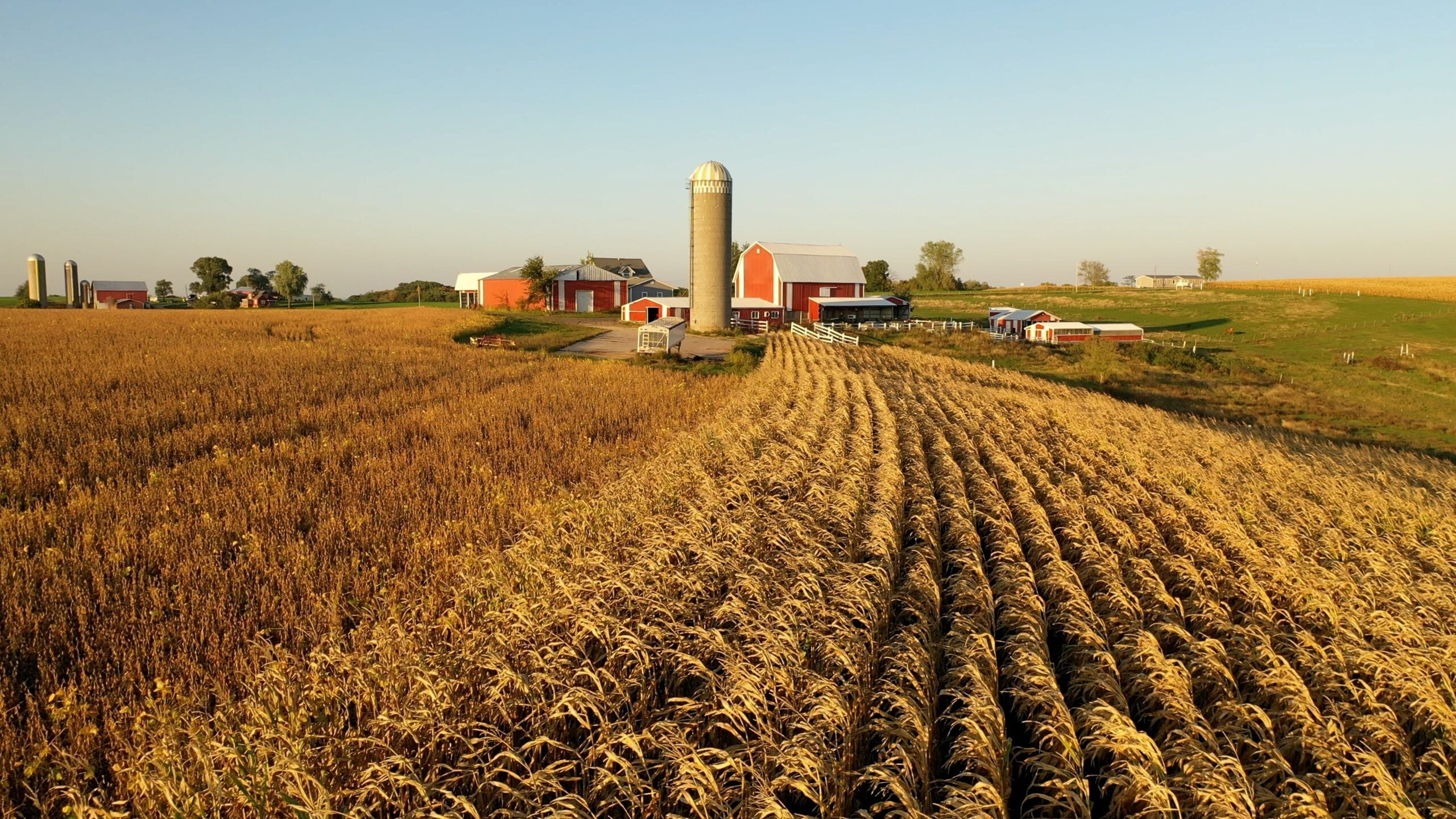
An 80-acre sale for $600,000 works out to $7,500 per acre. Iowa State University’s 2024 Land Value Survey put the statewide average farmland value at $11,467 per acre as of November 2024, after a 3.1% annual decline.That does not mean this particular parcel was underpriced. Soil quality, drainage, location, improvements, local demand, and dozens of other factors can move an individual farm far above or below a statewide average. But it shows that a sale does not have to involve premium Iowa acreage to create a gain large enough to matter for Medicare. A low historical basis can do most of the damage all by itself.
A Voluntary Land Sale Usually Does Not Support an SSA-44 Appeal

Social Security does allow beneficiaries to request a lower IRMAA after certain life-changing events reduce household income. The recognized events include marriage, divorce, death of a spouse, stopping or reducing work, certain pension changes, an employer settlement tied to closure or reorganization, and some losses of income-producing property.A voluntary sale is the problem here. Federal rules specifically say the qualifying loss-of-property event cannot be at the direction of the beneficiary or spouse, including through a sale or transfer. A one-time capital gain is not itself one of the listed life-changing events. If Social Security used incorrect tax information, an amended return applies, or a separate qualifying event occurred, reconsideration may still be appropriate.
The Good News: A One-Time Gain Usually Does Not Last Forever

IRMAA is recalculated for each premium year using the most recent tax information Social Security can obtain, generally from two years earlier. So if the big land gain appears only on the 2024 return, it generally affects 2026 premiums rather than permanently locking the beneficiary into the highest tier.The next return still matters. Interest from certificates of deposit, taxable bonds, dividends, IRA withdrawals, and other income can keep adjusted gross income elevated. Even tax-exempt interest matters because Social Security adds it back when calculating IRMAA MAGI. If 2025 income falls back to a lower range, the beneficiary would generally expect a lower IRMAA determination for 2027, subject to the thresholds and tax information applicable to that year.
An Installment Sale Can Spread Recognized Gain Across Tax Years

Before a sale closes, one strategy worth modeling is a traditional installment sale under Section 453. An installment sale generally requires at least one payment after the tax year of the sale. Instead of recognizing all eligible gain at once, the seller generally reports a portion of the gain as principal payments are received, while interest is taxed separately.That can reduce the size of a one-year MAGI spike, although it may create smaller IRMAA surcharges across several years instead. It also introduces buyer-credit risk, interest rules, and other tax complications. This is not something to invent after an all-cash closing. The payment terms need to support installment treatment from the transaction itself.
The New Farmland Rule Spreads the Tax Bill, Not the IRMAA Gain

Public Law 119-21 created Internal Revenue Code Section 1062 for qualifying farmland sales. For eligible sales to qualified farmers, the provision can let the seller pay the federal income tax attributable to the gain in four equal annual installments. The IRS issued proposed regulations on September 28, 2026, detailing the election and its requirements.Here is the crucial Medicare point: Section 1062 defers payment of the tax. It does not spread recognition of the gain over four years. IRS Form 1062 instructions explicitly calculate tax using taxable income that includes the recognized farmland gain. So Section 1062 can help cash flow on a qualifying sale, but by itself it does not solve an IRMAA spike. It also would not retroactively apply to this hypothetical 2024 sale.
Before the Closing, Model Medicare Alongside the Tax Bill

Once a large gain is already on the return, the planning window gets much smaller. Before closing, confirm basis records, selling expenses, and whether any installment structure makes sense. In the sale year, available capital losses may offset capital gains, and avoiding unnecessary taxable IRA withdrawals can prevent piling even more income onto an already expensive year.For someone age 70 1/2 or older who already gives to charity, a properly executed qualified charitable distribution from an eligible IRA can also satisfy charitable goals without adding that distribution to taxable income. None of these moves makes the land gain disappear. The point is to look at income tax and Medicare together before the transaction is locked in, not two years later when the IRMAA notice arrives.
Contact [email protected] for any questions or corrections.