Buy, Borrow, Die. How Larry Ellison Can Borrow Against Oracle Stock Instead of Selling It
Larry Ellison holds tens of billions in Oracle stock and reportedly avoids triggering a capital-gains bill by never selling. The legal mechanism behind that move scales down to ordinary brokerage accounts, and most investors have never heard of it.

This post may contain links from our sponsors and affiliates, and Flywheel Publishing may receive compensation for actions taken through them.
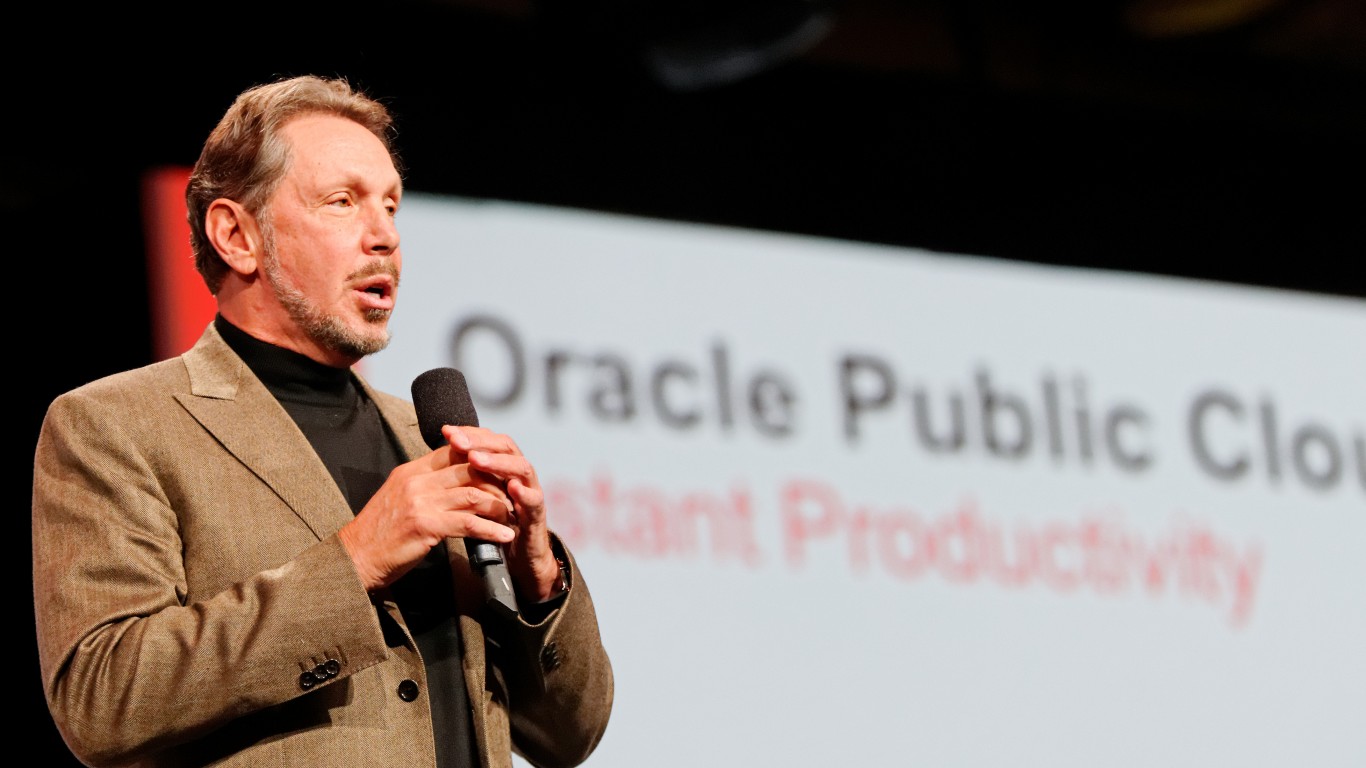
Larry Ellison’s stake in Oracle (NYSE:ORCL | ORCL Price Prediction) is worth in the tens of billions of dollars, and if he sold a slice to fund a yacht, a data center, or a Hawaiian island, the IRS would take a very large share. He doesn’t have to sell. Neither, at a smaller scale, do you.
That is the whole appeal of “buy, borrow, die,” the estate-planning shorthand for a legal sequence the tax code openly permits. The tax code openly permits it, as a natural consequence of three ordinary rules lining up: unrealized gains aren’t income, loan proceeds aren’t income, and heirs get a step-up in basis under IRC Section 1014.
How the Three-Step Machine Works
Buy. Ellison co-founded Oracle in 1977 and has held the bulk of his shares ever since. ORCL closed at $146.35 on September 2, 2026, up 297.66% over ten years. Every dollar of that appreciation sits inside his shares as an unrealized gain. Unrealized gains are not taxed. If he never sells, he never triggers a capital-gains bill.
Borrow. Instead of selling, ultra-wealthy holders pledge shares as collateral for a line of credit. Oracle discloses executive share pledging in its annual proxy statement (DEF 14A), which is where any specific pledged-share count for Ellison would appear. Loan proceeds are not income under the tax code, so the cash is spendable without a taxable event. The interest is a real cost, but for a borrower whose collateral compounds faster than the loan rate, the math works.
Die. At death, heirs’ cost basis resets to the date-of-death value. The accumulated lifetime gain escapes income tax entirely. The estate settles the outstanding loans out of a portion of the shares, which now carry a fresh, stepped-up basis. The unrealized gain is, for federal income-tax purposes, gone.
What Selling Would Have Cost
Ellison’s Oracle basis is effectively zero. Sell $1 billion of appreciated ORCL and, at the top federal long-term capital-gains rate of 20% plus the 3.8% Net Investment Income Tax, the check to the IRS is a substantial nine-figure sum per billion, before California’s own tax. Borrow the same $1 billion against the same shares and the tax bill is zero on the day the money hits the account.
The 2026 estate tax still applies. Estates of decedents who die during 2026 have a basic exclusion amount of $15,000,000, up from $13,990,000 for 2025, with a 40% rate above that line. For an estate the size of Ellison’s, the exemption is a rounding error, which is why GRATs, dynasty trusts, and charitable vehicles do the heavy lifting on the death side of the equation.
Risks Nobody Mentions at the Cocktail Party
Pledged shares can trigger a margin call if the stock drops. ORCL is not a placid holding: its beta is 1.718, its 52-week range runs from $114.50 to $341.82, and the stock is down 36.79% over the past year. A forced sale at the bottom is the exact taxable event the strategy exists to avoid.
Interest accrues every month. The strategy only pays off if the collateral compounds faster than the borrowing rate, net of tax. Estate tax still applies above the exemption, and the paperwork around beneficiaries, trusts, and account titling is where most of these plans quietly fall apart (we put the full estate checklist in a free guide, here). And the step-up in basis itself is a recurring target of reform proposals in Washington. If Congress ever repeals or caps it, the “die” step stops working retroactively for anyone still holding.
Scaled-Down Version You Can Actually Use
Securities-based lines of credit, often called SBLOCs, exist at Schwab, Fidelity, Morgan Stanley, and most major brokerages. The mechanics scale down exactly. Pledge a taxable brokerage account, draw a line of credit at a rate typically tied to SOFR, and use the proceeds without selling. Home-equity lines do the same trick against a house.
Three legitimate moves that rhyme with what Ellison does:
- Hold the low-basis lot until death. If you have a stock or fund with decades of gains, leaving it to heirs preserves the step-up. Selling it in your 70s to “simplify” may hand the IRS money your family would otherwise keep.
- Use the 0% long-term capital-gains bracket. Retirees with taxable income under the 0% LTCG threshold can realize gains at a zero federal rate and reset basis higher..
- Borrow, don’t sell, for short-term needs. A HELOC or a modest SBLOC can bridge a cash gap without forcing a taxable sale of appreciated shares, provided you can service the interest and tolerate the collateral risk.
One important caveat: this strategy’s power depends on a large, highly appreciated, low-basis position. A typical 401(k) rollover IRA is already tax-deferred, so pledging isn’t the lever. If most of your wealth is in retirement accounts, the more useful conversation is Roth conversions, QCDs after age 70.5, and withdrawal ordering, which is the kind of math worth running with a fiduciary advisor or CPA.
This article is for informational purposes only and is not tax, legal, or investment advice. Consult a qualified tax professional about your specific situation.
Contact [email protected] for any questions or corrections.
Jake has been been working in financial media for almost 15 years. He focuses on all things personal finance for 24/7 Wall St. with high hopes to educate and entertain. Most recently, Jake spent 12 years working various roles at The Motley Fool. He started copy editing fool.com content, worked on premium and marketing campaigns, and helped launch The Ascent, a personal finance brand.
His work has been featured on platforms like MSN, Yahoo Finance, USA Today, and more. He's written about credit cards, social security, ETFs, savings accounts, and just about anything else you can imagine when thinking about money. Jake love to cook, play golf, and tell people he's never had a cavity. (It's true!)