He Saved Every Medical Receipt for Years to Maximize His HSA Benefits. It Didn’t Save His Heirs a Dime.
Spending decades carefully saving every medical receipt sounds like a textbook wealth-building move, but a single overlooked rule can turn that entire strategy into an unexpected tax catastrophe for the people you leave behind.

This post may contain links from our sponsors and affiliates, and Flywheel Publishing may receive compensation for actions taken through them.

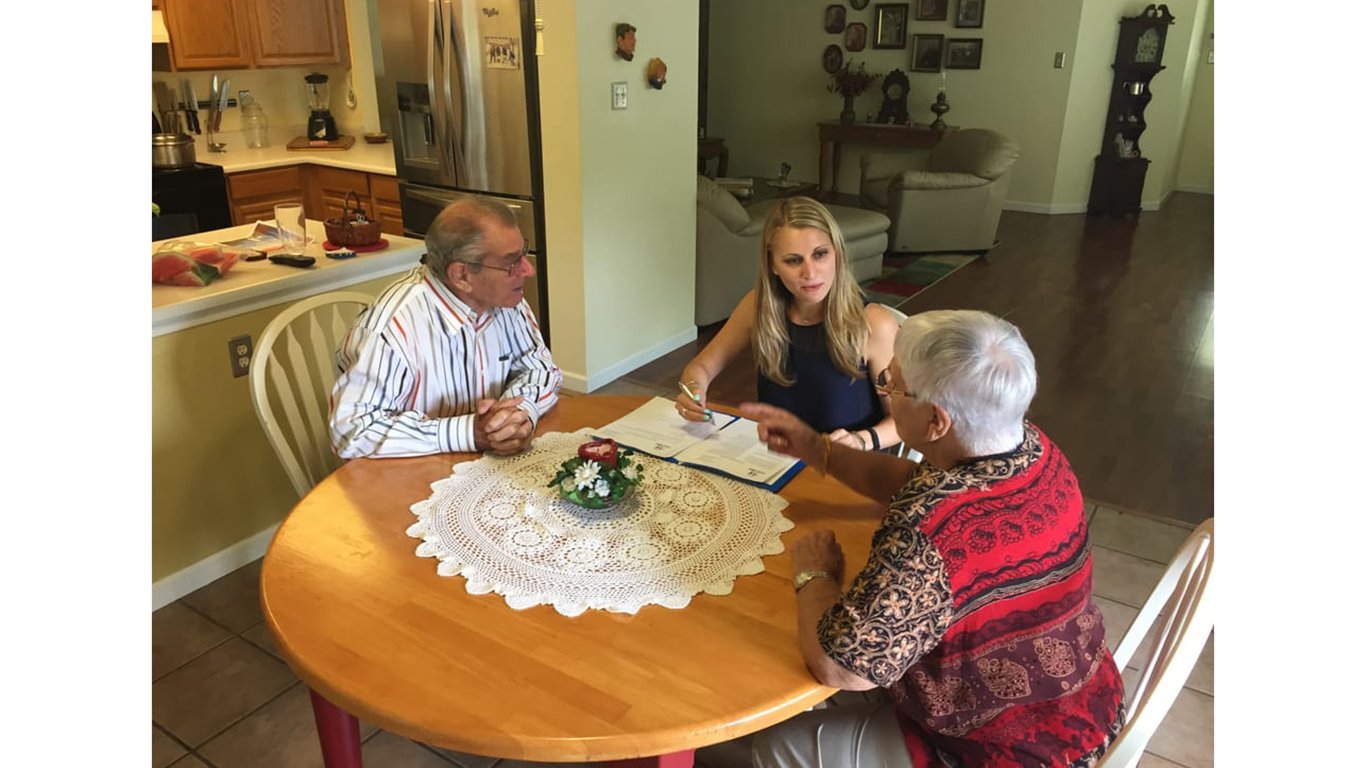
Consider a hypothetical example. Robert, a diligent saver, spent three decades running the HSA “shoebox strategy” by the book. He paid every doctor bill, dental crown, and prescription copay out of pocket, filed every itemized receipt in a labeled binder, and let his health savings account sit invested and untouched. By his late 70s the balance was well into six figures. He named his adult daughter Emma, a non-spouse, as beneficiary. Then he died before ever reimbursing himself a single dollar.
Emma assumed the binder was money in the bank. It wasn’t. The receipts became worthless the moment her father died.
Why the Shoebox Strategy Is Legitimate in the First Place
The strategy Robert used is real, sanctioned, and quietly one of the best deals in the tax code. The Internal Revenue Service, in Publication 969, sets no deadline for reimbursing yourself from an HSA for a qualified medical expense, provided the expense was incurred after the account was established, is documented, and was not otherwise reimbursed or deducted.
That flexibility is what allows a disciplined saver to pay medical bills with after-tax cash today, keep the HSA invested for decades of tax-free growth, and redeem those old receipts later for a tax-free withdrawal. Triple tax advantage: deductible contributions in, tax-free growth, tax-free distributions out. For 2026, the IRS allows contributions of up to $4,400 for individual coverage and $8,750 for family coverage, with an additional $1,000 catch-up for savers aged 55 and older. Maxed out consistently over a long career, an HSA can grow into one of the most efficient accounts an American can own.
That pool of savers is expanding. The One Big Beautiful Bill Act (Public Law 119-21), signed into law on July 4, 2025, extended HSA eligibility to millions more Americans by classifying Bronze and Catastrophic ACA marketplace plans as qualifying high-deductible health plans. It also made permanent the telehealth safe harbor that had previously been renewed on a temporary basis. More people running the shoebox strategy means more families who could stumble into the trap described below.
A Trap Nobody Warns You About
The saved receipts belong to the account owner, not the account itself. When a non-spouse inherits an HSA, the account instantly loses its tax-advantaged status. The full fair market value becomes ordinary taxable income to the beneficiary in the year of death. Unlike inherited IRAs, there is no ten-year stretch period, no rollover option, and no deferral. The entire balance lands in one tax year, stacked on top of the heir’s regular wages.
The binder of receipts does not travel with the account. Emma cannot review her father’s paid medical bills from 2004 or 2018 and use them to offset her taxable inheritance. That right died with him.
What Greenleaf Trust Says About the Boundary
Estate planners at Greenleaf Trust draw a clear line on this point. Any amounts the HSA owner incurred and paid out of pocket before death, and therefore had available to reimburse themselves while still alive, are not excludible by a non-spouse beneficiary. Once the account owner dies, the opportunity to use those expenses disappears.
There is one narrow escape hatch. A non-spouse heir can still reduce the taxable amount by paying the decedent’s outstanding, unpaid qualified medical bills within one year of death. Unpaid bills at death qualify for that reduction. Already-paid receipts sitting in the shoebox do not.
What the Advisors Actually Say About This
Austin Jarvis, Director of Estate, Trust, and High-Net-Worth Tax Planning Research at the Schwab Center for Financial Research, puts the problem directly: “Nonspousal heirs are forced to realize the entire account balance as income in the year of the owner’s death, potentially triggering a substantial and unexpected tax liability.” Emma may not be a top-bracket earner in a normal year, but a mid-six-figure HSA piled onto a regular salary can push her into tax brackets she has never encountered, all in a single April.
Carolyn McClanahan, a CFP at Life Planning Partners, calls the inherited-HSA treatment a “big unknown” for most clients. Ryan Greiser, a CFP at Opulus, calls it “a huge problem” that rarely surfaces until it is too late to act. A May 2026 CNBC report on the issue found that financial planners increasingly treat large unspent HSAs as a distinct estate-planning risk category, not just a retirement savings footnote.
A surviving spouse faces an entirely different outcome. The account keeps its HSA status, the spouse steps directly into the owner’s shoes, and the shoebox of receipts stays valid and usable. The contrast with the non-spouse outcome is stark.
How to Keep the Binder From Becoming a Tax Bomb
Five practical moves can change the ending of this story.
- Periodically redeem some of those saved receipts rather than letting the balance and the binder both compound untouched for 30 years.
- Name a spouse as primary beneficiary wherever possible, since a surviving spouse inherits the HSA intact with no tax hit.
- If a non-spouse must be the beneficiary, notify them in advance about any outstanding unpaid medical bills so they can pay those within one year of death and reduce the taxable amount.
- Consider naming a tax-exempt charity as full or partial beneficiary if no surviving spouse exists. Charities pay no income tax on HSA distributions, which can eliminate the tax burden that would otherwise fall on adult children.
- Treat a large unspent HSA as an estate-planning matter, not just a retirement savings vehicle, and revisit the beneficiary designation any time a major life event occurs.
Running these numbers with a fiduciary advisor or CPA before the binder gets any thicker is worth the time (stale beneficiary forms and untitled accounts are exactly the kind of estate issues we covered in a free estate checklist). The shoebox strategy still works precisely as designed. It simply carries an expiration date that nobody prints on the receipts.
This article is for informational purposes only and is not tax, legal, or investment advice. Consult a qualified tax professional about your specific situation.
Editor’s note: This update adds Austin Jarvis’s full title as Director of Estate, Trust, and High-Net-Worth Tax Planning Research at the Schwab Center for Financial Research, incorporates the 2026 HSA contribution limits ($4,400 individual, $8,750 family), notes the One Big Beautiful Bill Act’s July 2025 expansion of HSA eligibility to Bronze and Catastrophic ACA plan holders, adds the charity-beneficiary strategy as a fifth planning option, and references May 2026 CNBC coverage of the inherited-HSA tax risk.
Contact [email protected] for any questions or corrections.
AJ spent 10 years writing about financial markets at The Motley Fool. His coverage centers on technology stocks and the broader macroeconomic trends, from interest rates to geopolitics, that shape where markets are headed next. AJ is drawn to the stories where big-picture economics and individual companies collide.