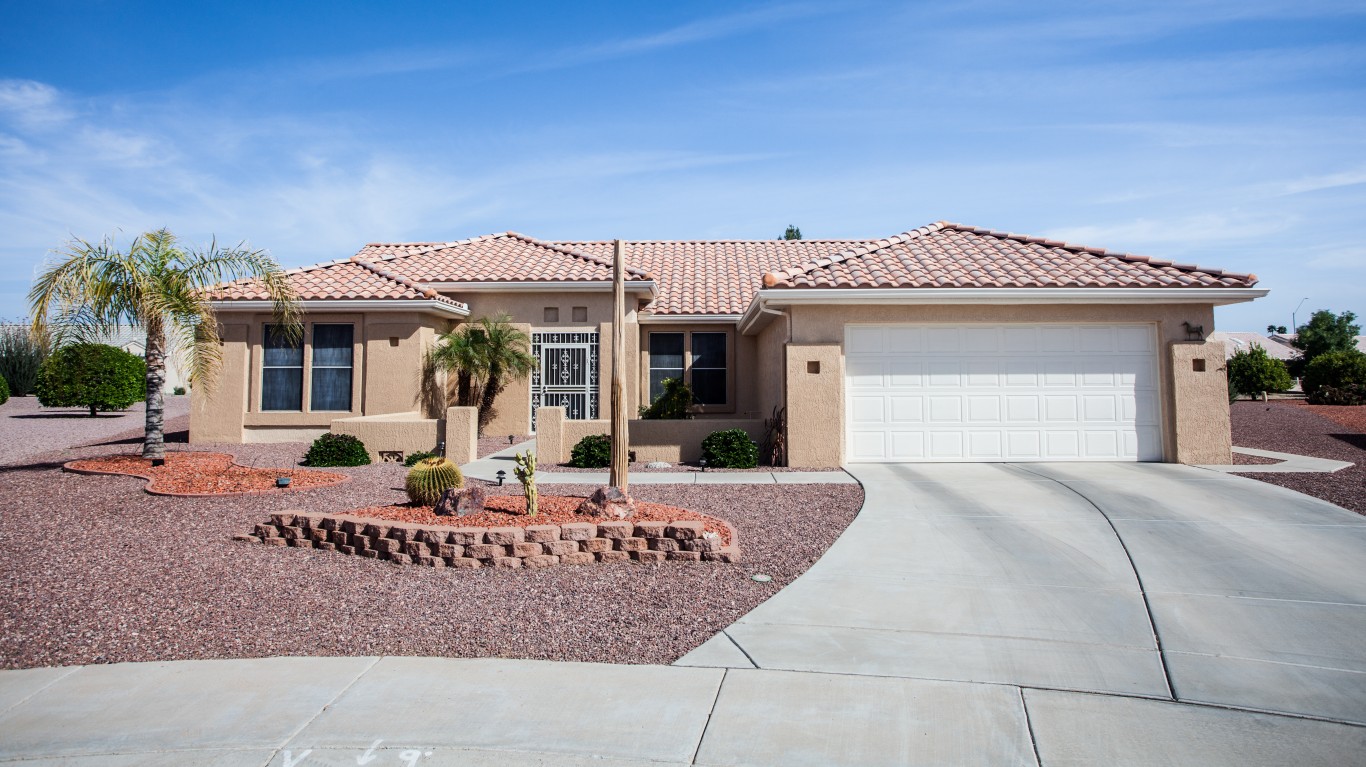
Nobody Plans to Retire Alone in Florida. Here’s What It Costs When It Happens
Most Florida retirement plans are built for two incomes, two tax brackets, and two people splitting the mortgage. When one person dies, the math breaks in ways most couples never modeled and the costs arrive faster than anyone expects.

This post may contain links from our sponsors and affiliates, and Flywheel Publishing may receive compensation for actions taken through them.
Nobody drafts a retirement plan around widowhood, and yet it is the outcome most married retirees eventually face. The Villages brochure, the beach condo, the boat slip, all of it was built for two. This piece is for the reader running the numbers on what happens when the plan keeps going, and one person does not. The focus here is the financial cost, which is quantifiable and largely predictable. The emotional cost is a separate issue.
One Check Instead of Two, Starting the Month After
The Social Security Administration pays a surviving spouse the higher of the two benefits, not both. Whichever check was smaller stops. The household’s fixed costs, property taxes, homeowners insurance, HOA dues, and the electric bill on a Florida house running air conditioning nine months a year, do not adjust downward to match.
A survivor can claim as early as age 60 at a reduced amount, earlier than the age 62 floor for a retirement benefit on one’s own record, which matters when the death happens before Medicare eligibility and the survivor needs cash flow to bridge to 65. The sequencing of the two benefits before 70 is its own decision worth six figures over a lifetime, which is why we boiled it down into a free survivor benefit walkthrough.
The 2027 Social Security COLA is tracking toward 3.1% based on early Q3 data, so the surviving benefit will keep pace with inflation. It won’t grow back to two checks. Household benefit income falls immediately and stays fallen.
Filing Status Penalty Nobody Warns You About
This shock lands quietly on the first tax return filed as a single filer. For 2026, the standard deduction is $32,200 for married filing jointly and $16,100 for single filers. The brackets compress in the same direction: the 22% bracket begins at $50,400 for a single filer versus $100,800 for a joint filer, and the 24% bracket begins at $105,700 versus $211,400. A qualifying surviving spouse can generally use the joint brackets and joint standard deduction for the two tax years following the year of death, provided a dependent child is in the home. Without a qualifying dependent, the survivor moves to single filing the year after death.
Medicare surcharges tighten on the same axis. In 2026, the standard Part B premium is $202.90 per month with a $283 annual deductible. IRMAA begins for single filers above $109,000 of modified adjusted gross income and for joint filers above $218,000. Same portfolio, same withdrawal, same RMD, half the threshold. Income can stay flat while the tax bill and the Medicare premium both rise.
Home Sale Window Closes Faster Than People Think
Florida’s cost of living index sits at 103.414 against a national benchmark of 100, and the Case-Shiller national home price index is at 336.7 as of June 2026, up 0.4% from the prior month. A long-held Florida primary residence often carries substantial embedded gain. Federal law excludes $500,000 of gain for joint filers and $250,000 for single filers on a primary residence, and a surviving spouse generally retains the $500,000 exclusion only if the sale closes within two years of the death. Miss that window, sell in year three, and the excess gain is taxable at capital gains rates. For a retiree who bought in the 1990s and now needs to downsize or move closer to family, that timing is expensive.
The Florida homestead exemption and Save Our Homes assessment cap do transfer to the surviving spouse, and portability allows the accumulated cap benefit to move to a next Florida home. What does not adjust downward: homeowners insurance and flood premiums, which have run hard for coastal Florida, and condo association special assessments driven by the state’s post-Surfside structural inspection and reserve funding requirements. All of it now falls on one Social Security check and one withdrawal stream.
Buying the Caregiver a Marriage Provides for Free
A married retiree has a built-in caregiver for the early stages of decline. A solo retiree writes a check for it. In Florida, the market rates for home health aides, assisted living, and skilled nursing are the single largest tail risk in this scenario, and Medicare does not pay for long-term care, a point CNBC noted in September 2026 that many retirees still get wrong. The Forbes and CNBC 2026 rankings of long-term care insurance carriers reflect a market that has repriced sharply, and premiums for a policy purchased at 65 look nothing like the quotes from a decade ago.
The BLS Consumer Expenditure Survey put average annual household spending at $78,535 in 2024. A solo Florida retiree’s number is not half of a couple’s, because the house, the car, the insurance, and the HOA dues do not halve. Plan on the survivor supporting roughly the same housing and fixed-cost base with one income stream, plus a care reserve the couple never had to fund.
Documents That Cost Almost Nothing and Matter Enormously
A married retiree has a default decision-maker. A solo retiree does not. A durable power of attorney, a healthcare surrogate designation, and a named trusted contact on brokerage and bank accounts cost a few hundred dollars to execute and close the largest gap in a solo plan, which is the absence of a second person to catch a missed bill, question a suspicious wire, or authorize a hospital decision. Isolation carries documented health costs, and the financial version of that risk is fraud exposure and lapsed obligations.
What the Number Actually Has to Be
The working answer for a Florida solo retirement, built on the figures above, is to plan the portfolio around the survivor case, not the couple case. That means sizing the nest egg to cover fixed housing costs on one Social Security check at the higher earner’s benefit, taxed at single-filer brackets after the qualifying window closes, with Part B and IRMAA calculated at the single-filer threshold of $109,000. A 3.5% withdrawal rate is the more defensible planning figure than 4% once one life expectancy is doing the work of two, because sequence risk concentrates on a single timeline.
Add a dedicated long-term care reserve, either self-funded or insured, sized to Florida assisted living and skilled nursing rates rather than national averages. Sell the appreciated home inside the two-year survivor window if a sale is coming anyway. Sign the power of attorney and the healthcare surrogate this quarter. Building the plan around the solo years from the start aligns the portfolio with the single-income period that most married retirees eventually enter.
Contact [email protected] for any questions or corrections.
David Beren has been a Flywheel Publishing contributor since 2022. Writing for 24/7 Wall St. since 2023, David loves to write about topics of all shapes and sizes. As a technology expert, David focuses heavily on consumer electronics brands, automobiles, and general technology. He has previously written for LifeWire, formerly About.com. As a part-time freelance writer, David’s “day job” has been working on and leading social media for multiple Fortune 100 brands. David loves the flexibility of this field and its ability to reach customers exactly where they like to spend their time. Additionally, David previously published his own blog, TmoNews.com, which reached 3 million readers in its first year. In addition to freelance and social media work, David loves to spend time with his family and children and relive the glory days of video game consoles by playing any retro game console he can get his hands on.