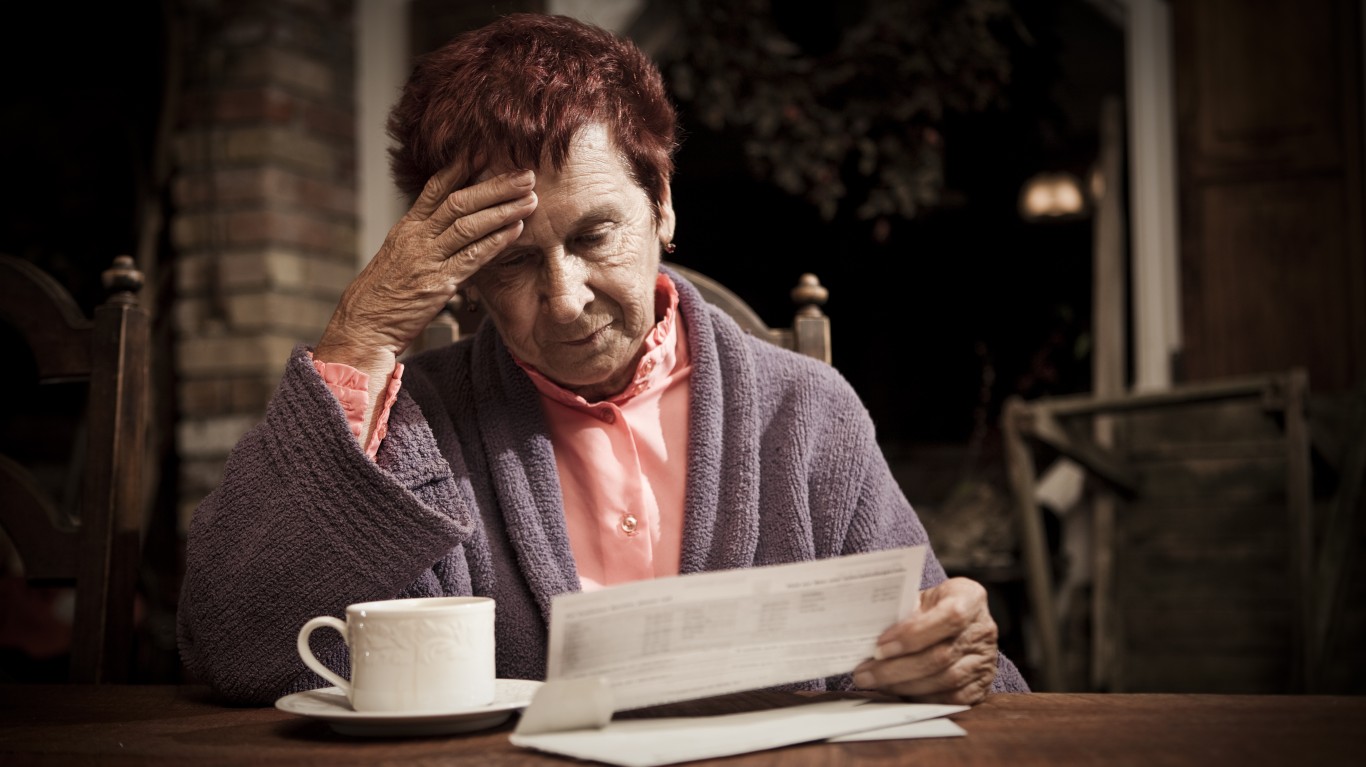
When One Spouse Is Gone, The Villages Retirement Math Changes Fast
A Villages household built around two incomes, two Social Security checks, and shared daily tasks can unravel faster than most couples expect when one spouse is gone, and the financial gaps that open up are rarely the ones they planned…

This post may contain links from our sponsors and affiliates, and Flywheel Publishing may receive compensation for actions taken through them.

Retirement math can look comfortable when two people are sharing one house and bringing in two streams of Social Security, pension income, or both. The equation changes quickly when that household becomes one person. That can happen after a spouse dies, after a divorce, or when one partner moves into assisted living or memory care while the other stays home.
That matters in a place like The Villages, where many retirees build a lifestyle around a home, community fees, golf-cart transportation, recreation, and a household budget that was originally designed for two people. Some costs fall when one spouse is gone. Plenty of others barely move at all. The right way to plan is to build the survivor’s budget before anyone actually has to live on it.
The Household Can Lose a Social Security Check

Start with Social Security because this is often the biggest immediate change. A surviving spouse who qualifies for both a retirement benefit on their own work record and a survivor benefit generally does not receive both full payments added together. Social Security pays the benefit or combination of benefits that produces the higher payable amount.
Imagine a couple receiving $2,600 and $1,800 per month. Their household had $4,400 coming in from Social Security. After one spouse dies, the survivor could ultimately receive an amount based on the higher benefit, subject to the survivor’s age, claiming history, and other Social Security rules. The household does not continue collecting $4,400. That loss of one monthly payment is why a budget that looked comfortable for two people can suddenly become tight for one.
A Pension Can Shrink at the Same Time

Pensions need their own line in the survivor budget. Many traditional pension plans offer a qualified joint-and-survivor annuity that continues some portion of the payment after the retiree dies. Depending on the plan and election, that survivor payment may be 50%, 75%, 100%, or another permitted amount.
A straight-life option can pay more while the retiree is alive but may provide nothing to a surviving spouse after death. Other plans work differently, so the actual election documents matter more than anyone’s memory of what was selected years ago. A couple planning for widowhood should pull the pension paperwork now and write down exactly what the surviving spouse would receive.
The House Does Not Suddenly Cost Half as Much

Losing one person does not cut most housing costs in half. Property taxes, homeowners insurance, maintenance, pest control, internet service, lawn care, and any remaining mortgage payment can stay close to where they were before. Electricity and water consumption may fall, but the basic cost of keeping the home does not disappear.
That is the core survivor-budget problem. Income can drop sharply while the biggest fixed expense remains sitting in exactly the same driveway. A paid-off home certainly helps, but “paid off” does not mean “free.” Taxes, insurance, maintenance, community charges, repairs, and eventual big-ticket replacements still need to come from somewhere.
The Villages Has Costs That Stay With the Property

The Villages adds a few community-specific expenses that retirees should put directly into the survivor calculation. Its current published cost-of-living example for a Designer Series home in the mid-$400,000s lists estimated monthly amounts including a $204 amenity fee, about $155 for homeowners insurance, $478 for property taxes, and $385 for an assessment, plus water, sewer, trash, and energy costs.
Those numbers are illustrations, not a universal bill for every Villages homeowner. The Villages Community Development Districts say amenity charges are contractual and may be adjusted based on the Consumer Price Index under each home’s deed restrictions. Maintenance assessments and bond assessments also vary by district, unit, and property. The useful number is the amount printed on your own bills, because that is the number the surviving spouse will actually have to pay.
Federal Taxes Can Change Once the Survivor Files Single

The tax transition does not necessarily happen immediately. If a spouse dies during the year, the surviving spouse may generally still file a joint federal return for that year if the usual requirements are met. For the following two years, someone with a qualifying dependent child may be eligible for qualifying surviving spouse status and continue using joint tax rates. Many older retirees will not meet that child requirement, so single filing status eventually becomes the relevant comparison.
For tax year 2026, the basic standard deduction is $32,200 for married couples filing jointly and $16,100 for single filers. The 22% federal bracket begins above $100,800 of taxable income for married couples filing jointly but above $50,400 for single filers. That does not mean every widow suddenly pays dramatically more tax, but it shows how the same pool of retirement income can encounter narrower tax brackets once the return changes from joint to single.
Retirees also have deductions that soften the blow. In 2026, an unmarried taxpayer age 65 or older can generally add $2,050 to the standard deduction. A separate enhanced senior deduction of as much as $6,000 is available through 2028 for eligible taxpayers age 65 and older, although it begins phasing out once modified adjusted gross income exceeds $75,000 for a single filer.
Even the Tax Rules for Social Security Get Tighter

There is another tax threshold hiding underneath the regular income-tax brackets. The federal formula used to determine whether Social Security benefits are taxable uses a base amount of $32,000 for married couples filing jointly but only $25,000 for single filers and qualifying surviving spouses.
At higher combined-income levels, as much as 85% of Social Security benefits can become taxable. The relevant upper threshold is $44,000 for a married couple filing jointly and $34,000 for most single filers. That does not mean the government takes 85% of the benefit. It means up to 85% can be included in taxable income. IRA withdrawals, pensions, investment income, and tax-exempt interest can all affect the calculation.
Medicare IRMAA Thresholds Drop From Joint to Single
Medicare creates another filing-status issue. In 2026, the standard Medicare Part B premium is $202.90 per month. Income-related surcharges begin when modified adjusted gross income exceeds $109,000 for an individual but $218,000 for a married couple filing jointly.
That can matter to a surviving spouse who still has substantial pension income, required retirement-account withdrawals, investment income, or a large Roth conversion. But there is an important protection the original version of this story missed. Social Security treats the death of a spouse as a qualifying life-changing event. If household income falls, the survivor can ask Social Security to use the lower, more recent income information to reconsider the IRMAA surcharge instead of blindly relying on an older tax return.
A Spouse May Have Been Providing Thousands of Dollars of Free Help
Some of the biggest new expenses are not bills the couple ever paid before. One spouse may have handled meals, transportation, medications, household paperwork, minor repairs, grocery runs, appointment scheduling, and day-to-day monitoring without anyone putting a dollar value on the work.
Once that person is gone or no longer able to help, some of those jobs may have to be purchased. CareScout’s latest Cost of Care Survey puts Florida’s 2025 median rate for a non-medical in-home caregiver at about $32 an hour. At 44 hours per week, that works out to roughly $6,101 per month. Someone who needs only a few hours a week will spend far less, but regular paid help can become one of the largest items in a solo retiree’s budget.
Stopping Driving Can Add Another Monthly Expense
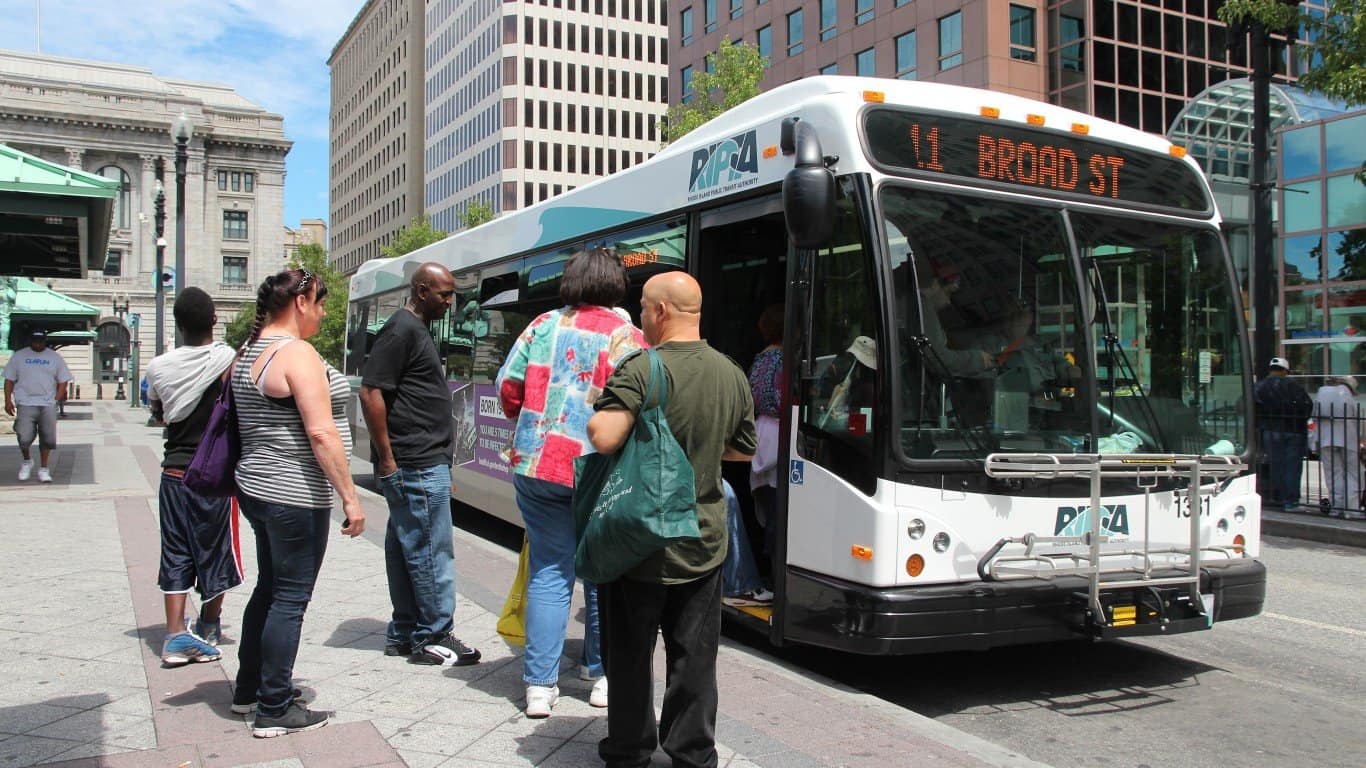
The Villages is unusually friendly to golf-cart transportation, which can keep many everyday trips manageable even after someone starts driving less. That still does not solve every transportation problem. Specialists, hospitals, airports, family visits, and destinations outside the golf-cart network may require a car, rideshare, taxi, shuttle, friend, or paid caregiver.
A couple may have solved those trips informally because one spouse was always available to drive. A survivor should put a transportation allowance into the budget before driving actually stops. Waiting until the keys are gone is a bad time to discover that every early-morning doctor’s appointment now requires a paid ride.
A Paid-Off House Can Still Be the Wrong House

Keeping the home is not automatically the cheapest choice simply because there is no mortgage. A larger home can mean higher taxes, insurance, utilities, maintenance, landscaping, and repair exposure than one person needs. At the same time, selling and moving create their own costs, so downsizing is not automatically the answer either.
This is where national home-price indexes are mostly noise. The value that matters is what the specific home in The Villages could realistically sell for, what debt or bond balance remains attached to it, what a smaller replacement would cost, and what the move would do to the survivor’s monthly cash flow. Run that comparison using local numbers rather than a nationwide housing index.
Distance From Family Becomes Part of the Financial Plan

Living far from adult children may be completely manageable when two healthy spouses can drive, keep up the house, and handle emergencies together. The calculation changes when only one person is left. A daughter who lives 900 miles away cannot casually drop by to replace a smoke-detector battery, drive to an outpatient procedure, or notice that Dad has stopped taking his medication correctly.
That does not mean a retiree has to move near the kids. It does mean distance has a price. The family should decide who can realistically help, how often they can travel, what services will be paid for locally, and who can step in during an emergency. Friendship and good neighbors matter enormously, but they are not a substitute for an actual care and transportation plan.
Do Not Build the Plan Around One Magic Withdrawal Rate

The original calculation used 3.5% as though it were automatically safer than 4%. Retirement withdrawals do not work that neatly. The sustainable amount depends on age, portfolio mix, market returns, inflation, taxes, spending flexibility, Social Security, pensions, and how long the money ultimately has to last.
A better exercise is to stress-test several starting withdrawals. On a $750,000 portfolio, 3% is $22,500 in the first year, 3.5% is $26,250, and 4% is $30,000. Then compare each amount with the survivor’s actual annual spending gap. The purpose is not to find a magic percentage. It is to find out whether the survivor budget still works when income falls, care costs rise, or markets have a bad stretch.
Build the Survivor Budget While You Still Have Two People at the Table

Start with the income the survivor would actually receive: their Social Security or survivor benefit, the surviving pension amount, required distributions, and any other dependable income. Then list the expenses that remain after one spouse is gone: housing, Villages fees and assessments, insurance, taxes, utilities, food, Medicare premiums, transportation, home maintenance, and a realistic allowance for paid help.
The difference is the amount the investment portfolio has to cover. If that number looks uncomfortable, the useful options are broader than simply buying another financial product. A couple might downsize, build a larger cash reserve, change spending, move closer to family, review long-term care coverage, or rethink how much house they want to carry into their eighties. Existing life insurance can also provide survivor liquidity, although buying new coverage later in retirement may be expensive or unavailable.
The important part is doing the exercise before a death, diagnosis, or emergency forces the decision. Retirement planning for a couple is only half the job. The other half is making sure either person can afford the life that remains if they eventually have to run the household alone.
Contact [email protected] for any questions or corrections.