The U.S. Just Added 162,000 Jobs. So Why Are Americans Still Feeling Broke?
The August jobs report looks healthy on paper, but gasoline records, diesel surcharges, and flat real wages are stacking up against American households in ways the headline number cannot hide.

This post may contain links from our sponsors and affiliates, and Flywheel Publishing may receive compensation for actions taken through them.

On Fox Business’s The Bottom Line, which aired on Friday, September 4, 2026, host Dagen McDowell laid out a stark problem facing American households: “According to AAA, we’ve had a record high for this time of year for gasoline. The national average to date is sitting at $4.15 a gallon, ninety-five cents higher than a year ago.” Federalist reporter Brianna Lyman followed with a blunt read of the national mood: “Americans right now are very concerned. The pump is the biggest issue.”
The August jobs report showed 162,000 new full-time jobs added to the economy. Even so, Americans are feeling the squeeze from higher prices across the board, and the situation has only grown more acute in the weeks since those numbers landed.
162,000 New Jobs Aren’t Making Americans Feel Richer
A strong aggregate figure does not offset a painful household number. Inflation-adjusted hourly pay, the figure that actually tells you what an hour of work buys, was $11.31 in July 2026 versus $11.32 in July 2025. Real wages, in other words, went nowhere over the course of a full year.
Federal jobs data shows total nonfarm payrolls reached 159,075,000 in August 2026, up from 158,472,000 a year earlier. Average hourly earnings rose to $37.75 from $36.62, a gain that inflation has largely absorbed. The University of Michigan’s final consumer sentiment reading for September 2026 came in at 48.1, down 7% from August and 12.7% below where it stood a year ago. Surveys of Consumers director Joanne Hsu noted that consumers reported roughly 10% deterioration in both current and year-ahead personal finance measures, with year-ahead inflation expectations jumping to 4.6%.
Record Diesel Prices Could Hit Your Grocery Bill Next
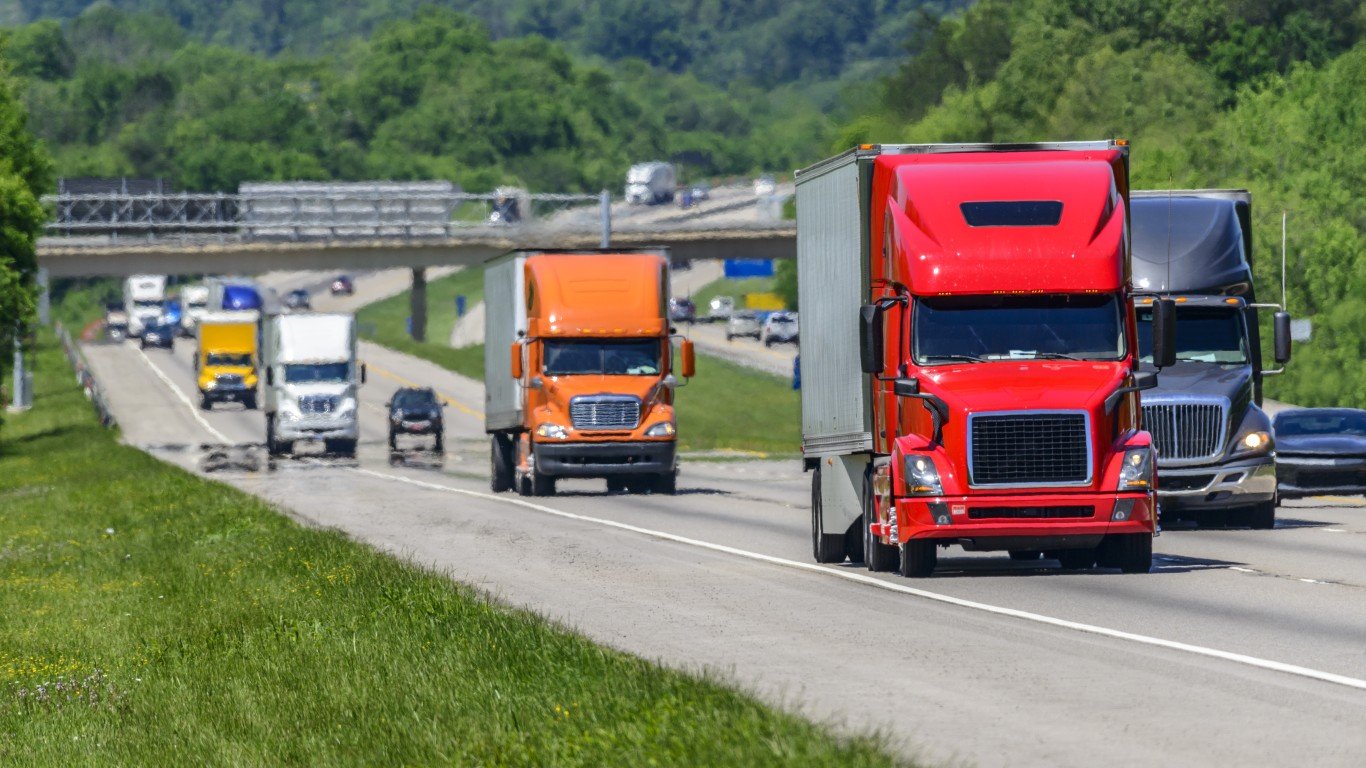
Lyman framed diesel as “the lifeblood of the American economy, because trucks and freight rely on diesel. Those costs are passed on very quickly to the end user and the end consumer.”
The transmission mechanism is straightforward. When diesel costs climb, carriers add fuel surcharges to freight invoices. Distributors fold those surcharges into wholesale prices. Retailers pass what they can on to consumers. The EIA’s weekly on-highway diesel index hit $6.529 per gallon for the week of September 21, up $2.78 from a year ago and the highest reading of 2026 so far. California’s regional diesel average reached $8.246 per gallon the same week. Consumer packaged goods, building materials, and anything shipped long-haul are most exposed to that kind of cost pressure.
Crude oil sits underneath all of it. WTI closed at roughly $90 per barrel on September 1, up from a low of $55.44 in mid-December 2025. In the weeks that followed, as U.S.-Iran strikes resumed, WTI surged past $100 a barrel by mid-September before partially retreating. Volatility in the Strait of Hormuz has been the dominant driver of that move.
National Averages Hide What You Actually Pay
The article’s opening figure of $4.15 per gallon captured the national average as of early September. Since then, prices have kept climbing. AAA put the national average at $4.48 per gallon by late September 2026, the highest ever recorded for this time of year. California’s statewide average reached $6.35 per gallon by September 27, according to AAA, while Los Angeles County prices neared $6.50. The gap between a California household and a Texas or Indiana household, where gas was running around $3.96, widened to nearly $2.40 per gallon.
That divergence captures the same stacked-cost problem Century 21 CEO Mike Miedler raised about housing in an August 31 CNBC interview: affordability pressure rarely hits one line item at a time.
The Bigger Picture
The August jobs report confirms an economy still generating employment. What it cannot tell you is whether those paychecks are keeping pace with what Americans owe at the pump, the checkout line, and the freight surcharge baked into every delivered good. With consumer sentiment now below the level recorded at the start of every recession since the index’s inception, and with year-ahead inflation expectations at 4.6%, the headline job number and the lived experience of American households remain far apart.
Editor’s note: This article has been updated to reflect the University of Michigan’s final September 2026 consumer sentiment reading of 48.1 (revised from the earlier 55.2 figure), the national average gasoline price rising to $4.48 per gallon and California’s statewide average reaching $6.35 per gallon by late September, and the EIA weekly on-highway diesel price hitting $6.529 per gallon nationally and $8.246 per gallon in California as of the week of September 21, 2026.
Contact [email protected] for any questions or corrections.
Thomas Richmond is a financial writer and content strategist with 5+ years of experience covering stocks and financial markets. He has published over 500 articles focused on individual stock analysis, helping investors better understand business fundamentals, stock valuations, and long-term opportunities.
Thomas previously served as a Content Lead at TIKR, a stock research platform, where he helped scale the company’s blog to hundreds of articles per month and contributed to a weekly newsletter reaching more than 100,000 investors.
Outside of work, Thomas enjoys weight lifting and soccer.