Inflation Is About to Hit Hard as Diesel Prices Soar to Record Near $6 a Gallon
Diesel just shattered a price record that touches every pallet of food, lumber, and consumer goods in America, and the seasonal surge that typically drives costs even higher has not yet begun.


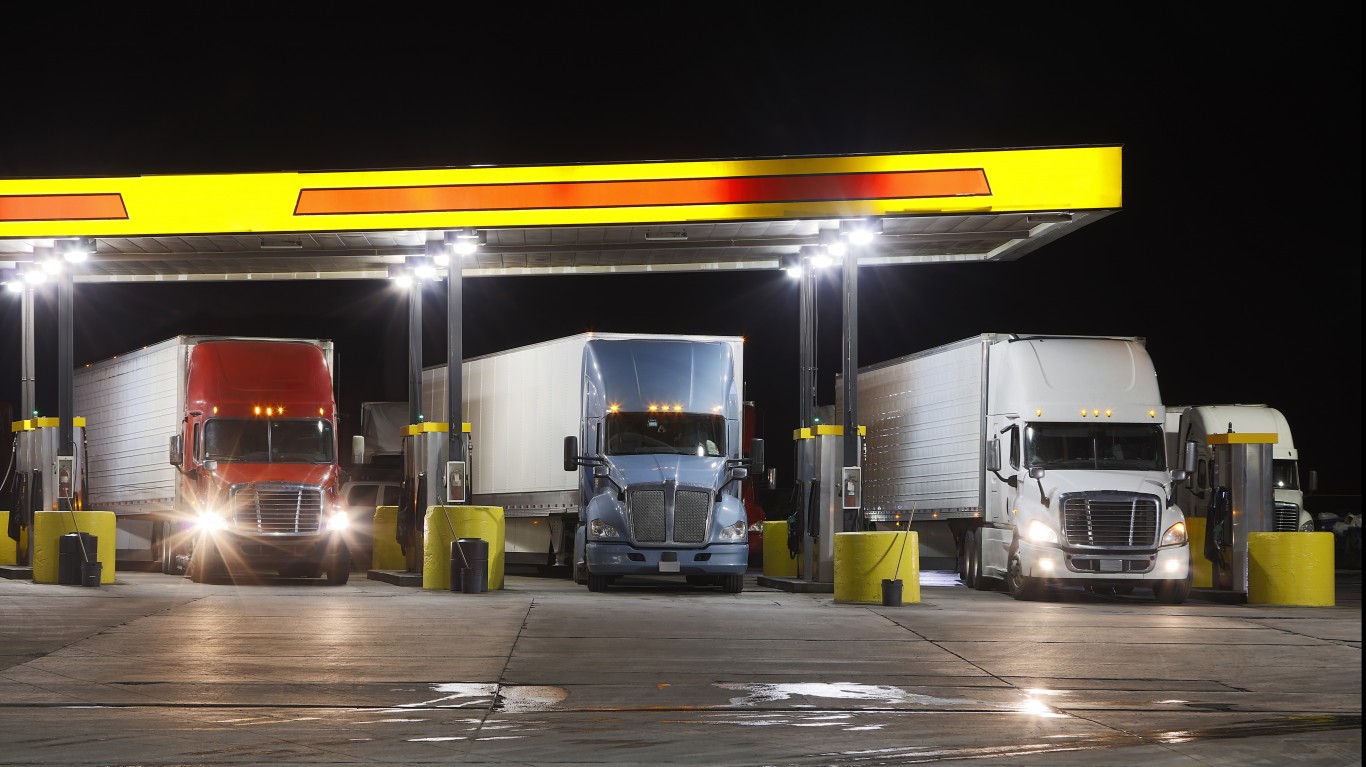
The number on the truck stop pump is doing something it has never done before. U.S. retail diesel hit $5.97 a gallon in the week ending September 7, a record and a 11.6% jump from a month earlier. In January, the same gallon cost $3.46. Nine months later, freight operators are paying nearly two dollars more to move the same pallet of cereal, chicken, or lumber. That cost rides off the truck and into every warehouse, grocery aisle, and construction site in the country, arriving just as the fall peak-demand season begins.
Why the Pump Turned This Month
The trigger is geopolitical. U.S. forces have targeted several Iranian crude oil tankers near the Strait of Hormuz, and Tehran has vowed retaliation. Refinery outages tied to the Ukraine and Iran conflicts have knocked distillate capacity offline at exactly the wrong moment, according to CNBC. West Texas Intermediate crude closed at $91.48 a barrel on September 1, up 9.0% in a week. CBS News reported this week that analysts see a path to $120 oil, with Americans already absorbing roughly $100 billion in added fuel costs.
Demand is compounding the supply shock. Global daily diesel consumption is rising by 2 million barrels as the U.S. harvest, heating-oil buying, and holiday freight cycle stack on top of one another through November. Diesel moves nearly everything on a supermarket shelf, so when the fuel that powers Class 8 tractors, rail locomotives, and container drayage jumps 70% in nine months, the pass-through is mechanical and immediate.
What the Bill Looks Like for Households
Households already feel the leading edge. Headline Personal Consumption Expenditures inflation ran at 3.7% year over year in July, with the energy component up a staggering 15.3%. Regular gasoline is $4.16 a gallon, an inflation signal that hits every commuter. Diesel near $6 is the wholesale version of the same story, and its effects show up on a lag inside grocery, retail, and restaurant prices.
Consumers are already flinching. The University of Michigan sentiment index sits at 55.2, well inside what the survey classifies as recessionary territory. Retail sales fell to $763.6 billion in July, down 0.6% from June, the first monthly decline of the summer. Food-services spending and transportation-services spending both rose in July even as goods spending softened, according to the Bureau of Economic Analysis: households are being pushed to pay more for the delivered cost of everyday items while they cut back elsewhere.
Signals to Watch Into November
The next two data points decide whether this becomes a full inflation scare. The first is the August and September CPI, where the July index already stood at 333.918, up from 323.048 a year earlier. The second is distillate inventories: the EIA’s Short-Term Energy Outlook shows refinery utilization already stretched heading into peak season. If Iran retaliates near Hormuz, or if a single Gulf Coast refinery trips offline in October, diesel could push past $6 toward $7, and the grocery bill would go with it.
Contact [email protected] for any questions or corrections.
After two decades of patrolling the dark corners of suburbia as a police officer, Rich Duprey hung up his badge and gun to begin writing full time about stocks and investing. For the past 20 years, he’s been cruising the markets looking for companies to lock up as long-term holdings in a portfolio while writing extensively on the broad sectors of consumer goods, technology, and industrials. Because his experience isn’t from the typical financial analyst track, Rich is able to break down complex topics into understandable and useful action points for the average investor. His writings have appeared on The Motley Fool, InvestorPlace, Yahoo! Finance, Money Morning, and, of course, 24/7 Wall St. He has been featured in both U.S. and international publications, including MarketWatch, Financial Times, Forbes, Fast Company, and USA Today.