Nursing Home Care Cost the Family $129,000 in a Year. The IRS Treats Most of That as a Medical Expense, and Almost Nobody Claims It
Families writing six-figure checks for a parent's nursing home care are sitting on one of the most-missed deductions in the entire tax code, and the IRS rule that unlocks it depends on a single question almost nobody thinks to ask.

This post may contain links from our sponsors and affiliates, and Flywheel Publishing may receive compensation for actions taken through them.
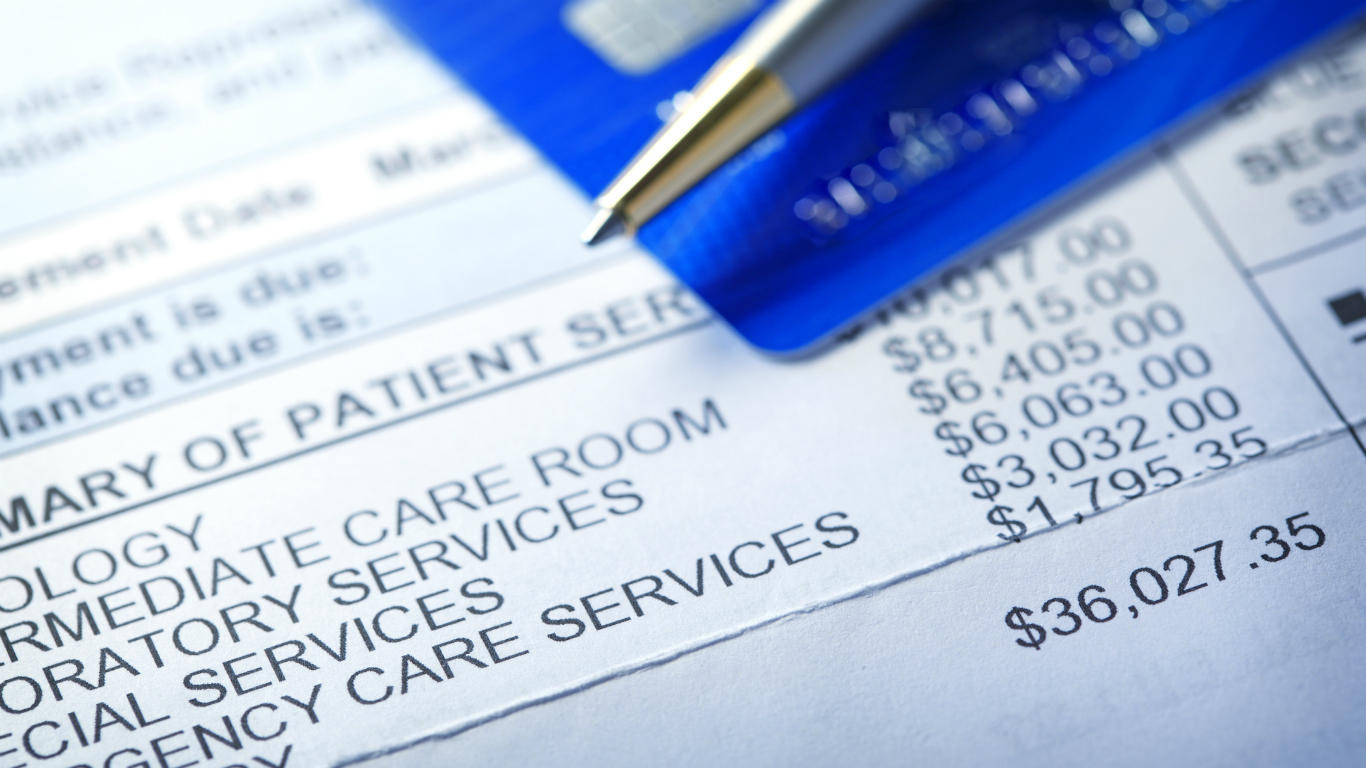
Picture a family that just closed out a year of skilled nursing care for an 84-year-old widowed mother. The facility billed $129,000 across twelve months of room, board, nursing, and therapy. That figure is not unusual: according to the CareScout 2025 Cost of Care Survey, released in March 2026, the national median for a private nursing home room runs $129,575 a year, or roughly $355 a day. Nobody at the admissions desk mentioned that most of that bill is a medical expense in the eyes of the IRS, and the adult daughter writing the checks has never itemized a tax return in her life.
That is the setup for one of the most-missed deductions in the entire tax code. When a person is in a nursing home principally for medical care, the entire cost, including meals and lodging, counts as a deductible medical expense. When the stay is primarily custodial, only the portion of the bill tied to medical and nursing services qualifies. The rule is precise, and it decides whether the deduction is enormous or modest.
What Actually Qualifies as a Medical Expense
The IRS draws the line at the principal reason for the stay. A resident admitted because they can no longer safely manage medications, wounds, mobility, or cognition, and who needs available medical or nursing care, is there for medical reasons. In that case, room and board come along for the ride and the whole bill is deductible.
A resident who moved in mainly for help with meals, laundry, and companionship, with only incidental nursing, is there for custodial reasons. Only the medical and nursing charges on the itemized statement are deductible in that scenario. Meals and lodging are personal expenses.
Assisted living follows the same logic, with an extra hurdle. To deduct the full monthly fee, the resident generally must be chronically ill: unable to perform at least two activities of daily living without substantial assistance for at least 90 days, or requiring substantial supervision due to cognitive impairment, and receiving care under a plan prescribed by a licensed health care practitioner. Without that certification, families are back to deducting only the medical and nursing slice.
Whose Bills You Can Claim, Including a Parent’s
A taxpayer can deduct qualifying medical expenses paid for themselves, a spouse, and a dependent. The word “dependent” is where adult children typically get tripped up.
A parent can qualify as a dependent for medical expense purposes even if the child cannot claim them as a regular dependent on their return. The gross income test that blocks so many parents from ordinary dependency does not apply here. The child generally must provide more than half of the parent’s total support for the year, and the parent must be a U.S. citizen or resident (or a resident of Canada or Mexico). Meet those conditions, and the parent’s nursing home bills that the child paid belong on the child’s return.
When several siblings share the cost and no single one covers more than half, a multiple support agreement (IRS Form 2120) lets the siblings decide which of them, having paid more than 10% of the parent’s support, claims the deduction that year. The others sign off. The arrangement can rotate from year to year.
Three Gates Before a Dollar Comes Off
First, the taxpayer has to itemize rather than take the standard deduction. For tax year 2026, the standard deduction is $32,200 for married couples filing jointly, $16,100 for single filers, and $24,150 for heads of household. Medical expenses only help if total itemized deductions clear those thresholds.
Second, only unreimbursed medical expenses above the AGI floor count. That floor is 7.5% of adjusted gross income, a threshold made permanent by the Consolidated Appropriations Act of 2021. Only the amount above it lands on Schedule A. In a year with a full nursing home bill, families typically blow past that floor without trying.
Third, only amounts actually paid during the tax year and not reimbursed by insurance are deductible. Anything Medicaid paid is not the family’s deduction. Confusing Medicare and Medicaid is a costly mistake here. Medicare is the federal health insurance program for people 65 and older, covering only short skilled nursing stays. Medicaid is the joint federal-state program that pays long-term nursing home care for people who have spent down their assets, with rules that vary by state. A dollar Medicaid covered is a dollar the family cannot deduct.
A New Senior Tax Break Worth Knowing About
Families in this situation should also know about a separate, newer provision. The One Big Beautiful Bill Act, signed in July 2025, created a temporary “Senior Bonus Deduction” of up to $6,000 per qualifying taxpayer age 65 or older. A married couple where both spouses qualify can claim up to $12,000. The deduction is available for tax years 2025 through 2028, stacks on top of the standard deduction and the existing age-65-plus additional deduction, and can be taken whether or not the taxpayer itemizes. It phases out for single filers with modified adjusted gross income above $75,000, and for joint filers above $150,000. For seniors in a heavy nursing home year who may not clear the itemizing threshold, this bonus deduction can provide separate relief on the same return.
Why Almost Nobody Claims It
Most retirees stopped itemizing after the standard deduction roughly doubled in 2018, and that habit has persisted. A year with a full nursing home bill is precisely the year the habit becomes expensive. It is one of several quiet IRS rules that drain retirement accounts, and we mapped the rest in a free guide here.
Deductions commonly missed alongside the nursing home bill itself include long-term care insurance premiums (deductible up to age-based dollar limits: $500 for those 40 or younger, $1,860 for ages 51 to 60, $4,960 for ages 61 to 70, and $6,200 for those 71 and older, per 2026 IRS figures), transportation and mileage to medical appointments, and assisted living costs when the chronically ill certification is in place.
The practical move is unglamorous. Ask the facility for the annual itemized statement that separates medical and nursing charges from custodial charges. Give it to the preparer. Run the return both ways, itemized and standard. Then take the bigger number.
Editor’s note: This article was updated to include the national median nursing home cost of $129,575 per year for a private room from the CareScout 2025 Cost of Care Survey (released March 2026), to specify the 7.5% AGI floor for medical expense deductions as permanently set by the Consolidated Appropriations Act of 2021, to add specific 2026 long-term care insurance premium deduction limits by age tier, and to incorporate the new Senior Bonus Deduction of up to $6,000 per person (age 65 or older) created by the One Big Beautiful Bill Act, signed July 2025.
Contact [email protected] for any questions or corrections.
Jake has been been working in financial media for almost 15 years. He focuses on all things personal finance for 24/7 Wall St. with high hopes to educate and entertain. Most recently, Jake spent 12 years working various roles at The Motley Fool. He started copy editing fool.com content, worked on premium and marketing campaigns, and helped launch The Ascent, a personal finance brand.
His work has been featured on platforms like MSN, Yahoo Finance, USA Today, and more. He's written about credit cards, social security, ETFs, savings accounts, and just about anything else you can imagine when thinking about money. Jake love to cook, play golf, and tell people he's never had a cavity. (It's true!)