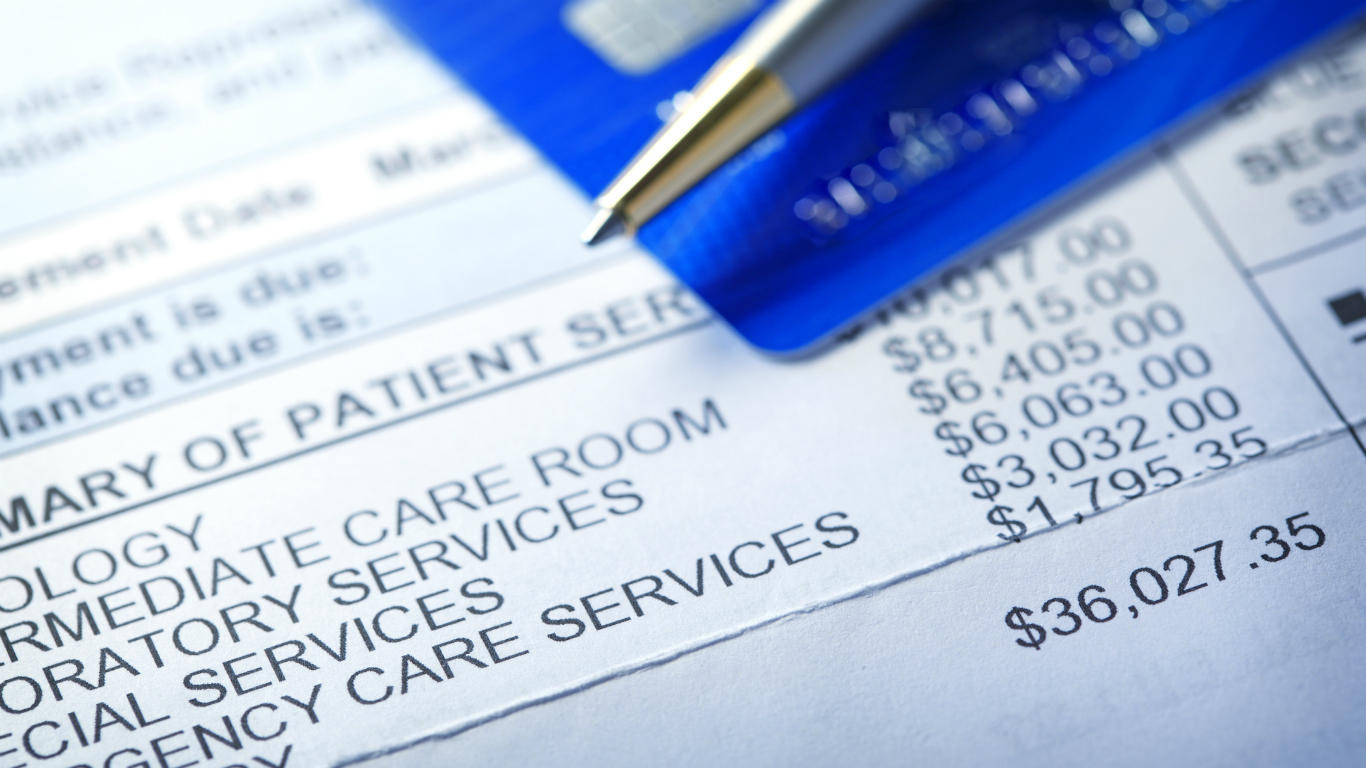
She Paid $70,000 of Her Mother’s Nursing-Home Bill Last Year. The IRS Let Her Deduct It on Her Own Return, Even Though Mom Files Her Own Taxes and Has Never Been Her Dependent
Most adult children writing six-figure checks to a nursing home assume the IRS offers nothing in return, especially when Mom files her own tax return and collects her own Social Security. The actual rule is more forgiving than almost anyone…

This post may contain links from our sponsors and affiliates, and Flywheel Publishing may receive compensation for actions taken through them.
If you spent last year writing checks for your mother’s nursing home while she filed her own tax return and collected her own Social Security, you probably assumed the money was gone. It is not. The tax code contains a specific carve-out that lets an adult child deduct medical expenses paid for a parent who is not, and never has been, their dependent. In the illustration on this page, a daughter paid $70,000 of her mother’s nursing home bill and claimed it on her own return. That result is legal, common, and routinely missed.
Why Most People Get This Wrong
Ordinarily, to deduct someone else’s medical bills, you need to claim that person as a dependent. For an elderly parent, the income test almost always fails. Social Security combined with a modest pension typically pushes a parent above the 2026 gross income threshold of $5,300, so the child assumes the door is closed.
The door is not closed. The medical expense rules contain a targeted exception: a parent who would qualify as your dependent except for having too much gross income still counts as your dependent for deducting medical expenses you paid on their behalf. The parent can file their own return and collect their own benefits, and you can still take the deduction. This exception is written into IRS Publication 502 in plain terms and traces to IRC Section 213.
The test that actually matters is support. You generally have to provide more than half of your parent’s total support for the year. Support covers housing, food, utilities, clothing, medical care, and similar living costs. The parent’s own spending from their own funds counts against your share. If Mom uses her Social Security to pay rent and groceries, that spending reduces your contribution, which is exactly why tracking the full support picture matters.
What Actually Qualifies at a Facility
Nursing home and assisted living costs are the largest bills this rule usually affects. When the principal reason for the stay is medical care, the entire cost, including room and board, is deductible as a medical expense. When the stay is primarily custodial or for personal convenience, only the portion attributable to actual medical care qualifies.
A physician’s written certification of medical necessity is important, especially for memory care and long-term care placements. Prescriptions, medical equipment, and transportation to medical appointments can also qualify. Call the facility’s billing office and ask them to break out the medical portion of the bill in writing. Most facilities do this routinely.
The Limits That Decide Whether You See a Benefit
Two limits determine whether this deduction produces real savings. First, you have to itemize on Schedule A. If you take the standard deduction, the carve-out does nothing unless your total itemized deductions exceed that bar. For 2026, the standard deduction is $16,100 for single filers and $32,200 for married couples filing jointly. Adult children paying large nursing home bills often find that those costs alone push them past the threshold, but the math has to be run. It is also worth noting that the One Big Beautiful Bill Act introduced a temporary $6,000 senior bonus deduction (available 2025 through 2028) for taxpayers aged 65 and older, which is separate from the standard deduction and could shift the itemizing calculation for some filers.
Second, medical expenses are deductible only above 7.5% of your adjusted gross income. That first tranche produces no tax benefit at all. On a $90,000 AGI, the floor is $6,750, so only expenses beyond that amount are deductible. On a large nursing home bill, the excess can still be substantial.
You must have actually paid the expense during the tax year you claim it. Pay the facility directly. Reimbursing your parent muddies the paper trail and weakens the deduction.
When Siblings Share the Bill
Very often, several children split a parent’s care and no single child provides more than half. In that case, no one meets the support test alone. The tax code allows the group to handle this through a multiple support agreement: one sibling is designated to claim the deduction while the others waive it for that year. The designated person must have contributed more than 10% of the parent’s total support, and each other contributing sibling who also provided more than 10% must sign a written declaration waiving their right to claim the parent as a dependent for that year. This is formalized on IRS Form 2120, the Multiple Support Declaration, which gets filed with the return of whoever claims the deduction.
Mistakes That Kill the Deduction
The recurring errors follow a familiar pattern. Paying the parent instead of the facility. Failing to keep a running tally of total support, then being unable to prove a majority share when it counts. Assuming that a parent who files their own return is automatically disqualified. Not requesting a medical cost breakdown from the facility. Forgetting to net out any long-term care insurance reimbursements before calculating the deductible amount.
Do the Long-Term Care Planning at the Same Time
If your parent has assets and may eventually need public assistance for long-term care, proceed carefully. Transfers and payment arrangements interact with state-administered look-back rules that can delay eligibility for Medicaid. This is also the moment to review the broader tax picture: required minimum distributions, Medicare surcharges, and inherited account rules can all be triggered by the same moves that solve the nursing home problem (we mapped nine of those quiet drains in a free retiree tax trap guide). Get state-specific advice before restructuring who pays what.
The deduction is real and routinely left on the table. Two things decide whether your family captures it: a clean support record and a facility statement that separates the medical portion of the bill. This is an illustration, not personalized advice.
Editor’s note: This article was updated to include the 2026 gross income threshold of $5,300 for the parent-as-dependent exception, the 7.5% AGI floor for medical expense deductions, the 10% minimum contribution requirement under the multiple support agreement rules (IRS Form 2120), and the 2026 standard deduction figures of $16,100 (single) and $32,200 (married filing jointly), along with the OBBBA temporary $6,000 senior bonus deduction for filers aged 65 and older.
Contact [email protected] for any questions or corrections.
David Beren has been a Flywheel Publishing contributor since 2022. Writing for 24/7 Wall St. since 2023, David loves to write about topics of all shapes and sizes. As a technology expert, David focuses heavily on consumer electronics brands, automobiles, and general technology. He has previously written for LifeWire, formerly About.com. As a part-time freelance writer, David’s “day job” has been working on and leading social media for multiple Fortune 100 brands. David loves the flexibility of this field and its ability to reach customers exactly where they like to spend their time. Additionally, David previously published his own blog, TmoNews.com, which reached 3 million readers in its first year. In addition to freelance and social media work, David loves to spend time with his family and children and relive the glory days of video game consoles by playing any retro game console he can get his hands on.