He Retired in Vermont Without Enough Saved. The State’s Shortage of Rides for Seniors Became His $3,100-a-Month Second Act
A Vermont retiree discovered that his state's most frustrating rural problem was quietly filling a hole in his retirement budget that his savings never could.

This post may contain links from our sponsors and affiliates, and Flywheel Publishing may receive compensation for actions taken through them.
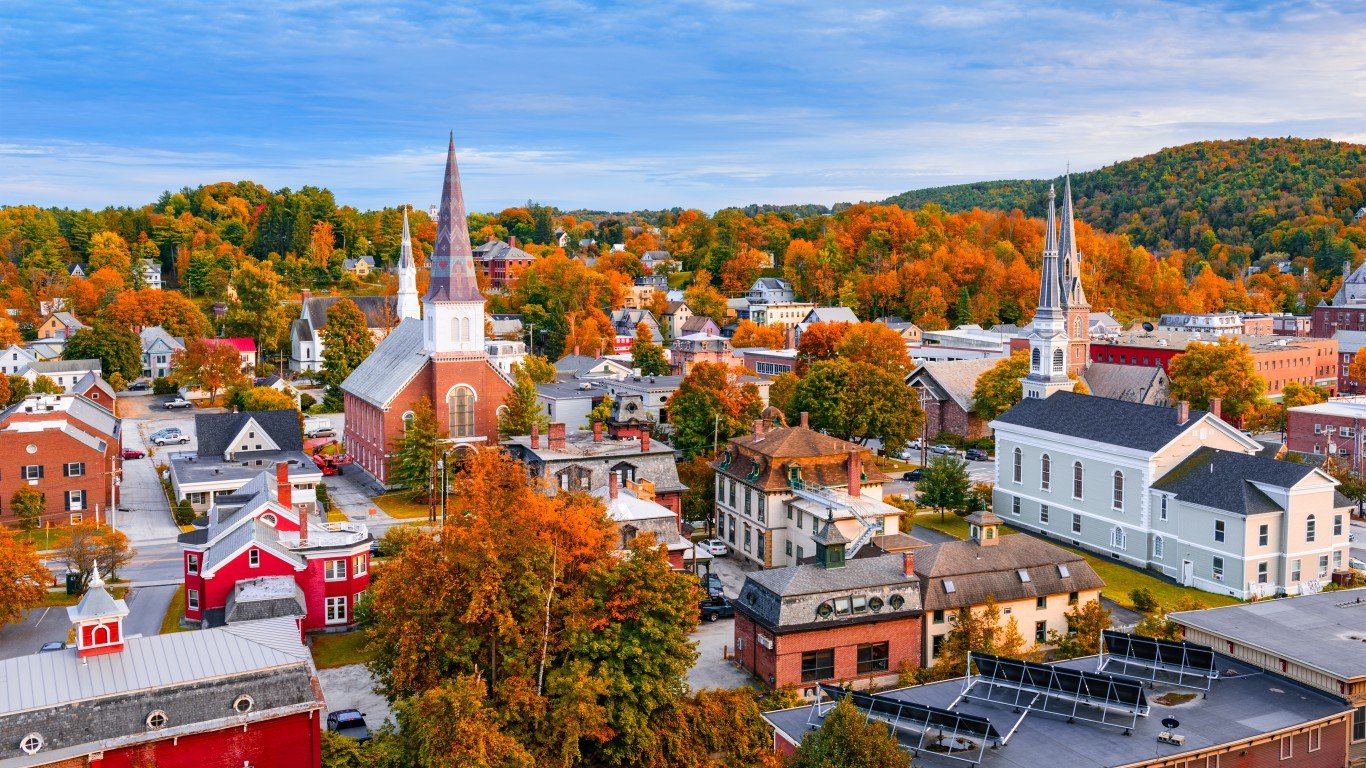
A Vermont retiree in his late 60s realized his nest egg wouldn’t cover a 25-year retirement. Instead of moving to a cheaper state or drawing down principal faster, he started driving seniors to medical appointments, grocery stores, and family visits through nonprofit volunteer-driver programs and paid rideshare work targeted at older adults. The gig brings in roughly $3,100 a month, closing the gap between his Social Security check and what his life in Vermont actually costs.
Rural New England has a well-documented shortage of transportation options for aging residents, and retirees with a reliable car, a clean driving record, and flexible time have quietly turned that shortage into part-time income. The FINRA National Financial Capability Study captured a broader pattern in its 2024 wave: the share of U.S. adults with three months of emergency savings fell to 46% from 53% in 2021, and 20% of respondents said they would work more to cover an unexpected $2,000 expense. Retirees are increasingly plugging shortfalls with labor rather than liquidating assets.
Why $3,100 a Month Changes the Retirement Math
Vermont looks affordable on paper and punishing in practice. The state’s cost-of-living index sits at roughly 98, just below the national benchmark of 100, but its per capita disposable income is only $63,484. The Tax Foundation ranks Vermont 43rd overall for tax competitiveness, with a property tax rank of 49, and its weighted state and local tax burden works out to $8,526 per capita. A retiree who owns a home outright still faces property tax bills that behave like a second mortgage.
The Bureau of Labor Statistics reports average annual household expenditures of $78,535 in 2024, up from $77,280 in 2023 and $72,973 in 2022. Social Security is only partially catching up: the 2027 COLA is tracking toward 3.3%.
$3,100 a month of earned income, roughly $37,000 a year, preserves principal during the market years that matter most. Sequence-of-returns risk is highest in the first decade of retirement. Every dollar earned in year one or two stays invested and compounds.
Earned Income vs. Drawing Down Principal
For a retiree with insufficient savings, the central question is which lever to pull first. Selling assets in a down market locks in losses that a portfolio may never recover from, the exact problem our free guide on defending the first years of retirement is built around, here. Working part-time sidesteps that risk entirely.
Fidelity’s benchmark suggests a retiree at 67 needs roughly 10x final salary to maintain lifestyle, or 8x for a downsized lifestyle. A Vermont retiree who saved 3x to 4x is short by hundreds of thousands of dollars. But $37,000 a year of earned income, sustained for 5 to 7 years, is functionally equivalent to having an extra $250,000 to $300,000 in the portfolio that never gets touched.
Two Paths That Actually Work
- Work the shortage for 5 to 7 years, then taper. Delay portfolio withdrawals until age 72 or 73, let tax-deferred balances compound, and file for Social Security at full retirement age or later if health allows. The senior-transportation niche is durable: demand is structural and durable, and it doesn’t require competing with younger workers for other jobs.
- Relocate to a lower-tax state and stop working sooner. Moving to Florida or Tennessee cuts the tax burden meaningfully. Florida’s weighted tax burden is $5,110 per capita and Tennessee’s is $5,333, versus Vermont’s $8,526. The problem: leaving family, a paid-off home, and a support network to save a few thousand a year in taxes rarely pencils out emotionally, and housing transaction costs eat the first two years of savings.
For most Vermont retirees with roots, path one wins. The earned income covers the tax disadvantage of staying put, and the work itself provides social contact that isolated rural retirees often lack.
What to Evaluate First
Calculate the exact monthly gap between guaranteed income (Social Security, any pension) and non-negotiable expenses (property tax, insurance, healthcare, food, utilities). If that gap is under $3,000, a part-time driving or delivery role can close it without touching investments. Second, delay Social Security if the earned income makes it feasible. Each year of delay past full retirement age adds roughly 8% to the lifetime benefit, a guaranteed return no portfolio can match.
Treat a retirement shortfall first as an income problem. Selling equities in year one to cover a $3,000 monthly gap can permanently impair a 25-year retirement. Earning that $3,000 instead, even for a few years, often solves it.
Contact [email protected] for any questions or corrections.
Jake has been been working in financial media for almost 15 years. He focuses on all things personal finance for 24/7 Wall St. with high hopes to educate and entertain. Most recently, Jake spent 12 years working various roles at The Motley Fool. He started copy editing fool.com content, worked on premium and marketing campaigns, and helped launch The Ascent, a personal finance brand.
His work has been featured on platforms like MSN, Yahoo Finance, USA Today, and more. He's written about credit cards, social security, ETFs, savings accounts, and just about anything else you can imagine when thinking about money. Jake love to cook, play golf, and tell people he's never had a cavity. (It's true!)