The Retirees Who Left Texas for Good Say the Property Tax Bill Was Only Half of It
Retirees who moved to Texas for the no-income-tax promise often pack up again within a few years, and property taxes are only the beginning of the explanation. The costs that actually break the budget are the ones that refuse to…

This post may contain links from our sponsors and affiliates, and Flywheel Publishing may receive compensation for actions taken through them.
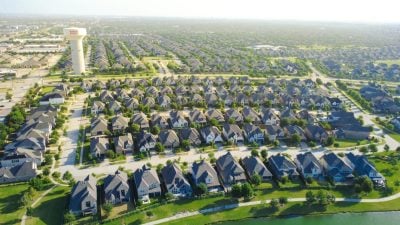
Retirees who moved to Texas for the no-income-tax pitch often leave within five to seven years. Property tax is always the first reason cited, but rarely the only one. This article examines what a Texas retirement actually costs a fixed-income household and what protections the state offers long-term residents.
Property Tax First, Because It Earns the Reputation
The Tax Foundation ranks Texas at 40 for property tax among the fifty states. What coverage often skips is the relief available to long-tenured older homeowners. At age 65, Texas homeowners qualify for an additional homestead exemption, and the school district portion of the tax bill is frozen at that year’s amount. A separate deferral allows qualifying older owners to postpone property tax entirely while living in the home, though interest accrues and the balance is settled from the estate or upon sale.
A couple who homesteaded in 2005 and turned 65 a decade ago faces a different bill than one who closed on a similar house last year. The Case-Shiller national index sits at 336.7, meaning new arrivals buy into assessed values that long-tenured neighbors were shielded from years ago.
What Replaces the Income Tax
Texas has no state income tax. Revenue comes from property tax, insurance premiums, and utility bills. On a fixed income, this composition matters more than the total. Property tax, homeowners insurance, and utility bills do not adjust when portfolio withdrawals fall.
Homeowners insurance in Texas is priced against wind, hail, and severe convective storms. Premiums have risen over recent renewal cycles, and older houses with older roofs increasingly face nonrenewal. The bill does not shrink when your portfolio does. In addition, cooling costs do not flex. ERCOT residential customers use roughly 2,689 kWh in the first quarter and over 3,100 kWh in the peak summer quarter, with residential prices near 17.7 cents per kilowatt-hour. A retiree dependent on continuous cooling or powered medical equipment is exposed to grid events in ways a working-age household is not. Add gasoline at $4.48 per gallon nationally in a car-dependent metro, and transportation costs stay stubborn.
Healthcare access also matters, as specialist availability is excellent inside Houston, Dallas, Austin, and San Antonio medical corridors. Outside these areas, rural hospital closures have thinned the network. A retiree with a chronic condition needs to verify where the nearest subspecialist practices.
Math on a Fixed Income
Texas registers a cost-of-living index of 97.057, below the national average, and looks better than Florida at 103.414. It looks less favorable than Tennessee at 91.87 or Oklahoma at 87.843, both no-income-tax or low-income-tax alternatives with lower fixed housing carrying costs. The BLS reports average annual household expenditures of $78,535, and for a Texas retiree that budget is weighted heavily toward the three lines that do not fall when withdrawals fall.
If you draw $120,000 a year from tax-deferred accounts, the missing state income tax offsets property tax and insurance. If you draw $50,000 and rely on Social Security for the rest, the no-income-tax benefit collapses while property and insurance bills stay full size. That is the crossover most departing retirees describe.
Who Should Still Go, and What Leaving Costs
Texas works for retirees who homestead early and hold, who buy inside a major medical corridor, and whose withdrawal rate is high enough that the absent income tax outweighs other costs. Selling costs run about six percent, including commission, title, and repairs. The accumulated homestead exemption, school tax ceiling, and any deferral protection do not travel. A prospective buyer should get the actual post-sale tax bill for the specific address, an insurance quote on the roof and ZIP code, and confirm exemption and ceiling filing deadlines with the county before closing.
The single move that changes the arithmetic for an older Texas owner is filing the age-65 additional homestead exemption and school tax ceiling the year you qualify. Done on time, it converts an escalating bill into a capped one for as long as you stay. Skip it or file late, and you’re left with the difference between the retirement Texas advertises and the one that pushes people out.
Contact [email protected] for any questions or corrections.
David Beren has been a Flywheel Publishing contributor since 2022. Writing for 24/7 Wall St. since 2023, David loves to write about topics of all shapes and sizes. As a technology expert, David focuses heavily on consumer electronics brands, automobiles, and general technology. He has previously written for LifeWire, formerly About.com. As a part-time freelance writer, David’s “day job” has been working on and leading social media for multiple Fortune 100 brands. David loves the flexibility of this field and its ability to reach customers exactly where they like to spend their time. Additionally, David previously published his own blog, TmoNews.com, which reached 3 million readers in its first year. In addition to freelance and social media work, David loves to spend time with his family and children and relive the glory days of video game consoles by playing any retro game console he can get his hands on.