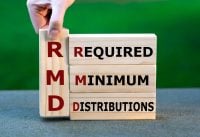
Turning 73 in 2026? Here’s What Your First RMD on a $500,000 IRA Actually Looks Like
Your first required minimum distribution at 73 does more than shrink your IRA balance. It can quietly push your Medicare premiums higher two years later and stack a second taxable distribution into the same calendar year if you wait too…

This post may contain links from our sponsors and affiliates, and Flywheel Publishing may receive compensation for actions taken through them.

If you turn 73 this year, the IRS finally comes calling on your traditional IRA. After decades of tax-deferred compounding, required minimum distributions (RMDs) begin. The example in the headline: $500,000 sitting in a traditional IRA on the last business day of 2025.
This scenario is common enough that Investopedia ran a piece this month asking exactly how large RMDs are on a $500,000 IRA and when they start. Retirement forums see the same question weekly: do I have to take it this year, or can I wait until next April?
Here is the compact version of what matters:
- Turning 73 in 2026 (the SECURE 2.0 Act starting age for RMDs)
- Traditional IRA balance on Dec. 31, 2025: $500,000
- First distribution deadline: no later than April 1 of the year after you turn 73 (verify with IRS Publication 590-B)
- Every dollar withdrawn is taxed as ordinary income
- Roth IRAs held by the original owner have no lifetime RMD
The stakes: bracket creep, Medicare surcharges two years later and penalties if you miss the deadline. We put the full playbook for defusing that first-year bill in a free guide here.
Your Divisor Is the Only Number That Actually Matters
The IRS takes your December 31, 2025 balance and divides it by a life expectancy factor from the Uniform Lifetime Table in Publication 590-B. For a first-year filer at 73, that factor is published. The calculation is: $500,000 ÷ (IRS Uniform Lifetime Table factor for age 73) = your first RMD.
On a $500,000 account, the result typically lands in the high teens of thousands of dollars, stacking on top of Social Security, pensions, dividends and other taxable income.
Now for the tax reality. The 2026 standard deduction is $32,200 for married couples filing jointly and $16,100 for single filers. If your other income already fills the 12% bracket, the RMD will push its top dollars into 22% or 24%.
Medicare compounds the pain. Your 2026 modified adjusted gross income determines your 2028 Medicare Part B and Part D surcharges. A single filer whose MAGI crosses $109,000 pays a Part B total premium of $284.10 per month, rising to $405.80 once MAGI exceeds $137,000. The Part D surcharge starts at $14.50 per month once MAGI passes $109,000 for singles or $218,000 for joint filers. An RMD that nudges you one dollar past a threshold means paying that surcharge every month for a full year, two years later. This is why the divisor conversation is really a bracket-and-IRMAA conversation.
Three Choices That Change the Outcome
- Take the first RMD in the calendar year you turn 73: Deferring the initial distribution to April 1 of the next year sounds like a favor but is usually a trap. Delay it and you take two RMDs in 2027: the deferred 2026 amount plus the required 2027 amount. Two distributions in one tax year can double bracket damage and IRMAA exposure.
- Use a qualified charitable distribution (QCD): If you give to charity, sending money directly from your IRA to a qualifying charity counts toward the RMD and is excluded from taxable income. For charitably inclined retirees, this is the single most tax-efficient RMD tactic available.
- Withhold federal tax directly from the distribution: Your IRA custodian can withhold whatever percentage you specify. Withholding from an IRA distribution is treated as paid evenly throughout the year, so a December withholding can cover shortfalls on other income and head off an underpayment penalty.
Moves to Make Before the End of the Year
Pull the Dec. 31, 2025, statement now and confirm the balance. The RMD is calculated on that specific figure.
Project 2026 taxable income with the RMD included and compare it against the IRMAA thresholds and 2026 bracket edges. If you land just over a threshold, look for ways to reduce other income: harvesting capital losses, deferring a Roth conversion, or timing a QCD to bring MAGI back under the line.
Do not miss the deadline: The excise tax on a missed RMD is a percentage of the shortfall. It is one of the harshest self-inflicted penalties in the tax code and entirely avoidable with a calendar reminder.
One last reminder on the Roth IRA: If the $500,000 sat in a Roth IRA instead of a traditional IRA, and you were the original owner, none of this would apply during your lifetime. That single distinction is why many retirees prioritize Roth conversions in the low-income window between retirement and age 73.
Contact [email protected] for any questions or corrections.
Joel South covers large-cap stocks, dividend investing, and major market trends, with a focus on earnings analysis, valuation, and turning complex data into actionable insights for investors.
He brings more than 15 years of experience as an investor and financial journalist, including 12 years at The Motley Fool, where he served as an investment analyst, Bureau Chief, and later led the Fool.com investing news desk. He has also co-hosted an investing podcast and appeared across TV and radio discussing market trends.