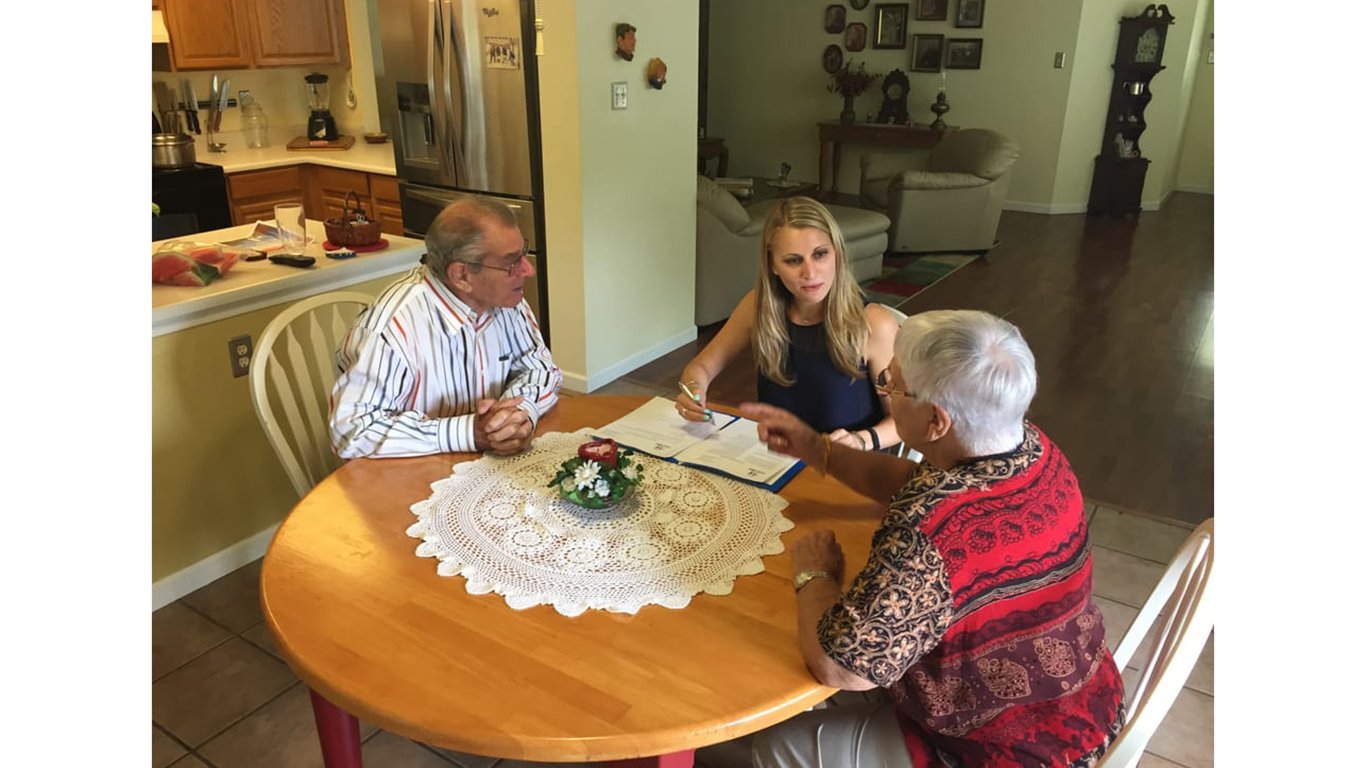
They Were Married 54 Years and Entered the Same Nursing Home Four Months Apart. With No Spouse Left at Home, Medicaid’s Spousal Protections Vanished and the Couple Kept $3,000 Between Them
Federal law gave this couple six figures in protected savings the moment he entered the nursing home. Four months later, when she followed him through the same door, a single change in legal status erased nearly all of it.

This post may contain links from our sponsors and affiliates, and Flywheel Publishing may receive compensation for actions taken through them.

Here’s a situation elder law attorneys describe often. A husband and wife have been married 54 years. He moves into a nursing home first and qualifies for Medicaid. She follows him four months later. Once she enters long-term care too, the spousal protections that sat under their savings while she lived at home no longer apply.
Those protections are Medicaid’s spousal impoverishment rules. Federal law covers them to an “institutionalized spouse” only when that person is “married to a spouse who is not in a medical institution or nursing facility.” Once both spouses live in care, neither one counts as the spouse at home. In a state that uses a $3,000 resource limit when both spouses need institutional coverage, that can leave them with just $3,000 between them.
Spousal Impoverishment Rules Protect Whoever Stays Home
The rules have one job: keeping the spouse at home from going broke while paying for the other spouse’s care. On her podcast in August 2026, Suze Orman described them as “rules that let at-home spouses keep a share of their assets and income so you aren’t left destitute.”
The asset protection is called the Community Spouse Resource Allowance (CSRA). In 2026, the spouse at home can keep up to $162,660 in countable assets. The federal minimum is $32,532, and each state’s formula sets the exact amount. In most states, the spouse in the nursing home keeps just $2,000.
The income protection is the Minimum Monthly Maintenance Needs Allowance (MMMNA). When the at-home spouse’s own income runs short, part of the other spouse’s income goes to her instead of the care facility. The minimum is $2,705 a month, effective July 1, 2026, and the 2026 maximum is $4,066.50.
Both allowances depend on one status: community spouse. Under federal law, that means the spouse who remains outside a medical institution or nursing facility. A 54-year marriage doesn’t earn the protection by itself.
Second Admission Wipes Out the $162,660 Allowance
When she moved into long-term care, the couple no longer had a community spouse. With nobody left at home to protect, the savings Medicaid had let her keep became countable again, this time against her own application.
States handle a couple’s second application differently. Texas, for example, uses a $3,000 resource limit for a couple in an institutional living arrangement. Other states may test each spouse separately. Either way, the much larger resource protection available while one spouse remained at home is gone.
Monthly Income Allowance Ends the Same Day
Families often miss the income allowance. While she was at home, part of his pension and Social Security could be set aside for her through the community-spouse income allowance. That protection ends when she enters care too.
From then on, each spouse generally contributes most of his or her own income toward care after allowed deductions. Each keeps a personal needs allowance, and the state sets that amount. The federal floor is $30 a month. Kansas pays $62. That covers haircuts and toothpaste, and that’s about it.
Medicare can’t fill the gap. Medicare is the government program that covers people 65 and older, and it doesn’t cover long-term custodial care. That bill falls to Medicaid, the program for people with very limited assets that the federal and state governments fund together.
Snapshot Date Locks In the Math at the First Admission
Medicaid takes a financial snapshot when one spouse first enters long-term care for a stay expected to last at least 30 days. For this couple, that happened when he entered the nursing home. The savings they had at that point helped determine how much she could keep while she was still living at home.
That made the four months between admissions especially important. His move went smoothly, so the family had little reason to think hers would create a new financial problem. But while she was still at home, they had time to look at what would happen to those protected savings if she needed care too.
That can include steps such as setting aside money in an irrevocable funeral trust. Giving money to the children is much riskier because Medicaid reviews transfers made during the five years before an application. Other rules, including how annuities and an empty house are treated, vary by state.
A family that talks with an elder law attorney after the first spouse enters care has more room to make those decisions deliberately. Waiting until the second admission can mean discovering that much of the financial picture has already changed.
Contact [email protected] for any questions or corrections.
Gerelyn Terzo is the author of dividend investing handbook "Dividend Investing Strategies: How to Have Your Cake & Eat It Too." A veteran financial journalist, she covers agri-finance for outlets like Global AgInvesting and the broader stock market and personal finance for 24/7 Wall Street. She began at CNBC and later helped launch Fox Business in New York. Gerelyn currently resides in Woodland Park, Colorado and dabbles in nature photography as a hobby.