She Married Him at 74 With a Prenup Protecting Her $600,000. When He Needed a Nursing Home at 80, Medicaid Told Her a Prenup Doesn’t Exist in Its Rules
She kept her $600,000 in a separate account, had her new husband sign a prenup before the wedding, and felt confident her savings were protected. Then he needed a nursing home, and Medicaid rewrote every assumption she had made.

This post may contain links from our sponsors and affiliates, and Flywheel Publishing may receive compensation for actions taken through them.

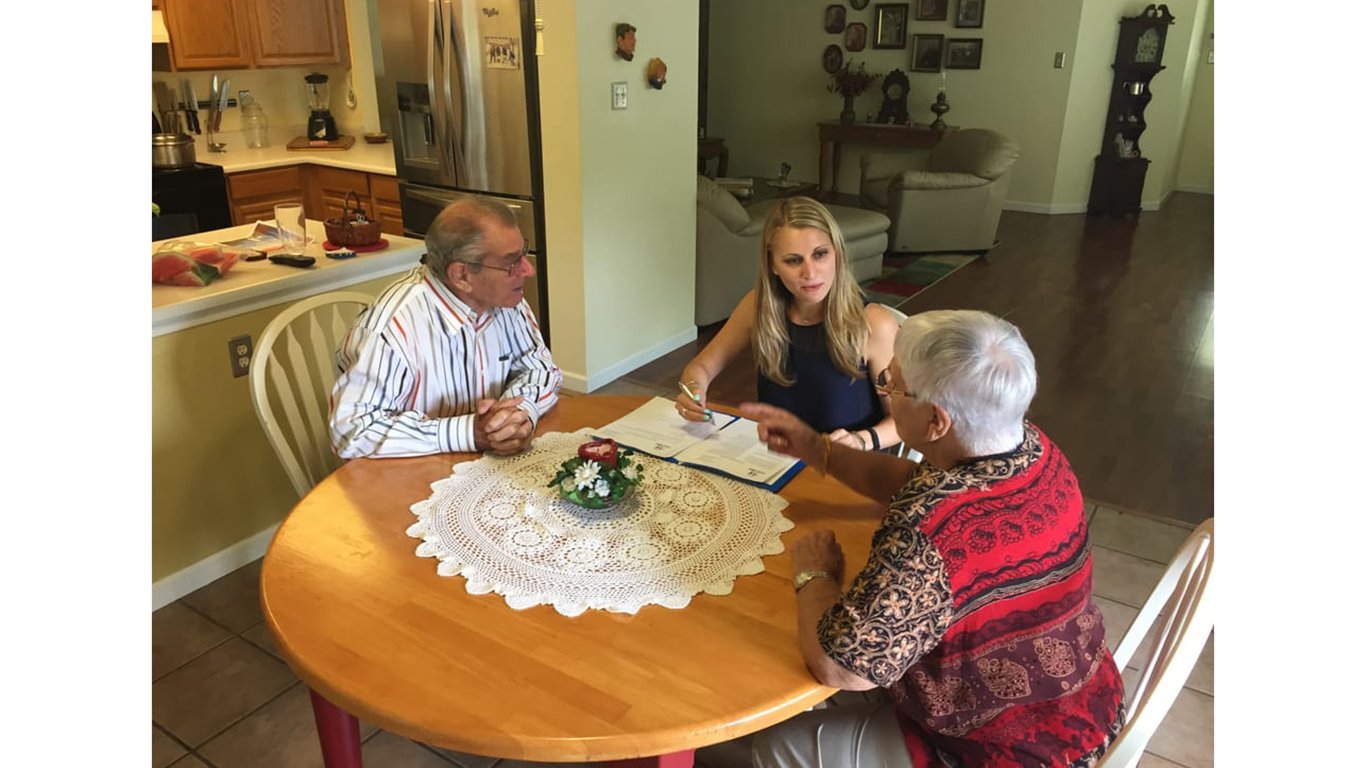
A widow remarries at 74 with $600,000 in savings. She signs a prenuptial agreement keeping every dollar in her name for her children from her first marriage. Six years later, her second husband has advanced dementia and needs a nursing home. She hands the Medicaid caseworker the prenup. The caseworker hands it back. As far as Medicaid is concerned, the document may as well not exist.
This shock plays out in thousands of later-in-life marriages, and it is entirely predictable once you understand how federal Medicaid law is structured. A prenup is a private contract between two spouses. Medicaid is not a party to it. Federal Medicaid law imposes a statutory spousal obligation that private parties cannot waive by contract, and that obligation drives the entire long-term care eligibility calculation. The names on the accounts and the language in the prenup simply do not change the answer.
Why Medicaid Ignores the Prenup at the Resource Assessment
When one spouse enters a nursing home and applies for Medicaid long-term care coverage, the state performs a resource assessment: a snapshot of everything the couple owns on the day the ill spouse is institutionalized.
At that assessment, Medicaid combines the couple’s countable resources (bank accounts, brokerage accounts, CDs, and most investment property) regardless of whose name is on them and regardless of what any private agreement says. Her $600,000 IRA and his $40,000 checking account are added together. The prenup does not carve her money out of that pile.
Income works differently. Income follows the name on the check. His Social Security is his; her pension is hers. Resources get combined, income does not. That distinction trips up more couples than almost any other Medicaid rule.
What the Prenup Still Does
The prenup is not worthless. It still governs what happens on divorce and at death. It can direct that her assets pass to her children rather than to her surviving husband’s estate, and in some states it affects exposure to estate recovery, the process by which Medicaid tries to recoup what it paid by making a claim against the deceased Medicaid recipient’s estate. Estate recovery rules vary sharply by state, and an elder law attorney in the specific state has to answer that question.
What Actually Protects the Healthy Spouse
The protections that keep the at-home spouse (the community spouse, in Medicaid’s language) from being wiped out are statutory, not contractual. The Community Spouse Resource Allowance lets the community spouse keep a share of the couple’s combined countable resources up to a federal maximum that adjusts every January 1. For 2026, that ceiling is $162,660, with a federal floor of $32,532. The specific amount a spouse can keep depends on how much the couple owns together and on the state they live in, since states may set any figure within the federal range.
The Minimum Monthly Maintenance Needs Allowance adds another layer of protection for income. If the community spouse’s own monthly income falls below a federally set floor, the institutionalized spouse’s income is diverted to close the gap before the nursing home gets paid. For 2026, that floor is $2,705 per month in most states, and it can rise as high as $4,066.50 per month when the community spouse’s housing costs are high. Congress has extended these spousal impoverishment protections through September 2027. Those allowances are the actual firewall, not the prenup.
Tools That Genuinely Work in a Second Marriage
Elder law attorneys point to a short list when a later-in-life couple wants to protect one spouse’s premarital assets for children from a prior marriage:
- Irrevocable trusts funded well outside the five-year Medicaid lookback. Rules are complex and vary state to state, and the trust must be genuinely irrevocable.
- Medicaid-compliant annuities that convert a countable lump sum into an income stream for the community spouse.
- Spousal refusal, available only in a minority of states (notably New York and Florida), lets the community spouse formally decline to contribute assets to the ill spouse’s care. It is grounded in federal law but actively practiced in only those two states.
- A prenup paired with actual asset segregation done years before either spouse needs care. The paper alone does nothing; retitling and time do the work.
Hard Truth About Whom the Law Protects
Medicaid’s spousal protections exist to keep the healthy spouse from destitution. They do not exist to preserve an inheritance for children from a prior marriage. A couple that marries at 74 with children from earlier lives on both sides has to accept that gap and plan around it, or accept that the surviving spouse’s care may consume assets the prenup told everyone were safe.
This is a conversation for before the wedding, not after the diagnosis. Once one spouse has a dementia workup on the calendar, the lookback clock is already the enemy, and the menu of options shrinks fast.
Editor’s note: This article was updated to include the specific 2026 federal Minimum Monthly Maintenance Needs Allowance figures ($2,705 per month floor, $4,066.50 per month ceiling) and to note that Congress has extended spousal impoverishment protections through September 2027.
Contact [email protected] for any questions or corrections.
Jake has been been working in financial media for almost 15 years. He focuses on all things personal finance for 24/7 Wall St. with high hopes to educate and entertain. Most recently, Jake spent 12 years working various roles at The Motley Fool. He started copy editing fool.com content, worked on premium and marketing campaigns, and helped launch The Ascent, a personal finance brand.
His work has been featured on platforms like MSN, Yahoo Finance, USA Today, and more. He's written about credit cards, social security, ETFs, savings accounts, and just about anything else you can imagine when thinking about money. Jake love to cook, play golf, and tell people he's never had a cavity. (It's true!)