The Hidden Costs of Retiring Near the Grandkids Will Not Show Up Until the First Holiday
The first Thanksgiving near the grandkids feels like a win, but whatever role you quietly accept at that table tends to become a financial obligation that compounds every year after.

This post may contain links from our sponsors and affiliates, and Flywheel Publishing may receive compensation for actions taken through them.
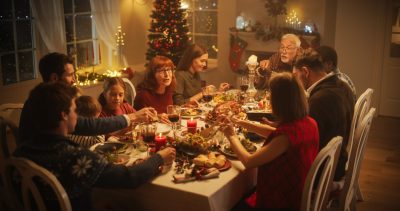
The first Thanksgiving in a new home near the grandkids brings a full table and a growing pile of receipts. Plenty of retirees who move near the grandkids picture exactly this scene. Fewer realize this is the day their role in the family gets set, and whatever happens this year tends to become the rule for every year after. Retiring near the grandkids comes with a lot, and the childcare expectation, the running cost of being the local grandparent, and the people who end up moving back are only part of it. The first holiday is where a lot of it gets settled, and it quietly decides more than most couples expect.
Living Closest Makes You the Default Host
Surprisingly, or perhaps unsurprisingly, food is the cheap part. The American Farm Bureau Federation’s 2025 survey priced a classic Thanksgiving dinner for 10 at $55.18, or about $5.20 a person. Double the guest list, and the core groceries run about $110.36. That won’t sink anyone’s retirement, but the surrounding season adds more: The National Retail Federation found shoppers planned to spend an average of $890.49 in 2025 on gifts, food, decorations, and other holiday items, and the hosting household picks up the extra food, decorations, and spare bedding on top of its own share.
The house is where the real money goes. Many buyers moving near family choose the extra bedroom, bigger dining room, or finished basement just so everyone fits at the holidays. That space gets used a few days a year, but property tax, insurance, utilities, and maintenance on it run all twelve months. With the Case-Shiller national home price index at a record 337.3, up 1.9% from a year earlier, those extra square feet are being bought near the top of the market. Call it the host premium: a fixed cost tied to a role, and you pay it whether anyone shows up.
Other Grandparents Get the Visit While You Handle the Logistics
Many grandchildren have two sets of grandparents in the picture, and anecdotal accounts suggest a familiar pattern. Holidays rotate year by year or get split across a single day. The closest family handles the logistics, the traveling family becomes the special occasion, and the remote grandparents show up as guests.
The local ones become the venue. In money terms, hosting costs more than visiting, because the host covers food, beds, and cleaning while the visitor covers one trip. A retiree who moved specifically to be present can land in an unnamed competition where the other side’s rare visit feels like an event, and the local side’s weekly presence fades into the background.
First-Year Gifts Become the Baseline
Big spending in year one usually comes from gratitude for the welcome or nerves about the new arrangement. Either way, it sets the bar. A survey by The Senior List found grandparents spend an average of $4,000 a year on their grandchildren. Paying $4,000 a year at a 4% withdrawal rate (the share of savings you pull out each year) requires about $100,000 in the portfolio. At a more conservative 3.5% withdrawal rate, it’s closer to $114,000.
Travel You Thought You’d Given Up
Moving close often leaves the trips in place. Retirees still travel when it’s the other grandparents’ year, to see the adult child who didn’t move, or to whoever is hosting. U.S. airfares in August were 23% higher than a year earlier, according to the Labor Department. AAA puts the full cost of owning and running a new vehicle at $12,863 a year, or $1,071.92 a month, and pump prices are sitting at record highs for autumn.
Decide the Terms Before the Turkey Goes In
The conversation that heads off most of this belongs in the weeks before the first holiday. Who hosts, and does hosting rotate? Do costs get shared, with the adult kids bringing dishes or chipping in for groceries? What’s the gift plan: a cap per child, one gift for the whole family, or experiences instead of things?
How do the two sides divide Thanksgiving, Christmas, and the rest? Families who settle this out loud in year one tend to avoid the slow resentment that builds up when the pattern sets itself by accident. That observation is qualitative.
Then put it in the budget. Treat the role as its own line item, with one annual number decided in advance: hosting, the carrying cost of the rooms you bought for gatherings, gifts, and the travel you still do. You can fund that number like any other fixed expense. With a 4% withdrawal rate, each $4,000 of annual role spending needs about $100,000 set aside. For early retirees or those expecting a long retirement, a 3.5% rate means roughly $114,000 for that same $4,000 (the full case for retiring the 4% rule, and what to use in its place, is laid out in a free report here). If the extra bedrooms push the number higher, the capital you need rises with it. Our earlier coverage handles the broader running costs.
Here’s one way to handle the transition. Price the role right alongside the house, and agree on the terms before the family comes. Then set aside capital to cover that annual number, and draw it down at a pace that fits how long your retirement could run. It’s worth getting this right early, because the first holiday often sets the pattern for the ones that follow.
Contact [email protected] for any questions or corrections.
David Beren has been a Flywheel Publishing contributor since 2022. Writing for 24/7 Wall St. since 2023, David loves to write about topics of all shapes and sizes. As a technology expert, David focuses heavily on consumer electronics brands, automobiles, and general technology. He has previously written for LifeWire, formerly About.com. As a part-time freelance writer, David’s “day job” has been working on and leading social media for multiple Fortune 100 brands. David loves the flexibility of this field and its ability to reach customers exactly where they like to spend their time. Additionally, David previously published his own blog, TmoNews.com, which reached 3 million readers in its first year. In addition to freelance and social media work, David loves to spend time with his family and children and relive the glory days of video game consoles by playing any retro game console he can get his hands on.