Some People Retire To Alaska. But Could You Afford It?
A 67-year-old retiree with a $1 million portfolio, no pension, and a projected Social Security benefit of $2,800 a month has a destination in mind: Anchorage, Alaska. The attraction is easy to understand. Alaska offers dramatic scenery, abundant wildlife, long summer…

This post may contain links from our sponsors and affiliates, and Flywheel Publishing may receive compensation for actions taken through them.
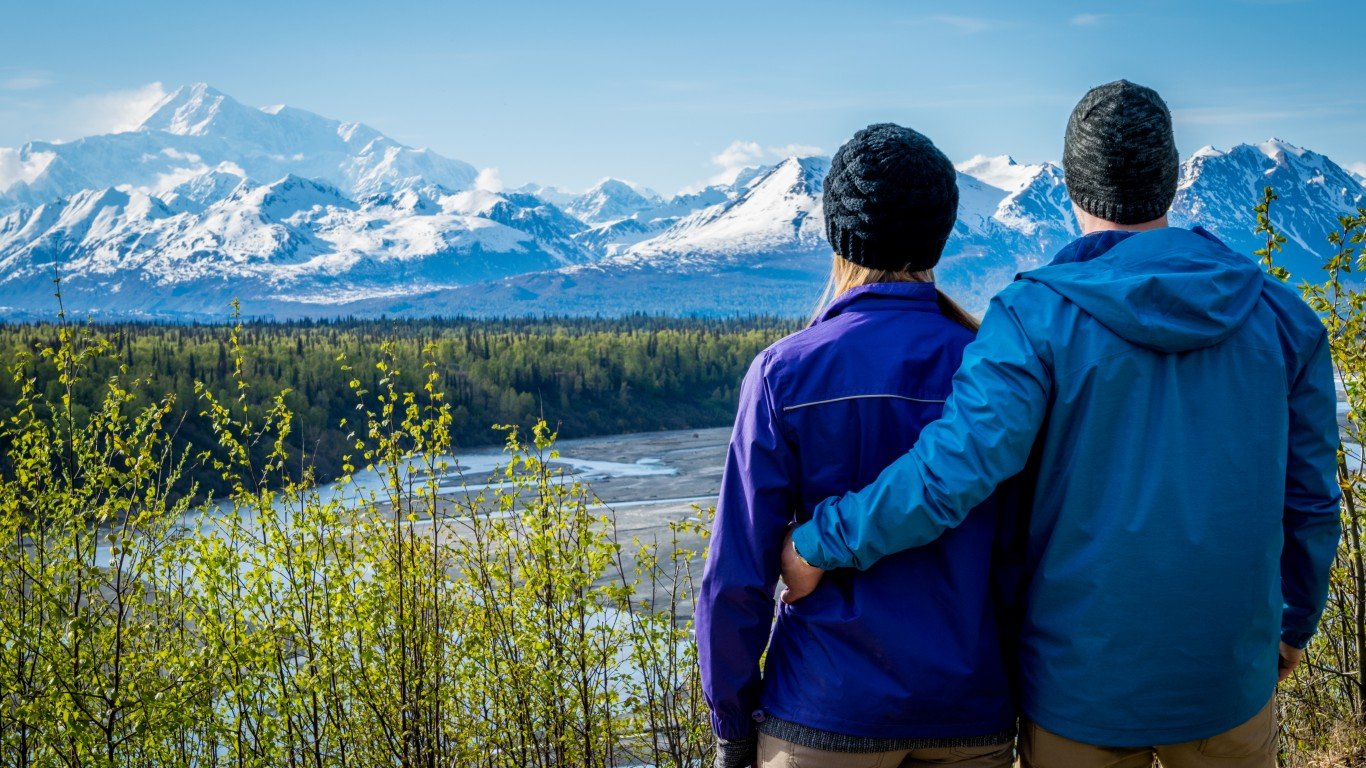
A 67-year-old retiree with a $1 million portfolio, no pension, and a projected Social Security benefit of $2,800 a month has a destination in mind: Anchorage, Alaska. The attraction is easy to understand. Alaska offers dramatic scenery, abundant wildlife, long summer days, and a sense of space that is increasingly difficult to find elsewhere. The question is whether a retirement portfolio that would work comfortably in much of the Lower 48 can support life at America’s northern edge. Let’s run the numbers.
The Alaska Cost Surprise
Most national cost-of-living rankings make Alaska look only slightly more expensive than the average state. The problem is that statewide averages can hide the realities of living in Anchorage, where distance affects almost everything.
Groceries typically cost more than in the Lower 48 because much of the state’s food travels thousands of miles before reaching store shelves. Utilities and home heating can also surprise new residents, especially during long winters. Insurance, home repairs, and many professional services carry a premium simply because labor and materials are harder to move around. Even visiting family becomes more expensive when a routine round-trip flight can cost hundreds of dollars per person.
Healthcare is the other major consideration. Medical costs in Alaska are among the highest in the country, specialist availability can be limited, and some complex procedures require travel to Seattle or another major medical center. For retirees, that means budgeting not only for healthcare itself, but also for the possibility of medical travel.
What You Get For The Money
Anchorage offers something increasingly rare in America: a real city surrounded by real wilderness. Nearly 300,000 people live there, yet moose and bears still wander through neighborhoods and snow-capped mountains dominate the skyline. Retirees can spend their days hiking, fishing, boating, or simply enjoying a level of natural beauty and open space that few places can match. Add endless summer daylight and winter views of the northern lights, and Alaska delivers a lifestyle that cannot be replicated in Florida, Arizona, or the Carolinas.
The Down Sides of Sub-Arctic Life
The tradeoff is that Alaska demands something in return. Around the December solstice, Anchorage receives barely five and a half hours of daylight, and some newcomers struggle with the long, dark winter and the isolation that can come with it. Travel to see family is expensive, healthcare options are more limited than in major metropolitan areas, and the outdoors requires caution. Moose regularly wander through neighborhoods, bears are a reality on many trails, and basic wildlife awareness and precautions become part of daily life. Alaska offers extraordinary beauty and freedom, but it also requires a level of self-reliance that many Americans have never experienced.
The Retirement Math
Social Security delivers $33,600 a year. A 4% withdrawal on a $1 million portfolio adds $40,000, for gross household income near $73,600. Alaska levies no state income tax, so the only tax drag is federal, roughly $4,000 to $6,000 depending on the mix of traditional and Roth withdrawals. Net spendable: call it $68,000.
A workable Anchorage budget for a single retiree who owns the home outright:
Property taxes, insurance and maintenance: $9,000; utilities and heating fuel: $5,500; groceries: $8,500; healthcare including the $202.90 monthly Part B premium, a supplement, Part D and out-of-pocket: $7,000; transportation: $5,000; travel to see family: $5,500; auto and umbrella insurance: $2,000; entertainment: $4,000; reserves for roof, vehicle replacement, and emergencies: $3,000. Total: roughly $55,500 before income taxes, or $61,000 after. It fits, with a thin cushion.
If renting a two-bedroom at $1,900 a month, housing climbs by $14,000 and the plan stops working without lifestyle cuts.
Stress test it. Assume 3% inflation, a 30-year horizon to age 95, and a market drawdown in the first five years. With services inflation running 3.49% and energy volatile, the real risk is sequence of returns. A 25% portfolio hit in year three, combined with 4% withdrawals, can shave a decade off portfolio life. A safer posture is 3.5% withdrawals in early years, with 10-year Treasury at 4.53% giving cash and short-duration ladders real work as a sequence-risk buffer.
The Permanent Fund And The Senior Exemption
Alaska residency, established after meeting the state’s requirements, can qualify retirees for the Permanent Fund Dividend, an annual payment funded by Alaska’s oil revenues. The amount varies from year to year but has often fallen in the range of roughly $1,300 to $1,700 a year per resident.
More importantly for many homeowners, Anchorage exempts the first $150,000 of assessed value from property taxes for residents age 65 and older, reducing annual property tax bills by roughly $2,000. Combined with Alaska’s lack of a state income tax on portfolio withdrawals and Social Security benefits, those advantages make the state’s tax picture considerably more attractive than its cost-of-living statistics might suggest, helping turn a borderline retirement budget into a workable one.
Who Should Never Retire To Alaska
Alaska is not for everyone. It is a difficult fit for retirees who need frequent specialist care, cannot tolerate long winters, or expect to see grandchildren every few weeks rather than a few times a year. It is also a risky choice for anyone whose retirement budget depends on buying a home they do not yet own. The isolation is real, and it rarely shows up in spreadsheets until the second winter.
Is $1 million enough? For a 67-year-old homeowner willing to withdraw 3.5% to 4% annually, take advantage of Alaska’s tax benefits, collect the Permanent Fund Dividend, and treat trips to the Lower 48 as a regular budget item rather than an occasional luxury, the answer is yes.
Alaska is expensive because Alaska is Alaska. The mountains, the wildlife, and the sense of space are not available at a discount. For retirees who genuinely want that life, a carefully structured retirement can afford it.
Contact [email protected] for any questions or corrections.
Drew Wood has edited or ghostwritten nine books and published more than 1,500 articles on investing, business, politics, travel, world cultures, wildlife, and earth science. He holds a doctorate and four master's degrees and has nearly 30 years of college teaching experience. His travels have taken him to 25 countries, including three years living in Ukraine.