The Portfolio Blueprint for $9,600 a Month in Dividend Income Without Selling a Single Share
Chasing the highest yield feels like the fastest route to a $9,600 monthly paycheck, but the math reveals a counterintuitive trap that could leave you earning less a decade from now than the investor who settled for far lower payouts…

This post may contain links from our sponsors and affiliates, and Flywheel Publishing may receive compensation for actions taken through them.
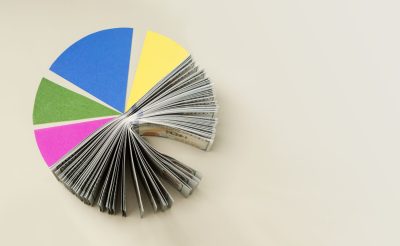
To earn a $9,600 monthly dividend check, or $115,200 a year, you’ll want to know exactly how much you need invested. If you want to collect this amount without selling shares, the portfolio’s distributions must cover the full amount each year. This is a definite goal, so you need to know the capital each yield level requires, followed by a six-fund portfolio built with real payout data.
Three Yield Levels, Three Price Tags
Conservative: 3% to 4%
At the conservative level, $115,200 divided by 0.035 is about $3,291,000. This level includes dividend-growth funds and high-quality payers. The iShares Core High Dividend ETF (NYSEARCA:HDV) fits here at a forward yield near 4.2% and an expense ratio of 0.08%. You need the biggest check up front, and both the income and the principal tend to grow. HDV gained 29% over the past year.
Moderate: 5% to 7%
Choose a more moderate path with $115,200 divided by 0.06 is $1,920,000. This level covers REITs, preferred stock, and covered call funds. Realty Income (NYSE:O) yields about 5.7%, the iShares Preferred and Income Securities ETF (NASDAQ:PFF) about 6.6%, and the JPMorgan Equity Premium Income ETF (NYSEARCA:JEPI) about 7.2%.
The caveat is that income growth is slow at this level. For its part, Realty Income has declared its 136th monthly dividend increase, and the payout moved from $0.2275 in December 2019 to $0.2715 today. PFF’s price slid about 1% over five years, and preferreds react to rates, with the 10-year Treasury near 5%. JEPI’s payout changes monthly: $0.34 in October vs. $0.45 in May.
Aggressive: 8% to 14%
For those comfortable being more aggressive, $115,200 divided by 0.10 is $1,152,000. To hit this number, start with JPMorgan Nasdaq Equity Premium Income ETF (NASDAQ:JEPQ), which yields near 11.6%, and Blue Owl Capital Corporation (NYSE:OBDC | OBDC Price Prediction), a business development company that lends to midsize private firms, which yields about 12.3%. Blue Owl cut its base dividend from $0.37 to $0.31, net asset value per share slid to $14.26 from $14.41, and non-accruals (loans that have stopped paying) rose to 3% of the portfolio at cost.
Six Funds, One $1.49 Million Blueprint
Using the weights below, the portfolio yields about 7.7%. $115,200 divided by 0.077 equals roughly $1,490,000.
| Has | Weight | Dollars | Forward Yield | Annual Income |
|---|---|---|---|---|
| JEPI | 20% | $298,000 | 7.2% | $21,500 |
| JEPQ | 15% | $224,000 | 11.6% | $26,000 |
| O | 15% | $224,000 | 5.7% | $12,800 |
| OBDC | 15% | $224,000 | 12.3% | $27,500 |
| HDV | 20% | $298,000 | 4.2% | $12,500 |
| PFF | 15% | $224,000 | 6.6% | $14,900 |
JEPQ and Blue Owl hold 30% of the money and produce the two biggest income sources. Each forward yield takes the latest payout and annualizes it, so these figures will change from month to month.
Why a Smaller Yield Can Pay You More
Say a 3.5% portfolio increases its payout 8% a year. In nine years, $115,200 of income grows to about $230,000. A 12% payer with no growth still sends $115,200, and that’s the best case. Blue Owl’s cut shows how quickly that figure can shrink.
Five-year price returns tell the same story: HDV rose 86%, Blue Owl 22%, and PFF fell about 1%. The high-yield part pays you now. The growth part protects your buying power in year 15 (we laid out a full dividend ladder built to throw off income for life without selling the shares in a free report here).
Three Moves Before You Build This
- Start from spending. Add up what leaves your checking account in a year. If you actually need $7,500 a month, the combined capital requirement drops by hundreds of thousands of dollars.
- Stress-test the high-yield half. Run the portfolio again after a Blue Owl cut like the move from $0.37 to $0.31 and a weak JEPQ month. Keep several months of distributions in cash so a lower payout doesn’t force you to sell shares.
- Map each fund to the right account. REIT, BDC, and covered call distributions are mostly taxed as ordinary income. In 2026, single filers pay 24% on taxable income above $105,700, and joint filers hit that rate above $211,400. Keeping these funds in IRAs and HDV in taxable accounts can help you keep more of the $9,600.
Contact [email protected] for any questions or corrections.
David Beren has been a Flywheel Publishing contributor since 2022. Writing for 24/7 Wall St. since 2023, David loves to write about topics of all shapes and sizes. As a technology expert, David focuses heavily on consumer electronics brands, automobiles, and general technology. He has previously written for LifeWire, formerly About.com. As a part-time freelance writer, David’s “day job” has been working on and leading social media for multiple Fortune 100 brands. David loves the flexibility of this field and its ability to reach customers exactly where they like to spend their time. Additionally, David previously published his own blog, TmoNews.com, which reached 3 million readers in its first year. In addition to freelance and social media work, David loves to spend time with his family and children and relive the glory days of video game consoles by playing any retro game console he can get his hands on.