Nursing-Home Bills Could Drain a Couple’s Savings. A 2026 Medicaid Rule May Protect Up to $162,660 for the Spouse at Home
When one spouse moves into a nursing home, Medicaid's asset rules can strip a couple's savings down to almost nothing before benefits kick in, but a federal protection most families never hear about changes the math entirely.

This post may contain links from our sponsors and affiliates, and Flywheel Publishing may receive compensation for actions taken through them.

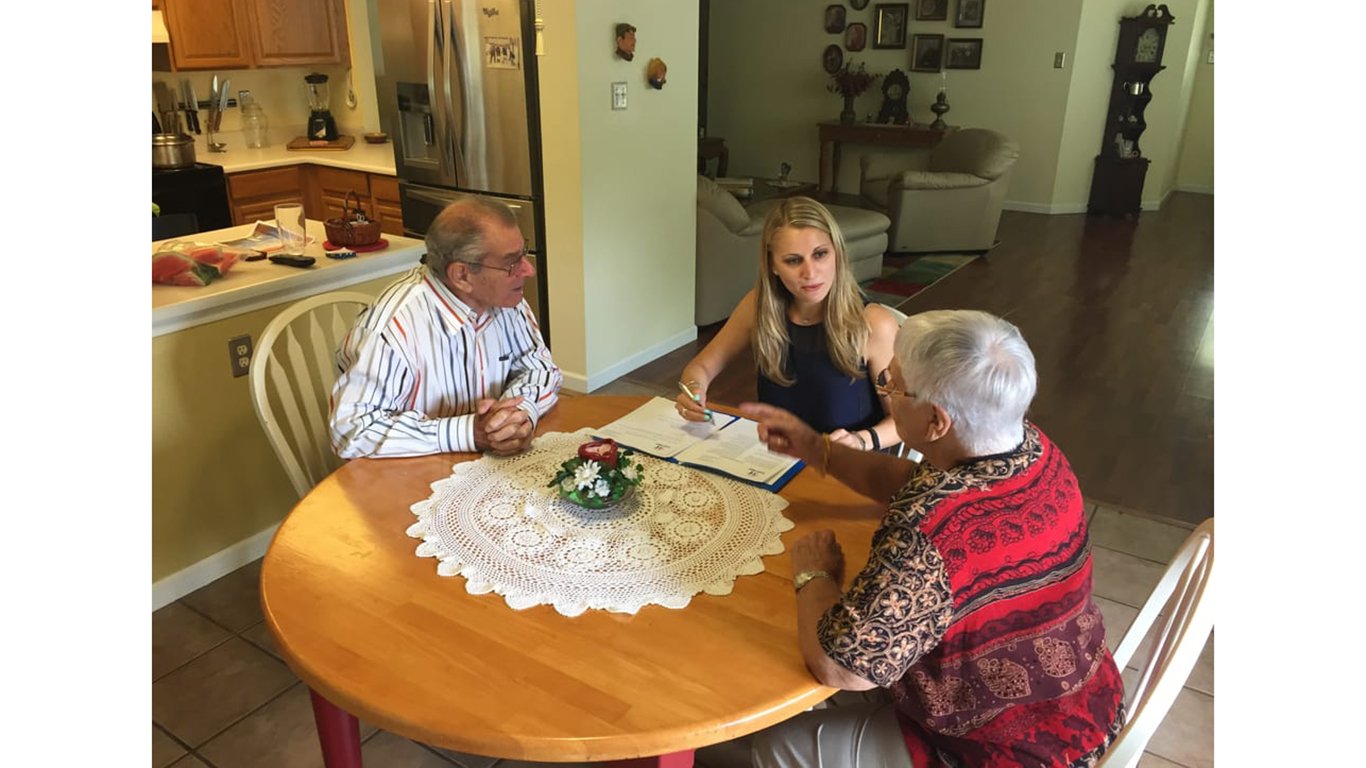
Picture a married couple. He moves into a care facility after a stroke. She stays in the house they’ve shared for decades. Between checking, CDs and a brokerage account, they’ve saved $400,000. Her biggest fear is that Medicaid will make them burn through every dollar before it pays a cent.
Federal rules prevent that. A federal protection called the Community Spouse Resource Allowance (CSRA) shields part of a couple’s countable assets for the spouse who stays home. Under the Center for Medicare & Medicaid Services’ (CMS’s) 2026 spousal impoverishment standards, the maximum community spouse resource standard is $162,660 and the minimum is $32,532. Each state sets its own protected amount inside that range or by formula, so $162,660 is a ceiling. How close a family gets to it depends on where they live.
Medicaid Covers the Long-Term Care Bill Medicare Limits
The bills come fast. In 2024, a semi-private nursing home room cost an average of $9,277 a month.
The federal health insurance most people pick up at 65, Medicare, can cover up to 100 days of skilled nursing care in a benefit period when the stay meets its rules. It also doesn’t cover custodial care, meaning daily help with bathing, dressing and eating (that custodial gap is one of several surprises we cataloged in a free Medicare guide). Medicaid is a different program. It’s run jointly by the federal government and the states for people with limited income and assets, and it covers extended residential care. To qualify, the institutionalized spouse usually has to reduce countable assets to a very low state limit, often $2,000.
Without spousal protections, that $2,000 test would leave the wife at home with almost nothing. Congress wrote the CSRA rules to stop that from happening.
How Medicaid’s Snapshot Sets the $162,660 Protection
Medicaid adds up everything the couple owns on a “snapshot date”. That date is generally the first day of the first continuous period of institutionalization lasting at least 30 days. It counts all countable assets regardless of which spouse legally owns them. Moving the brokerage account into her name alone changes nothing, because the caseworker still adds both columns together.
Next comes the state’s formula. In many states, the spouse at home keeps 50% of the couple’s assets, subject to the federal floor and ceiling. Other states are more generous and let the community spouse keep the full maximum no matter how the split works out.
Here’s how our couple fares in a half-split state:
- Half of their $400,000 is $200,000, which tops the ceiling, so she keeps $162,660.
- He keeps the small allowance his state allows the institutionalized spouse, $2,000 in most states.
- The remaining $235,340 is the excess the couple has to spend down before he clears the asset test. That’s equivalent to about 25 months at the 2024 national median rate for a semi-private nursing home room, although the money doesn’t all have to go to the facility.
The floor matters for couples with less saved. If a couple holds $60,000, half would be $30,000. That falls below the minimum, so the spouse at home keeps $32,532 instead.
Income Gets a Separate Floor of $2,705 a Month
Assets and income are judged separately. Once her husband qualifies, most of his income goes toward his care, but some can be shifted to her if her own income falls short. CMS sets the minimum monthly maintenance needs allowance at $2,705, effective July 1, 2026, in every state except Alaska and Hawaii, with a 2026 maximum of $4,066.50. At the top end, that’s $48,798 a year for the spouse still keeping up the household.
If her available income still falls short of her maintenance allowance, federal law gives either spouse the right to request a fair hearing and seek a larger protected resource amount.
Get the Spousal Resource Assessment Before Paying Privately
Some families start writing private-pay checks before learning the math. Medicaid has a formal process for this question. Before the big checks go out, the family can ask the state Medicaid agency for a spousal resource assessment, which pins down the couple’s combined countable assets as of the snapshot date and shows exactly how much the spouse at home keeps.
For our couple, the planning problem is the $235,340 in excess countable assets. In a state that applies the full 2026 maximum, $162,660 can remain protected for her instead of disappearing into the spend-down. That’s money for groceries, property taxes and home repairs.
Contact [email protected] for any questions or corrections.
Gerelyn Terzo is the author of dividend investing handbook "Dividend Investing Strategies: How to Have Your Cake & Eat It Too." A veteran financial journalist, she covers agri-finance for outlets like Global AgInvesting and the broader stock market and personal finance for 24/7 Wall Street. She began at CNBC and later helped launch Fox Business in New York. Gerelyn currently resides in Woodland Park, Colorado and dabbles in nature photography as a hobby.