Jim Cramer Warns the Anthropic IPO Windfall Is Going to the Super Rich. Here’s the Backlash He Sees Coming

This post may contain links from our sponsors and affiliates, and Flywheel Publishing may receive compensation for actions taken through them.

Jim Cramer spent part of his November 16 Mad Money episode celebrating Anthropic’s early backers. Then he warned about the political bill he thinks is coming due. “Only the super rich are making this type of windfall in these mega IPO names like SpaceX, Anthropic, potentially OpenAI. I am a fair market capitalist who wants everyone to get rich.”
His point is that the biggest gains from AI’s hottest company were made before ordinary investors could buy a single share. Cramer described one early investor’s position as making a 1,500% return on the deal.
How Insiders Got Rich Before the Opening Bell
Startups raise money in private rounds. Each round sells preferred stock to venture funds, wealthy individuals, and strategic partners, usually at a higher price than the round before. Anthropic’s S-1 registration statement lists that history. Series A, C-1, D-1, D-2, E-1, F-1, G-1 and H-1 preferred shares automatically convert into Class A common stock just before the offering closes. A long list of other series converts into Class N shares.
Companies now stay private longer because private money is easy to find. In Q3 2026 alone, Databricks reported selling nearly $5 billion of stock to 136 investors[1] in a single private offering. Once these companies list, the public is buying at the end of a long run-up. Anthropic’s insiders and most existing holders also signed agreements that bar them from selling for 180 days after the prospectus date.
Amazon Is Already Banking Its Share
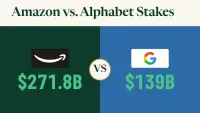
The clearest public-market example of an insider-style return is Amazon (NASDAQ:AMZN | AMZN Price Prediction). When the IPO happens, Amazon’s convertible notes turn into Class N stock at the lower of $2.0928 per share (2023 notes) or $5.0478 per share (2024 notes) and the public offering price. Class N shares carry no voting rights but have economic rights equal to Class A.
That stake is already showing up in Amazon’s income statement. Anthropic-related gains added $16.80 billion[2] to pre-tax income in Q1 and $53.40 billion[3] in Q2. The operating relationship may matter more. AWS revenue rose 39% YoY to $45.98B[4] in Q3, and Anthropic has committed to secure up to 5 GW of Trainium chips. Even so, Q3 GAAP EPS of $1.89[4] missed expectations of $1.96. The stock trades at $256.58, up 11.16% year to date, at about 36x earnings.

Why Cramer Expects a Political Backlash
Federal Reserve data supports his concern. The top 1% of households held 50.9%[5] of household corporate equities and mutual funds in Q2 2026. The bottom 50% held 0.6%[5].
Cramer argued that “these large allocations for the most wealthy have become both inflationary and inequitable.” He also said funds advertising venture-style access fall short: “You’re still not getting the same deals as those insiders with the 1,500% Anthropic return.”
Then he outlined how the reaction could unfold: “Higher taxes for top earners, higher capital gains taxes even if there aren’t any gains, flat-out wealth taxes. I can see new Democrats going for all these attempts to create equality in a harsh meat-axe way.” He presented this as a risk and said he favors the opposite approach: “I want to grow the pie.”
What to Check Before Buying a Hot IPO After It Lists
- Know the gap in cost basis. Insiders own shares that cost a fraction of the public price. If the stock stalls, they can still sell at a profit.
- Mark the lock-up date. Once the 180-day restriction ends, a wave of new supply can hit the market.
- Read the risk factors. On CNBC, Anastasia Amoroso pointed out that the S-1 shows two customers accounting for nearly a quarter of revenue.
- Watch the AI read-through. Cramer has called the deal the next big test for AI stocks. A weak debut could weigh on Amazon and Alphabet (NASDAQ:GOOGL).
Amazon shareholders get more direct exposure. Watch Q4 guidance of $240.0B-$247.0B[4] in net sales, and expect each quarter’s Anthropic mark to keep moving reported earnings. For readers looking past the chipmakers, we rounded up seven companies supplying the AI data-center expansion, from power to cooling, in a free report you can grab here.
Contact [email protected] for any questions or corrections.
Chris Lange is a financial and geopolitical writer with more than a decade of experience covering a myriad of topics. He has published thousands of articles for 24/7 Wall St., with past coverage focused heavily on stocks, IPOs, healthcare, defense, global affairs, and technology.
His work has been quoted, or referenced by a number of outlets including Business Insider, USA Today, Yahoo Finance, MSN, The Motley Fool, and many other publications. A graduate of Southwestern University, he studied business with a focus on investments and has previous experience in banking and startups.
When not reading or writing the news, he is following his passion for Lacrosse, playing chess, or building solar projects with his dad.