How Much AEP and Portland General Electric Stock It Takes for Your Utility to Pay Your Electric Bill
Rising electricity rates from AI data centers are quietly making your power bill a moving target, and two regulated utilities might already be paying it for you without your knowing.

This post may contain links from our sponsors and affiliates, and Flywheel Publishing may receive compensation for actions taken through them.
If you own enough shares of the power company, its dividend can pay your power bill. Data centers are pushing electric rates higher, so it’s worth running the numbers on two regulated utilities: American Electric Power (NASDAQ:AEP | AEP Price Prediction) and Portland General Electric (NYSE:POR).
Your Target Is About $1,905 a Year
The U.S. Energy Information Administration expects the average home to buy 10,465 kWh of electricity in 2026 at 18.2 cents per kWh. That totals about $1,905 a year, or roughly $159 a month. Your dividends need to cover that.
Where you live changes the number. Through March 2026, Ohio homes paid about 18 cents per kWh, right at the national average. Oregon came in near 15 cents, so the typical Oregon bill runs lower.
The math is simple: divide the annual bill by the dividend yield, and you get the amount you need invested. All prices and dividends below reflect recent levels.
American Electric Power Covers the Bill With About $64,000
AEP makes and delivers electricity for about 5.6 million customers across 11 states. Its local utilities include Ohio Power, Appalachian Power and AEP Texas. The stock trades near $130 and pays $3.88 a year in dividends, a yield of about 3.0%.
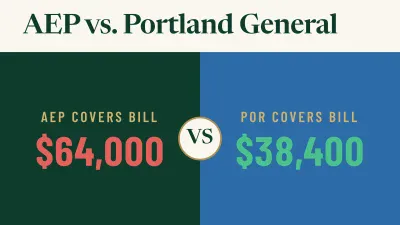
Covering $1,905 takes about 491 shares, or roughly $64,000.
AEP has paid dividends for a long time. It paid $0.50 a quarter in 2014 and announced in October 20 that it would now pay $0.97 in December. The dividend represents about 59% of the high end of the company’s 2026 earnings guidance, so there’s room to spare.
On debt, AEP keeps its FFO-to-debt ratio, which measures operating cash against total debt, in a 14% to 15% target range. That’s above the 13% level that would trigger a credit downgrade.
There’s a tradeoff. AEP is spending heavily on a $100 billion five-year plan to serve 84 GW of new contracted load, mostly from data centers and manufacturers (we rounded up seven of the power, cooling, and networking companies riding that same expansion in a free report here). The CFO said the dividend will grow at “roughly 2% per annum.”

Portland General Electric Gets There for About $38,400
Portland General is Oregon’s regulated utility, serving about 962,000 customers, or roughly 2 million Oregonians. The stock sits near $44 and pays $2.205 a year, a yield of about 5.0%.
Covering $1,905 takes about 864 shares, or roughly $38,400.
The quarterly dividend has grown from $0.225 in 2006 to $0.55125 today. The latest raise worked out to 5% a year. Management aims to pay out 60% to 70% of earnings. Right now the dividend represents about 68% of the middle of 2026 guidance, which a mild summer pushed down to $3.18 to $3.28 per share. That puts it near the top of the target range.
Oregon brings its own risks, and wildfire is the big one. The company shut off power several times this year during “one of the longest PSPS runs” in its history. PSPS stands for public safety power shutoffs.

Splitting It Down the Middle
If you put equal dollars into each stock, you’d need about $24,000 per stock, or roughly $48,000 total. That buys about 184 AEP shares and 540 Portland General shares.
Higher-yield options cost less to start. At a typical 7% yield from covered call funds or preferred shares, you’d need about $27,200. At 12% from business development companies or mortgage REITs, you’d need about $15,900. Those payouts often stay flat, and the principal often shrinks over time.
Why Dividend Growth Matters More Than Yield
Your bill keeps climbing. EIA expects residential prices to grow nearly 5% in 2026 and 2% in 2027. Utilities often raise dividends as rates go up, because regulators let them earn a return on what they build. Portland General targets 5% to 7% dividend growth a year, which roughly keeps pace with bills.
AEP’s latest raise was about 2%, so its dividend could fall behind your bill. Neither raise is guaranteed, since regulators set rates and each company’s board sets the dividend.
Taxes Take a Smaller Bite
Dividends from U.S. companies like these generally count as qualified dividends, as long as you meet the holding period. Qualified dividends are taxed at 0%, 15%, or 20% depending on your income. If you’re in the 15% bracket, you’ll need a bit more invested to cover the full bill after tax.
How Much Each Stock Takes
Portland General covers the average bill with less money, at about $38,400. AEP takes about $64,000. A 50/50 mix comes in near $48,000. It combines Portland General’s higher yield with AEP’s targeted 9% to 11% annual earnings growth.
Do one check every year: put your total electric bills for the past 12 months next to your dividend income. If the bill grew faster than the dividends, the gap shows how much more dividend income you’d need to stay covered.
Contact [email protected] for any questions or corrections.
David Beren has been a Flywheel Publishing contributor since 2022. Writing for 24/7 Wall St. since 2023, David loves to write about topics of all shapes and sizes. As a technology expert, David focuses heavily on consumer electronics brands, automobiles, and general technology. He has previously written for LifeWire, formerly About.com. As a part-time freelance writer, David’s “day job” has been working on and leading social media for multiple Fortune 100 brands. David loves the flexibility of this field and its ability to reach customers exactly where they like to spend their time. Additionally, David previously published his own blog, TmoNews.com, which reached 3 million readers in its first year. In addition to freelance and social media work, David loves to spend time with his family and children and relive the glory days of video game consoles by playing any retro game console he can get his hands on.