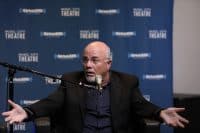
‘Santa Claus Does Not Live in Washington D.C.’: Ramsey to Anyone Celebrating a $3,000 Tax Refund
Dave Ramsey says your big refund is a mistake, but the price of that mistake swings from pocket change to hundreds of dollars. One detail about your wallet decides which side you land on.

This post may contain links from our sponsors and affiliates, and Flywheel Publishing may receive compensation for actions taken through them.

On the Nov. 6 episode of The Ramsey Show, personal finance host Dave Ramsey told a caller that a $3,000 tax refund is nothing to celebrate. He called it “an interest free loan to the government” and then delivered the line built to stick: “Santa Claus does not live in Washington D.C.”
His fix was simple. Reduce the refund, take home about $250 more a month, and send that money into retirement. The stakes are large in aggregate. Treasury has already issued about $17.1 billion in individual refunds this fiscal year, through Nov. 2. Every one of those dollars sat at Treasury earning the taxpayer nothing.
Ramsey is right on principle. But the dollar cost of that “loan” swings wildly depending on one fact he never said out loud: whether you carry a credit card balance.
What a $3,000 Refund Really Costs a Saver
Start with the safest alternative. The FDIC national average 12-month CD paid 1.8% in October, its highest reading in the past year. By our calculation (not Ramsey’s), $3,000 left there for a full year earns about $53.
The real number is even smaller. Over-withholding trickles out of each paycheck, so the government holds the full $3,000 only at year-end. The average balance across the year is roughly half, which puts the lost interest closer to $26. That is one takeout dinner.
Top online banks routinely pay 3 to 5 times the national average. Even at those rates, a saver with no debt loses only tens of dollars a year. For this household, the refund is a mild waste.
A Credit Card Balance Turns a Small Leak Into a Big One
Now change one variable. The average credit card APR hit 21% in August, which sits in what Federal Reserve data treats as record territory above 20%. Applying $3,000 to a balance at that rate saves roughly $636 in interest over a year, again by our math.
That is about 12 times the CD figure. Using the same trickle-in adjustment, the savings still come to about $318, and the 12-to-1 gap holds.
Debt makes Ramsey’s point stronger than he stated it. A household carrying a card balance is borrowing from a bank at 21% while lending to the IRS at 0%. That spread is the real cost of the refund. Card delinquencies stood at 3% in the latest Fed reading, so plenty of households are living inside that math right now.
Ramsey Pitched the Advice During an EveryDollar App Segment
Ramsey’s version assumes the $250 a month gets invested for retirement, where long-run returns beat a CD. It also came during a product section. Co-host Jade Warshaw introduced the EveryDollar budgeting app, and Ramsey said the app “will point out stuff” like a $3,000 refund. The show gave no specific W-4 instruction, so changing your withholding remains your call.
How to Shrink Your Refund Without Owing in April
- Run the IRS estimator first. The Tax Withholding Estimator at IRS.gov/W4App projects your 2026 liability against what you have already had withheld. IRS Publication 505 offers worksheets that show how much to adjust each payday.
- Check your card balances before deciding. If you carry a balance near the 21% average, adjusting withholding and sending the extra take-home pay to your highest-rate card gets the full value of Ramsey’s advice. Full payers see a gain closer to $26 a year, and a refund you treat as forced savings may be worth that cost to you.
- Avoid overcorrecting. IRS Publication 17 warns that if too little is withheld, you will owe tax at the end of the year and may have to pay interest and a penalty. Aim to land close to zero.
- File a new W-4 and revisit it in January. You can give your employer a new Form W-4 whenever your situation changes. The IRS also suggests submitting a new Form W-4 at the beginning of each year if you made a mid-year change based on the estimator, because a mid-year fix can over-adjust the following year.
The refund costs a debt-free saver pocket change, but it costs a cardholder hundreds, so let your interest rate decide how hard you chase Ramsey’s $250 a month.
Contact [email protected] for any questions or corrections.
Jake has been been working in financial media for almost 15 years. He focuses on all things personal finance for 24/7 Wall St. with high hopes to educate and entertain. Most recently, Jake spent 12 years working various roles at The Motley Fool. He started copy editing fool.com content, worked on premium and marketing campaigns, and helped launch The Ascent, a personal finance brand.
His work has been featured on platforms like MSN, Yahoo Finance, USA Today, and more. He's written about credit cards, social security, ETFs, savings accounts, and just about anything else you can imagine when thinking about money. Jake love to cook, play golf, and tell people he's never had a cavity. (It's true!)