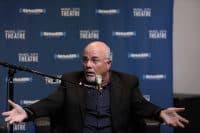
Dave Ramsey Tells Single Dad With $26,000 Debt to Redirect His Custody Battle Energy Into Paying It Off
D, a 29-year-old single father, called into The Ramsey Show on March 31, 2026, carrying $26,000 in debt and something heavier: seven years of custody battles that had consumed every ounce of his mental energy. The financial mess wasn’t laziness.…


D, a 29-year-old single father, called into The Ramsey Show on March 31, 2026, carrying $26,000 in debt and something heavier: seven years of custody battles that had consumed his mental energy. The financial mess was not laziness. It was triage. When your kid’s future is on the line, the credit card statement can wait.
Dave Ramsey’s response was direct: “You’ve spent 90% of your brain power fighting custody for the last however many years. You spent almost 0% managing money. Agreed?” He followed that with a concrete prescription. Ignore the old debts in collections for now, find $1,500 a month, cut the monthly budget by at least $1,000, and put $2,500 a month toward the $17,000 in credit card and car debt. “That’s a 6 or an 8-month program and you’re debt-free except the medical bills and the old landlord debt.”
Ramsey is largely right here. But the sequencing logic behind his advice deserves a closer look, because it is the part that actually teaches something actionable.
Why Attacking the $17,000 First Is the Correct Move
D’s debt breaks down into three buckets. The first is $7,000 in credit cards, with at least one card charging 28% interest. The second is a $10,139 car loan at 13.63% on a 2016 Chevy Malibu. The third is roughly $9,000 in medical bills and old apartment debt sitting in collections.
The collections debt is the least urgent for one specific reason: once a debt is in collections, the credit damage has already occurred, and the account is often past the point where the original creditor can sue. Medical debt, in particular, carries a more complicated credit reporting picture in 2026. The CFPB rule that would have banned all medical debt from credit reports nationwide was struck down by a federal court and is no longer enforceable. However, the three major credit bureaus, Equifax, Experian, and TransUnion, voluntarily removed paid medical collections from reports in 2023 and also removed unpaid collections under $500. Those voluntary changes remain in effect, which limits the additional damage D’s medical debt can do to his score. Ramsey’s instinct to set it aside temporarily and attack the high-interest debt first is still sound sequencing.
The 28% credit card is the most expensive money D is borrowing. At that rate, every $1,000 left on that card costs $280 per year in interest alone. The car loan at 13.63% is expensive too, especially on a vehicle described as “falling apart.” Paying off both eliminates roughly $17,000 in high-cost debt and frees up the monthly cash flow those payments consume.
The $2,500-a-Month Target Is Aggressive But Achievable
D just started a paralegal job paying $40,000 annually, down from $45,000 at his warehouse job, but saving an estimated $2,000 to $3,000 per year in commuting costs. That net income shift softens the salary cut in a meaningful way.
At $40,000, take-home pay after federal and state taxes lands somewhere around $2,800 to $3,000 per month for a single filer, though the exact figure depends on his state and any pre-tax deductions. Ramsey’s prescription of cutting the monthly budget by at least $1,000 and layering in an extra $1,500 to reach $2,500 total toward debt is tight but not impossible on this income, especially if D qualifies for the head-of-household filing status and child tax credits that come with gaining custody of his son.
The broader economic backdrop makes urgency reasonable. The Federal Reserve held its target rate at 3.50% to 3.75% throughout 2026, and markets are pricing the possibility of at least one rate increase before year-end. Consumer credit card rates have not fallen in that environment. The average APR for accounts actually carrying a balance reached 22.15% in the second quarter of 2026, according to Federal Reserve data tracked by LendingTree. D’s card at 28% sits well above even that elevated average. Waiting on it is expensive by the day.
Who This Advice Fits, and One Caution
Ramsey’s framework works well for someone in D’s position: under 35, no mortgage, recently stabilized income, and debt concentrated in high-interest consumer accounts. The shift from intensity in a legal battle to intentionality in personal finance is a real psychological transition, and it matters. As Ramsey put it: “When you bother to care about the money one-tenth as much as you care about this custody thing, it’s gonna straighten up.”
The one gap in the advice is that D is still paying $600 in mediation costs plus $300 in attorney fees to complete the custody case. That cash outflow needs to be factored into the monthly budget before committing to $2,500 toward debt. Overcommitting and missing payments creates its own damage, and there is no benefit to a debt payoff plan that collapses under its own pressure.
Three Steps D Should Take This Week
- List all debts by interest rate, not balance size. The 28% card gets every extra dollar first, then the 13.63% car loan. This is the avalanche method, and it minimizes total interest paid over the life of the debt.
- Pull a free credit report at AnnualCreditReport.com to verify which collections accounts are still within the statute of limitations in his state before making any payment on them. Paying an old collection can restart the clock in some states.
- File taxes as head of household now that he has protective custody. The child tax credit and potential earned income credit could generate a refund that accelerates the debt payoff timeline.
D spent seven years fighting for his son. That same focused energy, redirected toward $17,000 in debt, can clear it in less than a year.
Editor’s note: This article has been updated to reflect the current federal funds rate target range of 3.50% to 3.75%, current average credit card APR data for Q2 2026, and the current status of medical debt credit reporting rules following a federal court ruling that vacated the CFPB’s proposed ban, while noting that the voluntary bureau changes removing paid and sub-$500 medical collections remain in effect.
Contact [email protected] for any questions or corrections.
Austin Smith is a financial publisher with over two decades of experience as an investor, analyst, and advisor. He covers stocks, ETFs, Artificial intelligence and personal finance for 24/7 Wall St. Previously, he spent over a decade at The Motley Fool as a senior editor for Fool.com, portfolio advisor for Millionacres, and launched The Ascent to help reader take control of their personal finances.
His work has been featured on Fool.com, NPR, CNBC, USA Today, Yahoo Finance, MSN, AOL, Marketwatch, and many other publications. He is as an advisor to private companies, and co-hosts The AI Investor Podcast with Eric Bleeker.
When not looking for investment opportunities, he can be found skiing, running, or playing soccer with his children. Learn more about Austin's investment approach here.