Her Husband Will Have a Stroke and Need a Nursing Home. They’ll Be $30,000 Over Medicaid’s Limit, and She’ll Spend It on a New Roof and Furnace Instead of the Facility

This post may contain links from our sponsors and affiliates, and Flywheel Publishing may receive compensation for actions taken through them.

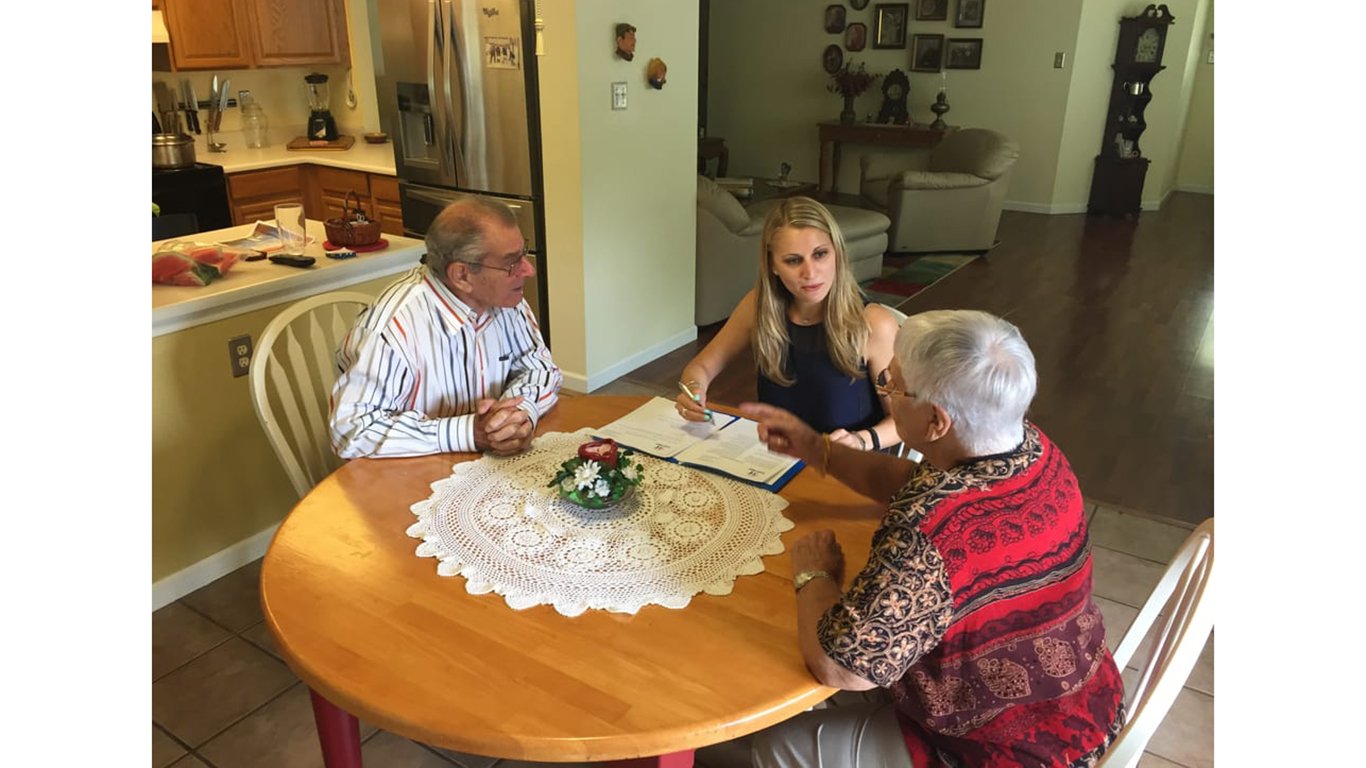
Picture a retired couple in their late 70s. He slurs his words over morning coffee, and by dinner a neurologist confirms a stroke. After the hospital and a stretch of rehab, the doctors deliver the hard news: he needs to move into long-term care for good, and she stays home alone in the house they’ve shared for decades.
Then she runs the Medicaid math. Their savings sit $30,000 above what Medicaid lets the couple keep. She can pay that money toward his care, or she can spend it on the aging roof and the furnace that groans every January. The rules favor the roof. Medicaid’s transfer-of-assets rule penalizes money given away for less than fair value. Money spent at fair market value on real work for an exempt home generally does not create a transfer penalty.
Why $30,000 Spent at Fair Market Value Triggers No Medicaid Penalty
Medicaid’s spousal impoverishment rules protect part of the couple’s countable resources for the at-home spouse through the Community Spouse Resource Allowance. In 2026, the federal minimum is $32,532 and the maximum is $162,660, but states apply those limits differently.
Michigan generally protects half the couple’s countable resources, subject to that federal floor and ceiling, while New York guarantees at least $74,820. The amount this couple must spend down therefore depends on where they live.
The state caseworker reviews the 60 months before the application and checks whether the couple received fair value for what left their accounts. Fair value can come in the form of money, property or services worth roughly the same amount. A new roof at the going rate counts.
The house itself stays protected while she lives in it. Consumer advocate Clark Howard has told listeners that an at-home spouse “has the right to stay in the family home” when the other spouse enters a care facility.
Turning the Excess Into a Roof, a Furnace and Safer Floors
She pulls together bids from licensed contractors for the roof and a new furnace, then adds the safety work a 70-something living alone actually needs: grab bars, a walk-in shower, better stair railings. Elder law firms regularly list “making home improvements” among standard spend-down strategies. Every dollar moves from a countable bank account into an exempt home.
Paper wins this game. Written estimates, signed contracts, itemized bills and cancelled checks prove that each payment bought something worth the price. Caseworkers review bank statements line by line, and a large withdrawal with no receipt looks a lot like a gift.
Now consider the alternative. CareScout’s 2025 survey set the national median for a semi-private room in a long-term care facility at $315 per day, or $9,581 a month. At that rate, the $30,000 covers roughly 3.13 months of private-pay care, and then the money’s gone with nothing left behind.
There’s one catch. After the surviving spouse dies, the state may pursue estate recovery for Medicaid-funded long-term care, depending on state law and which assets fall within the recoverable estate. Clark Howard has warned that the state ‘would have rights to the house and would sell it to recover the money’ it spent, though recovery rules vary widely by state. The roof keeps her safe and dry for now. It does not guarantee the home’s value will eventually pass untouched to the kids, which is why ownership and state estate-recovery rules matter too (we put the whole estate checklist in a free guide here: Die With a Plan).
Paying Real Contractors vs. Handing $30,000 to the Kids
Suppose she skips the contractors and writes the $30,000 to her son instead. That counts as a transfer for less than fair market value, and a gift by either spouse can trigger the Medicaid penalty. The state divides the gift by a monthly penalty divisor. Michigan’s 2026 divisor is about $12,216, so that gift produces two full months plus roughly 14 days in which Medicaid will not pay for his long-term care.
The timing makes it worse. The penalty generally starts when you would otherwise qualify, which means the care bill shows up just as the money disappears into the son’s checking account.
Overpaying relatives backfires the same way. If her son-in-law runs a roofing crew and bills triple the market rate, Medicaid treats the excess as a gift. Families that hire a relative pay the going rate, sign a written contract and keep competing bids on file to prove it.
Either way, $30,000 leaves the account. Spent on the house, it completes her spend-down with a dry attic, a working furnace and a safe shower. Before spending, couples should check their state’s spousal allowance and estate recovery rules, and watch for next year’s updated Medicaid limits.
Contact [email protected] for any questions or corrections.
Gerelyn Terzo is the author of dividend investing handbook "Dividend Investing Strategies: How to Have Your Cake & Eat It Too." A veteran financial journalist, she covers agri-finance for outlets like Global AgInvesting and the broader stock market and personal finance for 24/7 Wall Street. She began at CNBC and later helped launch Fox Business in New York. Gerelyn currently resides in Woodland Park, Colorado and dabbles in nature photography as a hobby.