What It Takes to Retire in Champaign-Urbana, Illinois, at 64 on $750,000, in a State That Doesn’t Tax Retirement Income

This post may contain links from our sponsors and affiliates, and Flywheel Publishing may receive compensation for actions taken through them.
Many who spent their working years around the University of Illinois wonder if they could simply stay in the area after they retire. This piece runs the numbers on one version of that plan: retiring at 64 in Champaign-Urbana with $750,000 saved, in a state that leaves most retirement income alone. The plan works on a median-priced house with no mortgage, as long as you keep an eye on two income lines and the property tax bill.
What Illinois Exempts, and Where It Collects Instead
The Illinois Department of Revenue lets you subtract the federally taxed portion of Social Security, 401(k), and other qualified plan payouts, as well as IRA distributions, on Line 5 of Form IL-1040. Pensions qualify too, while other income, like interest, dividends, and gains from a regular brokerage account, is taxed at the flat 4.95% rate. If most of your savings sit in IRAs and 401(k)s, your state income tax is close to zero.
Illinois makes up for it with property taxes. After adjusting for income, the state ranks 10th for state and local tax burden, at $8,042 per person. Champaign’s median effective property tax rate is 2.43% of home value. The national median is 1.02%.
How $750,000 Turns Into a Monthly Budget
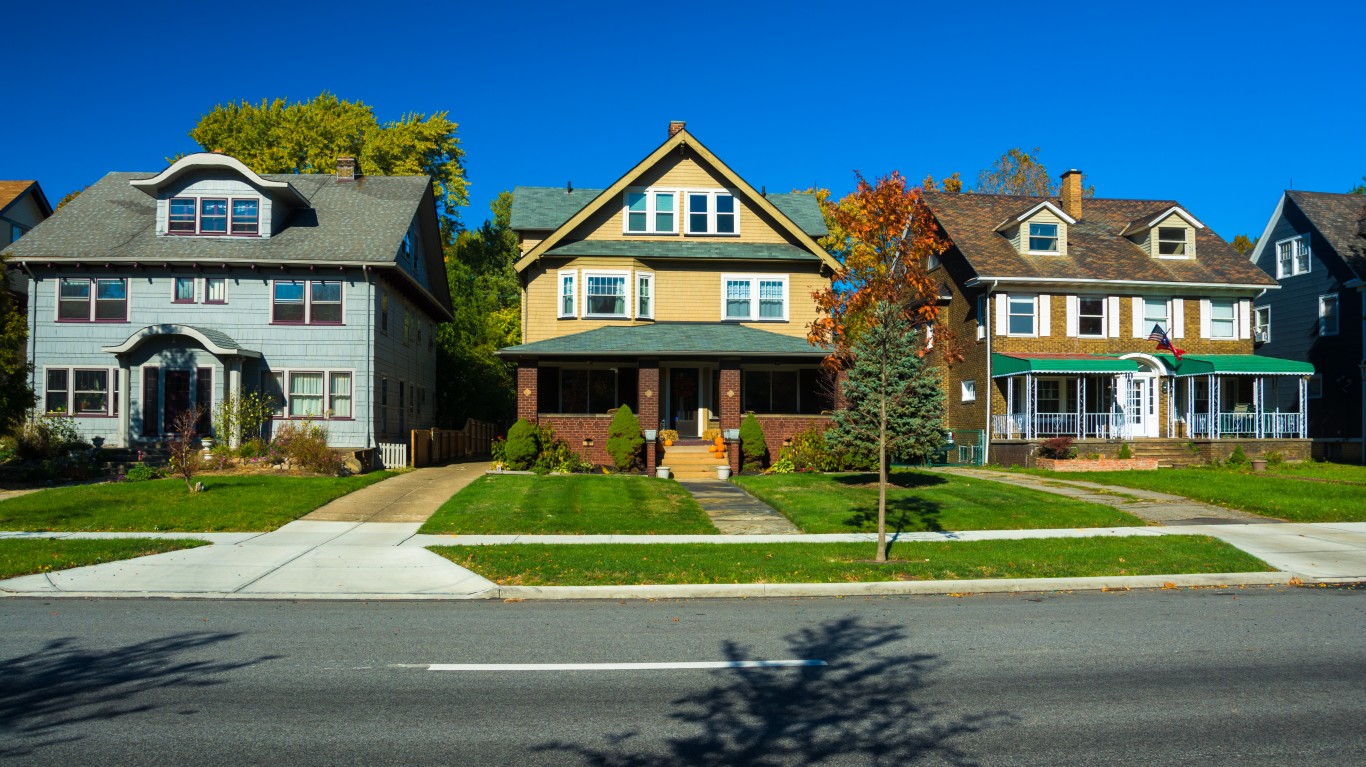
Houses here are still pretty priced. Champaign’s median closing price is $242,500, and the middle half of sales closed between $173,000 and $336,000. Prices keep rising, though. The metro’s FHFA price index is up 5.39% over one year and 47.47% over five. At a 2.43% rate, a median house runs about $5,900 a year in property tax. That’s roughly $490 a month.
On the income side, a 4% first-year withdrawal from $750,000 gives you $30,000. The average retired worker’s Social Security check is $2,170 a month in 2027, after a 3.6% COLA. Over a year, that’s $26,040. Combined, you have $56,040 before federal tax, or about $4,670 a month.
After subtracting roughly $490 in property taxes, you’re left with about $4,180 a month before health insurance and other expenses. That has to cover food, utilities, homeowners insurance, maintenance, a car fund, Part D and Medigap, and federal tax. One person can live on that in Champaign, though it won’t feel spacious. A couple has more flexibility, as two checks add up to $3,355 a month on average, bringing the household to $70,260 a year with the same withdrawal.
Withdrawals above 4% add risk to this budget. Inflation for Americans 62 and older ran 3.6% over the past year, and the old withdrawal math was built for a different market (we laid out the case against the 4% rule, and what to run instead, in a free guide). Trustees also project that Social Security’s retirement trust fund runs short in the fourth quarter of 2032. At that point, 78% of scheduled benefits would still be payable. Claiming later than 64 raises your check for life and takes pressure off the portfolio.
Getting Through the Last Year Before Medicare
At 64, you’ll need one year of marketplace coverage. The extra federal subsidies ended after 2025, so the hard income cutoff is back. For 2027 coverage, the limits are $63,840 for one person and $86,560 for two. Just under the line, your share of the benchmark silver plan tops out at 10.22% of income. Go one dollar over, and you pay full price. The single budget above stays under the line. If a new roof comes due that year, pay for it with cash or brokerage money rather than an extra IRA withdrawal.
Big Ten Perks Against Flat Land and State Money Trouble
Here’s what staying gets you: Big Ten sports, campus concerts and lectures, Carle’s regional medical center in Urbana, and Amtrak trains to Chicago. The costs include farmland in every direction, long gray winters, and a state under budget strain. Illinois lost a net 54,182 people to other states in the latest IRS migration data. Chicago voters also just approved a millionaire tax. A state in that position tends to keep property taxes high.
Plan Around the Property Tax Bill and the Senior Freeze
Your property tax bill is what you should plan around. At 65, the senior homestead exemption takes $5,000 off your assessed value. That’s on top of the $6,000 general exemption, and assessed value runs about a third of market value. The bigger tool is the Senior Freeze, which locks in your assessed value. To qualify, household income has to be $75,000 or less for 2026, rising to $77,000 in 2027 and $79,000 after that. It must be renewed every year.
The freeze test counts Social Security and the income of everyone living in the home, so the state’s retirement income exemption does nothing to lower your number. The couple at $70,260 qualifies, but one large IRA withdrawal in a single year could knock them out. The bill that raised the limit also called for three years of owning and living in the home, so newcomers should check before they buy.
To make this work, you need about $750,000 withdrawn at 4%, Social Security close to the average, and a house near the median with no mortgage. You also need household income kept under both the ACA cutoff and, once eligible, the Senior Freeze income limit, with both exemptions filed at 65. Hit those marks, and Champaign-Urbana works on this budget. If your house is worth well above the median, your property tax rises with it. That’s the number to check first.
Contact [email protected] for any questions or corrections.
David Beren has been a Flywheel Publishing contributor since 2022. Writing for 24/7 Wall St. since 2023, David loves to write about topics of all shapes and sizes. As a technology expert, David focuses heavily on consumer electronics brands, automobiles, and general technology. He has previously written for LifeWire, formerly About.com. As a part-time freelance writer, David’s “day job” has been working on and leading social media for multiple Fortune 100 brands. David loves the flexibility of this field and its ability to reach customers exactly where they like to spend their time. Additionally, David previously published his own blog, TmoNews.com, which reached 3 million readers in its first year. In addition to freelance and social media work, David loves to spend time with his family and children and relive the glory days of video game consoles by playing any retro game console he can get his hands on.