He Hears Anthropic CEO Predicts AI Could Cure Cancer and Alzheimer’s Within 10 Years. He’s Skeptical, and Medicare May Cover the Clinical Trial Without Paying for the Experimental Drug

This post may contain links from our sponsors and affiliates, and Flywheel Publishing may receive compensation for actions taken through them.

Anthropic CEO Dario Amodei spoke in an IPO roadshow video. He said cancer, Alzheimer’s, heart disease and mental illness “will be relics of the past in, I think, less than a decade”. Business Insider reported on November 11, 2026 that physicians and researchers doubted the timeline and questioned the claim.
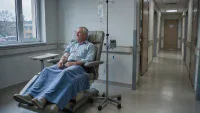
Consider a hypothetical 71-year-old retiree on Original Medicare, midway through chemotherapy for colon cancer. He reads the forecast and doubts the 10-year promise. A narrower question still nags him. If his oncologist offered a slot in a trial of an AI-designed drug, what would Medicare pay, and what would show up on his bill? The answer hits hardest for beneficiaries on Original Medicare with no Medigap policy, while patients with Plan G or Medicare Advantage face different math, covered below.
Why Doctors Doubt a 10-Year Cure Timeline
Karl Lauterbach, Germany’s former health minister, wrote on X: “Curing cancer, Alzheimer’s and mental illnesses can definitely benefit from AI. But that is impossible in just 10 years.” Biotech executive Rami Elghandour called the remarks “insane things to say in an IPO pitch”.
AI can speed up the front end of drug development: screening molecules and choosing candidates faster, but the back end still moves at the speed of human biology. A candidate must clear safety testing, dosing and efficacy studies and large confirmatory trials before the FDA reviews it, and an AI-designed compound gets no shortcut to approval, no guaranteed pharmacy shelf and no automatic Medicare coverage.
What Medicare Pays When You Join a Qualifying Trial
Under Medicare’s current national coverage policy, effective July 9, 2007, Medicare covers routine costs in qualifying clinical trials, along with reasonable and necessary care to diagnose and treat complications arising from trial participation. Routine costs include conventional care, administering the investigational drug, clinically appropriate monitoring and preventing complications.
The Centers for Medicare & Medicaid Services (CMS) excludes three categories:
- The investigational item itself, meaning the experimental drug
- Services provided solely for data collection, such as monthly CT scans for a condition usually requiring only a single scan
- Items the sponsor customarily provides free to every enrollee
The first exclusion sounds alarming, but trial sponsors often supply experimental drugs free of charge. Patients should confirm that arrangement before enrolling because Medicare generally won’t pay for the investigational drug itself. A trial qualifies only if it assesses something within a Medicare benefit category, has therapeutic intent and, for treatment trials, enrolls patients with diagnosed disease rather than healthy volunteers.
Where His Real Bill Comes From
Under Original Medicare, covered outpatient trial services carry the Part B deductible, $283 in 2026 (up from $257), then 20% of the Medicare-approved amount. An inpatient admission adds the Part A deductible of $1,736 per benefit period.
In a hypothetical example, if his covered outpatient care totals $20,000 in Medicare-approved charges, he owes about $4,226, assuming he hasn’t met his Part B deductible. If those charges reach $60,000, his share rises to about $12,226. Both estimates assume the services are subject to standard Part B cost-sharing. Original Medicare puts no annual cap on that 20%, and the bill comes on top of the $202.90 monthly Part B premium.
Research-only tests create another potential expense. Medicare doesn’t cover scans performed solely to collect study data. Ask the trial coordinator whether the sponsor pays for them and whether any charges could fall to you.
Supplemental coverage changes the picture. Medigap Plan G pays the 20% Part B coinsurance after the deductible. For Medicare Advantage members, Original Medicare generally pays covered clinical-trial claims, while their Advantage plans limit cost-sharing to the plans’ in-network amounts. These patients don’t owe Original Medicare’s Part A or Part B deductibles for covered trial services. Getting Medigap later can be difficult. Outside the six-month open enrollment window, insurers in most states can review medical histories, and an active cancer diagnosis could lead to denial.
Questions to Ask Before Signing the Consent Form
- Does this trial qualify for Medicare coverage of routine costs? Ask the trial coordinator to confirm it in writing and to give you the ClinicalTrials.gov registration number.
- Who supplies the experimental drug? Get written confirmation that the sponsor provides it free, along with its administration if the sponsor covers that too.
- Which visits and tests go to Medicare? Request the study’s billing grid showing which services the sponsor pays and which get billed to Medicare. Apply 20% to every Medicare line to estimate your share before you enroll.
Weighing a Bold Prediction Against Today’s Bills
Our retiree can stay skeptical of a decade-long cure timeline and still explore a clinical trial today. The sponsor may provide the experimental drug at no charge, but covered outpatient care can still leave him owing 20% under Original Medicare. Medigap or Medicare Advantage coverage may lower that expense. AI may speed up the search for cures. The financial protections available to patients today rest on established Medicare coverage rules, written policies that are not predictions about future breakthroughs.
Contact [email protected] for any questions or corrections.
Gerelyn Terzo is the author of dividend investing handbook "Dividend Investing Strategies: How to Have Your Cake & Eat It Too." A veteran financial journalist, she covers agri-finance for outlets like Global AgInvesting and the broader stock market and personal finance for 24/7 Wall Street. She began at CNBC and later helped launch Fox Business in New York. Gerelyn currently resides in Woodland Park, Colorado and dabbles in nature photography as a hobby.