New York Has 2,590 SEC-Registered Investment Advisers, the Most of Any State. North Dakota and Alaska Have 9 Each

This post may contain links from our sponsors and affiliates, and Flywheel Publishing may receive compensation for actions taken through them.
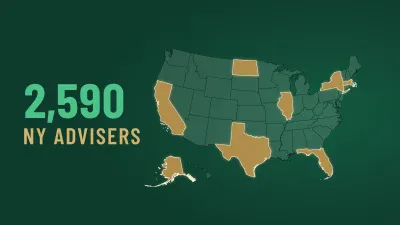
Shopping for a financial advisor turns up an uneven picture once state lines come into play. New York is home to 2,590[1] investment advisors registered with the Securities and Exchange Commission, more than any other state, while North Dakota and Alaska have just 9[1] each. Those counts come from the SEC’s monthly registered advisor data for November 2026[1], which lists 17,263 SEC-registered advisors nationwide.
An investment advisor is a person or firm that gets paid to give advice about investments, and many also manage the money directly. SEC registration means the firm files a public disclosure form, called Form ADV, and answers to federal regulators. Generally, firms managing $100 million or more in client assets register with the SEC, while smaller ones register with their state. That means plenty of small local practices don’t show up in these counts at all.
States With the Most SEC-Registered Advisers
Advisor headquarters cluster where the finance industry already lives. Here’s the top of the ranking by the number of SEC-registered advisors with a main office in each state:
- New York: 2,590[1]
- California: 1,883[1]
- Florida: 1,099[1]
- Texas: 1,084[1]
- Illinois: 686[1]
- Massachusetts: 627[1]
- Pennsylvania: 568[1]
New York’s lead traces back to Wall Street. Asset managers, hedge funds, and the wealth arms of big banks put their main offices in Manhattan and its suburbs, which drives the count well past everyone else. Florida and Texas land almost side by side, which makes sense for two big, populous states with no state income tax. Illinois, Massachusetts and Pennsylvania round out the list on the strength of Chicago, Boston and Philadelphia.
States With the Fewest SEC-Registered Advisers
On the other end, the numbers drop to the low teens and below:
A small count says more about where the industry sits than about how much money residents have. North Dakota’s purchasing-power-adjusted income per person was $82,201 in 2024, ahead of New York’s $80,462, according to the Bureau of Economic Analysis. North Dakota’s income per person ranks ahead of New York’s once prices are factored in. The state simply has fewer large advisory firms, and its smaller local advisors mostly register with state regulators instead.
Why a Main Office Address Matters Less Than It Looks
An advisor’s clients can live anywhere, regardless of where its main office sits. The wealth management arm of Morgan Stanley (NYSE:MS | MS Price Prediction), based in Purchase, N.Y.[1], reports 2,600,707 individual clients in its Form ADV filing. A firm that size serves people far beyond New York. So a saver in Fargo or Anchorage can work with an adviser headquartered in Manhattan, Boston, or Dallas, and the state ranking mostly reflects where firms chose to set up shop.
How to Check Any Adviser Before Hiring
Everyday savers can get good advice from any firm they’ve checked out, whether it is local or based in another state. Every SEC- and state-registered advisor can be looked up for free on the SEC’s Investment Adviser Public Disclosure site at adviserinfo.sec.gov. FINRA BrokerCheck, at brokercheck.finra.org, covers brokers and shows licenses, work history, and customer complaints. Plenty of advisors are also licensed brokers, so it’s worth searching both.
The most useful document on file is Form ADV Part 2, often called the brochure. Advisers must give it to clients, and it lays out in plain language how the firm charges, what conflicts of interest it has, and any disciplinary history. It answers questions about fees, conflicts, and discipline before a first meeting.
How an advisor gets paid shapes the advice. A fee-only adviser is paid directly by clients, usually as a percentage of assets managed, a flat fee, or an hourly rate. Alternatively, a commission-based advisor earns money when clients buy certain products, such as annuities or mutual funds with sales charges. That setup can create a conflict, since the advisor makes more by recommending some products over others. Some firms call themselves “fee-based,” which is a mix of both, and the brochure spells out which model applies. 24/7 Wall St.’s coverage of adviser fees and choosing an adviser goes deeper on what a reasonable price looks like.
One Check Before Handing Over Money
The SEC updates its registered advisor data every month, so the ranking will shift as firms grow past the federal threshold, merge, or move their main offices. Still, the count can’t tell anyone which advisor matches their situation. A state with 2,590[1] firms and a state with 9 both give residents access to the same national pool of advisors. The lookup is the step that protects savers. Before giving money to any advisor, search the name on the SEC’s disclosure site and on BrokerCheck, read the Form ADV Part 2 brochure, and confirm in writing exactly how the advisor gets paid.
Contact [email protected] for any questions or corrections.
David Beren has been a Flywheel Publishing contributor since 2022. Writing for 24/7 Wall St. since 2023, David loves to write about topics of all shapes and sizes. As a technology expert, David focuses heavily on consumer electronics brands, automobiles, and general technology. He has previously written for LifeWire, formerly About.com. As a part-time freelance writer, David’s “day job” has been working on and leading social media for multiple Fortune 100 brands. David loves the flexibility of this field and its ability to reach customers exactly where they like to spend their time. Additionally, David previously published his own blog, TmoNews.com, which reached 3 million readers in its first year. In addition to freelance and social media work, David loves to spend time with his family and children and relive the glory days of video game consoles by playing any retro game console he can get his hands on.