He Books a Luxury Weekend in Texas Hill Country at 72. If He Falls on a Remote Trail, the Helicopter Ride Could Cost $40,000. Medicare Pays Only if a Ground Ambulance Would Have Put His Life at Risk

This post may contain links from our sponsors and affiliates, and Flywheel Publishing may receive compensation for actions taken through them.

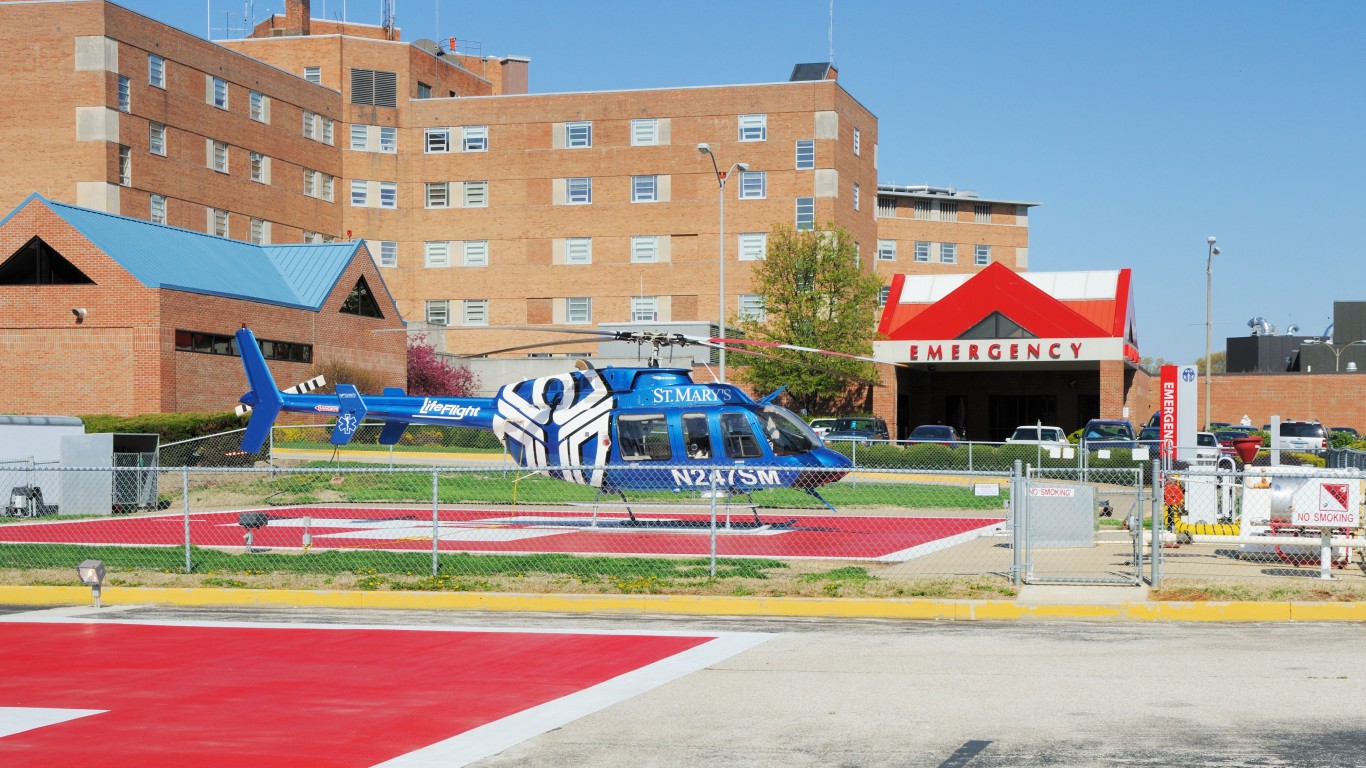
The Hill Country west of Austin is trading honky-tonks for spa suites. The Wall Street Journal reported last month that the region is going upscale, and Fredericksburg alone has a 210-room Kimpton scheduled to open in 2027. Picture a 72-year-old who books a luxury weekend there and sets out on a remote granite trail one morning. His boot catches on loose rock. He breaks a hip far from any road, and a medevac helicopter flies him out.
Weeks later, a $40,000 bill arrives. That falls inside the $25,000 to $60,000 range a standard U.S. helicopter transport typically costs. With a Medigap Plan G, he will owe either $283 or the full $40,000, and Medicare decides which one after he lands. All figures here use 2026 Medicare rules from the CMS annual fact sheet.
Most emergency rides happen by ground, and most retirees never see a helicopter bill. Enrollees who hike, fish or drive far from trauma centers bear most of the risk. Any of them, with or without a supplement, can face the denial scenario below.
One Medicare Test Decides Who Pays the Helicopter Bill
Medicare may pay for a helicopter ambulance “if you need immediate and rapid transport that ground transportation can’t provide,”[1] and it covers transport only “to the nearest appropriate medical facility that’s able to give you the care you need.” That gives reviewers two questions to answer. Could a ground ambulance have reached him safely in time? Did the crew fly him to the closest hospital able to treat him?
Ambulance companies must hand out an Advance Beneficiary Notice only for non-emergency[1] rides. In a trail emergency, he gets no warning. He learns the outcome on his Medicare Summary Notice, long after the helicopter stop.
An Approved Claim Caps His Bill by Federal Rule
If Medicare approves the flight, he gets strong protection. Federal regulation applies. It requires that ambulance suppliers “must accept the Medicare allowed charge as payment in full and may not bill or collect from the beneficiary any amount other than the unmet Part B deductible and Part B coinsurance amounts.” The operator’s $40,000 charge stops mattering. Only the Medicare-approved amount counts.
In 2026, the Part B deductible is $283, and he owes 20%[1] of the approved amount after that. As an illustration, if Medicare approves $10,000, he owes $2,226 without a supplement. Original Medicare has no annual out-of-pocket cap, so that 20% grows with every dollar Medicare approves, but Plan G picks up the coinsurance, which leaves him with the $283 deductible.
A Denied Claim Puts the Full $40,000 Back on the Table
Reviewers may decide that a ground ambulance could have reached the trailhead, or that the crew flew past a closer hospital that could have treated him. If so, the claim fails the test. The assignment cap protects only amounts Medicare approves, so the disputed balance can land on him, and Plan G pays its share only on Medicare-approved services, which means it covers none of a denied flight.
At the 2026 standard Part B premium of $202.90 a month, $40,000 is about 16 years of premiums. It also equals roughly 19 months of the average retired worker’s $2,071 monthly Social Security check after the 2026 cost-of-living adjustment (COLA).
Medicare Advantage enrollees face the same question about whether the flight was necessary. The plan makes that call, and the plan’s Evidence of Coverage sets the copay. Read that document before the trip, because it can differ sharply from Original Medicare’s 20%.
Air-ambulance denials are one of several Medicare surprises. They catch retirees off guard, alongside IRMAA surcharges and coverage gaps we mapped in a free guide to Medicare’s hidden bills.
Three Moves to Make Before You Hit the Trail
- Know which bill you would face. Pull your Medigap or Advantage paperwork and find your ambulance cost-sharing. If you have Original Medicare with no supplement, your 20% on an approved flight has no ceiling. At 72, adding Plan G outside your initial Medigap window usually means medical underwriting in most states, so check your state’s rules before you count on that option.
- Build the appeal file at the hospital. A denial turns on documentation. Before discharge, ask the emergency physician and the flight crew for records showing that the pickup site had no ground access or that delay threatened your life. Then confirm the receiving hospital was the nearest one equipped for your injury. Medicare’s appeals process runs through 5 levels[2], and each decision letter explains how to move to the next. Your State Health Insurance Assistance Program offers free, personalized[2] counseling on how to file.
- Get air-ambulance membership terms in writing. On an approved claim, the assignment rule already limits what you owe, so a membership mostly matters if Medicare denies the flight. Before paying a fee, ask whether the membership covers the full balance after a denial and whether its aircraft actually serve the counties you plan to visit.
As upscale resorts push more retirees onto remote Hill Country trails, the worst moment comes after the rescue, when Medicare reviews the claim. Your records from that day will largely decide whether you owe the deductible or the full bill.
Contact [email protected] for any questions or corrections.
Gerelyn Terzo is the author of dividend investing handbook "Dividend Investing Strategies: How to Have Your Cake & Eat It Too." A veteran financial journalist, she covers agri-finance for outlets like Global AgInvesting and the broader stock market and personal finance for 24/7 Wall Street. She began at CNBC and later helped launch Fox Business in New York. Gerelyn currently resides in Woodland Park, Colorado and dabbles in nature photography as a hobby.