The 10 Most Expensive Trading Cards Ever Sold. A Pokémon Card Now Outranks Every Mickey Mantle

This post may contain links from our sponsors and affiliates, and Flywheel Publishing may receive compensation for actions taken through them.

The most expensive trading card ever sold is now a Pikachu. A 1998 Japanese promo Pokémon card has passed every Mickey Mantle, every Honus Wagner and every Michael Jordan dual autograph on the all-time sales list. Card prices now rival fine art. And The New York Times describes a bull market for Pokémon cards fueled by Pikachu and nostalgia. That makes the tax side worth knowing for retirees and near-retirees who own graded cards, since a profitable card sale lands on a different line of the tax return than a profitable stock sale.
The list below comes from Sports Illustrated, which used Card Ladder data, as of its February 2026 publication, and it counts down from No. 10 and includes only confirmed sales recorded by Card Ladder. One much larger claim is left off: Men’s Journal reported pushback against a claim of a $50 million record sale of a 1952 Mickey Mantle card. That sale remains disputed and unconfirmed.
List From No. 10 to No. 1
No. 10: 2003-04 Upper Deck Exquisite LeBron James Rookie Parallel Patch Autograph
Sports Illustrated (Card Ladder data) lists this LeBron James rookie patch autograph, graded BGS 9/10[1], as selling on April 26, 2021 for $5.2 million. Upper Deck’s Exquisite line appears three times in the top 10.
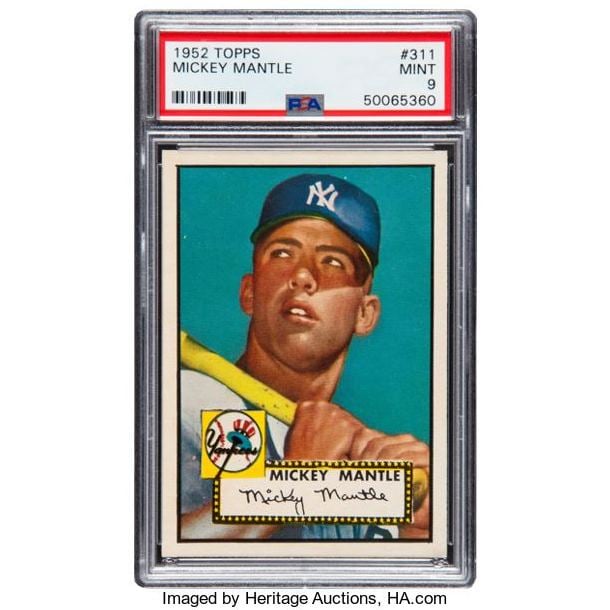
No. 9: 1952 Topps Mickey Mantle
According to Sports Illustrated (Card Ladder data), a PSA 9[1] copy sold on January 14, 2021 for $5.2 million. It is the first of two Mantles on the list.
No. 8: 1998 Pokémon Japanese Promo Pikachu Holo Illustrator
Sports Illustrated (Card Ladder data) records a PSA 10[1] Pikachu Illustrator selling on July 22, 2021 for $5.275 million. The same card name returns at the top of the list.
No. 7: 1909 T-206 Honus Wagner
Per Sports Illustrated (Card Ladder data), an SGC 3[1] Wagner sold on August 15, 2021 for $6.6 million. A mid-grade copy of the hobby’s best-known card still reached seven figures.
No. 6: 1914 Baltimore News Babe Ruth
Sports Illustrated (Card Ladder data) shows this SGC 3[1] Ruth selling on December 3, 2023 for $7.2 million.
No. 5: 1909 Caporal T-206 Honus Wagner
An SGC 2[1] Wagner sold on August 4, 2022 for $7.25 million, according to Sports Illustrated (Card Ladder data).
No. 4: 2006-07 Upper Deck Exquisite LeBron James/Michael Jordan Dual Logoman Autograph
Sports Illustrated (Card Ladder data) lists this 1-of-1 dual autograph selling on September 26, 2025[1] for $10 million.
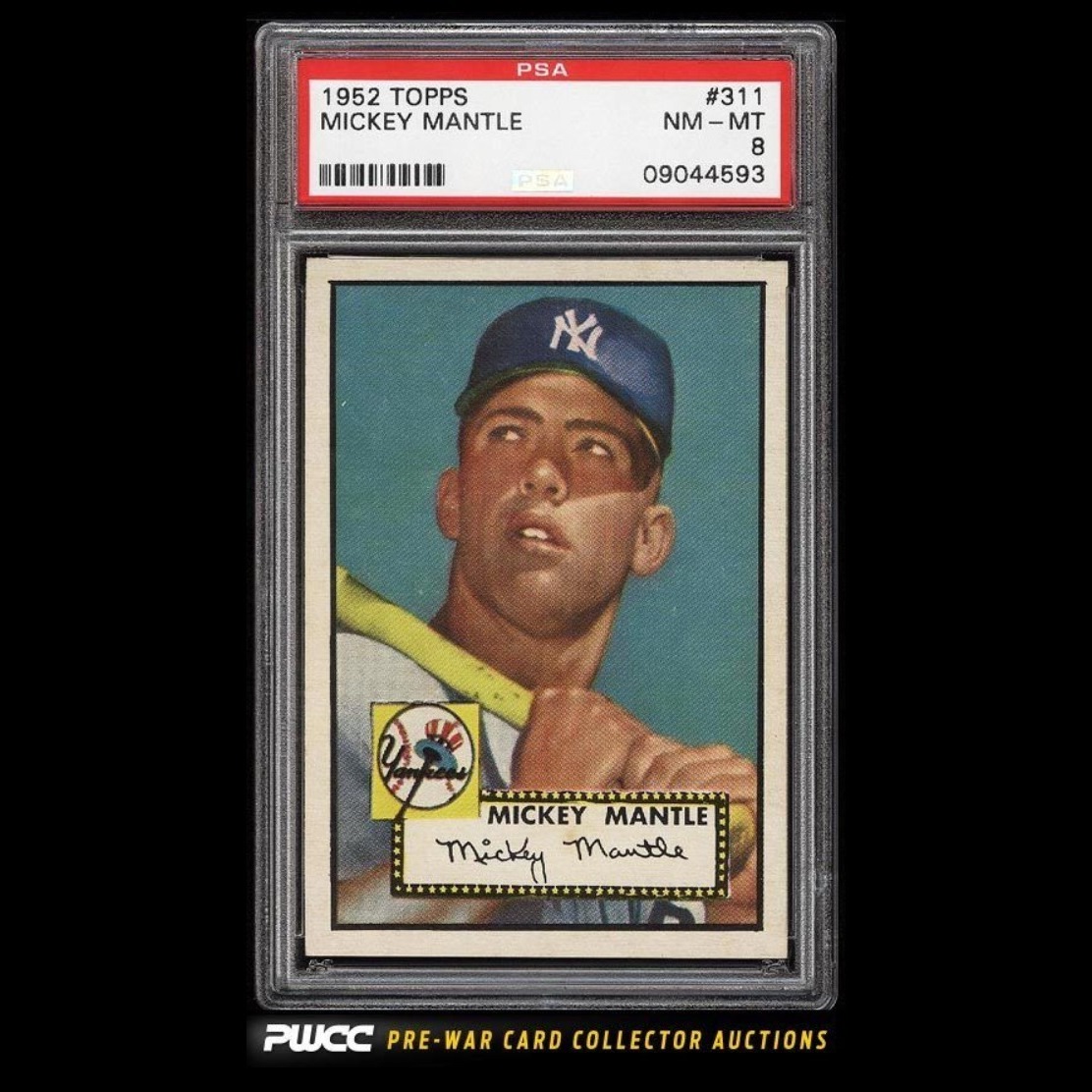
No. 3: 1952 Mickey Mantle
The top confirmed Mantle, graded SGC 9.5[1], sold on August 27, 2022 for $12.6 million, per Sports Illustrated (Card Ladder data).
No. 2: 2007-08 Upper Deck Exquisite Kobe Bryant/Michael Jordan Dual Logoman Patch Autograph
Sports Illustrated (Card Ladder data) records this PSA 6[1] 1-of-1 selling on August 23, 2025 for $12.932 million.
No. 1: Logan Paul’s 1998 Pokémon Japanese Promo Holo Illustrator
Sports Illustrated (Card Ladder data) shows Logan Paul’s PSA 10[1] Illustrator selling on February 15, 2026 for $16.492 million. SI noted that the sale included a custom diamond-encased necklace, so part of the price may reflect more than the card itself.
What the IRS Sees When You Sell a Valuable Card
Trading cards are taxed under the collectibles rule. They follow a separate capital gains schedule from stocks. Under 26 U.S.C. § 1(h)(5)(A)[2], “collectibles gain” means gain from selling a collectible, as defined in section 408(m), that is a capital asset held for more than 1 year[2]. Section 408(m)(2)[3] lists artworks, rugs, antiques, metals, gems, stamps, coins and alcoholic beverages. Subparagraph (F) adds a catch-all for any other tangible personal property specified by the Secretary[3].
The rate comes from 26 U.S.C. § 1(h)(1)(F)[2], which taxes that slice of income at 28%[2]. IRS Publication 550 for tax year 2025 lists a maximum rate of 28% on collectibles gain. In that same table, “other gain” tops out at 20% and drops to 15% or 0% at lower incomes. The 28% is a ceiling. The IRS says that a seller otherwise subject to a rate lower than 28% pays the lower rate.
Bracket thresholds decide where a sale lands. For tax year 2026, the 24% bracket starts above $105,700 for single filers ($211,400 for joint filers). The 32% bracket starts above $201,775 ($403,550 joint). A large card sale can push a retiree’s income past those lines, and once that happens, the 28% cap applies to the card gain. A card held one year or less produces short-term gain, which is taxed as ordinary income.
The tax bill is only part of the cost for retirees. A large gain raises adjusted gross income for the year. Higher income can trigger Medicare’s income-related premium surcharges (IRMAA) and can make more of your Social Security benefits taxable. Check current-year IRMAA levels and provisional-income thresholds before planning a sale.
Retirement accounts follow their own rule. Under 26 U.S.C. § 408(m)(1)[3], when an IRA buys a collectible, the purchase is treated as a distribution equal to its cost. Section 408(m)(3)[3] carves out certain gold, silver and platinum coins described in 31 U.S.C. 5112, coins issued under state law, and bullion that satisfies the fineness requirements for contract markets and is held by a qualifying trustee. Those carve-outs apply only to IRA purposes. Section 1(h)(5)(A) sets out what counts as collectibles gain without regard to paragraph (3)[2], so the same coins sold outside an IRA can still produce collectibles gain.
Two Things to Watch
Keep an eye on whether the disputed Mantle claim is ever confirmed by recorded sales data, and on whether Pokémon demand holds near current levels. Anyone holding a high-grade card should know their cost basis and holding period before a sale. Those two facts decide whether the gain is taxed as short-term or long-term, and whether the 28% collectibles ceiling comes into play. The collectibles rate is one of several IRS rules. These rules quietly drain retirement balances (we mapped nine of them in a free report on retiree tax traps).
Contact [email protected] for any questions or corrections.
Jake has been been working in financial media for almost 15 years. He focuses on all things personal finance for 24/7 Wall St. with high hopes to educate and entertain. Most recently, Jake spent 12 years working various roles at The Motley Fool. He started copy editing fool.com content, worked on premium and marketing campaigns, and helped launch The Ascent, a personal finance brand.
His work has been featured on platforms like MSN, Yahoo Finance, USA Today, and more. He's written about credit cards, social security, ETFs, savings accounts, and just about anything else you can imagine when thinking about money. Jake love to cook, play golf, and tell people he's never had a cavity. (It's true!)