At 66 With $800,000, She’ll Inherit Her Mother’s House. The Tax Basis Resets to What It’s Worth the Day Her Mother Dies, So Selling Soon Could Mean Little or No Tax

This post may contain links from our sponsors and affiliates, and Flywheel Publishing may receive compensation for actions taken through them.
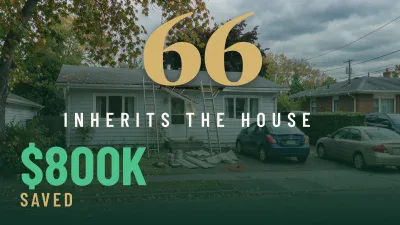
The boxes in her mother’s attic still hold her old report cards, and the kitchen still looks the way it did when she was 12. Her brother keeps warning her that once the house is hers, selling it will mean a huge capital gains bill.
At 66, with about $800,000 saved, she’ll inherit the house she grew up in. The grief will come first, and right behind it comes the weight of deciding what to do with a place full of memories. For most heirs in her position, the tax worry is a lot smaller than the family thinks.
A Step-Up in Basis Wipes Out Decades of Gain
Your tax basis is the number the IRS deducts from your sale price to find your taxable gain. Under 26 U.S.C. § 1014(a)(1)[1], inherited property takes a basis equal to its fair market value at the date of the decedent’s death[1]. IRS Publication 523 says the same thing: your basis is the home’s value on the date of the decedent’s death (or the later alternate valuation date chosen by the estate’s personal representative).
That matters because home prices have risen so far. The S&P CoreLogic Case-Shiller national index is at 336.7[2], with January 2000 set at 100. That’s a gain of about 237% nationally. A parent who bought decades ago could be sitting on a gain several times what she paid. When she dies, that gain disappears for income tax purposes.
So if the daughter sells a few months later for close to the appraised value, only the small gap gets taxed. Selling costs shrink it further. The IRS figures gain as selling price minus selling expenses, minus adjusted basis, so commissions and closing costs can push a small gain close to zero. And if an heir sells within a year, 26 U.S.C. § 1223(9)[3] treats the property as held for more than a year. Any gain gets the lower long-term capital gains rates.
A Date-of-Death Appraisal Locks In Your Number
The step-up only helps if you can prove the value. If a federal estate tax return was filed or required, the property value listed on the estate tax return is your basis. If not, Publication 551 says heirs can use the appraised value at the date of death for state inheritance or transmission tax purposes.
In practice, get a professional appraisal dated as close to the date of death as possible. A Zillow screenshot won’t hold up if the IRS asks questions years later.
Any gain after that date is taxable. Right now, the market is mixed. Case-Shiller is up 2%[2] over the past year but slipped 0.2% in the latest month. Cape Coral-Fort Myers is down 1%[4] over the past year. If she holds the house hoping it’ll go up, she’ll owe tax on whatever it gains.
A Gift Deed Before Death Can Erase the Tax Break
This is the biggest risk in her situation. Some parents sign the house over to a child while they’re still alive, thinking it keeps things simple. Then 26 U.S.C. § 1015(a)[5] applies: the child’s basis is the same as it would be in the donor’s hands. She’d take on her mother’s original basis, and decades of appreciation would become taxable when she sells.
Even five years adds up. FHFA data shows home prices in Charleston rose 62%[4] over five years, and Hilton Head rose 64%.
For most families, leaving the house in the mother’s name and passing it through her estate is the better tax path. If a gift deed has already been signed, that’s a real reason to hire a CPA or estate attorney. The tax bill on a sale could be many times larger, and the numbers need to be run before the house is listed. (The full checklist on ownership, beneficiary forms, and the paperwork that decides whether money goes to family or lawyers is in a free estate guide here.)
Selling Soon Wins for Most Heirs
Path one: sell soon after the appraisal. She’ll owe little or no tax. The cash goes into her portfolio and gets diversified, and she stops paying property taxes, insurance, and maintenance on an empty house. For a 66-year-old who doesn’t plan to live there, this is clearly the better choice.
Path two: move in. The home-sale exclusion shields up to $250,000 of gain ($500,000 for married couples filing jointly). To get it, she has to own the house and live in it as her main home for at least 2 years out of the 5-year period before the sale. Since the step-up already eliminated the old gain, the exclusion only shelters future gains. It’s worth it only if she actually wants to live there.
Keeping it empty as a someday house is the worst choice. The costs pile up, and any new gain is taxable.
Your First Two Moves
First, find out how the title is held today. If anyone is pushing a lifetime gift deed, ask what the family loses by giving up the step-up.
Second, after the death, order the date-of-death appraisal before the attic gets cleaned out, and keep every closing statement from the sale. Her brother’s warning mostly goes away the day the house passes to her. The mistake that actually costs money is signing a gift deed too early.
Contact [email protected] for any questions or corrections.
David Beren has been a Flywheel Publishing contributor since 2022. Writing for 24/7 Wall St. since 2023, David loves to write about topics of all shapes and sizes. As a technology expert, David focuses heavily on consumer electronics brands, automobiles, and general technology. He has previously written for LifeWire, formerly About.com. As a part-time freelance writer, David’s “day job” has been working on and leading social media for multiple Fortune 100 brands. David loves the flexibility of this field and its ability to reach customers exactly where they like to spend their time. Additionally, David previously published his own blog, TmoNews.com, which reached 3 million readers in its first year. In addition to freelance and social media work, David loves to spend time with his family and children and relive the glory days of video game consoles by playing any retro game console he can get his hands on.