‘SpaceX Has Gone All In With Nvidia’: Nvidia’s Biggest Customer Is Also Its Biggest Stock Holding at $19.7B

This post may contain links from our sponsors and affiliates, and Flywheel Publishing may receive compensation for actions taken through them.
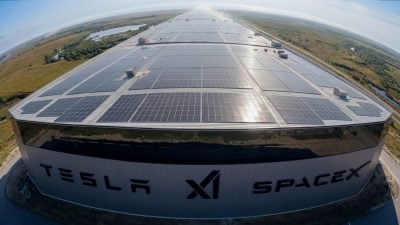
The biggest customer at NVIDIA (NASDAQ:NVDA | NVDA Price Prediction) is now SpaceX (NASDAQ:SPCX). NVIDIA’s latest 13F filing also shows that SpaceX is the largest stock holding at NVIDIA, worth $19.7 billion. NVIDIA raised that stake 6% to 130.5 million shares.
On the November 19 episode of 24/7 Wall St.’s AI Investor Podcast, host Eric Bleeker said NVIDIA’s “number one customer is suddenly SpaceX” and that “SpaceX has essentially gone all in with NVIDIA.” He doubted Elon Musk could pay for the up to $500 billion in spending he has proposed for next year. His question: “How would you possibly finance it at this moment in time?”
Within hours, reports said SpaceX was readying a $40 billion AI chip financing. Apollo Global Management (NYSE:APO) arranged it through a special-purpose vehicle, so the debt does not sit directly on SpaceX’s balance sheet. At least $32 billion was expected to be offered to investors Thursday.
For SpaceX, concentrating on one supplier is a business strategy. In your brokerage account, the same move is concentration risk, and NVIDIA stock just showed what it can cost. Shares near $150 are down 31% over the past month and 19% this year.

Record Earnings Failed to Stop a 31% Slide
My view: copying SpaceX’s concentrated approach with your own money is a mistake, even with a company as profitable as NVIDIA. With concentration risk, the worst month for one stock becomes the worst month for your whole portfolio.
Start with what NVIDIA just reported. Third-quarter revenue reached $115.8 billion[1], up 103% from a year earlier. Adjusted EPS of $2.68[1] beat the $2.47 consensus. The stock fell anyway, weighed down by a CEO transition and concerns about future AI spending.

Losses also hurt more than gains help. After a 31% decline, a stock has to gain 44% just to get back to even. Each point lost on the way down takes more than a point to win back.
Concentration also builds on itself. Three direct customers made up for 14%, 11% and 11%[1] of NVIDIA’s third-quarter revenue. SpaceX’s own revenue is lopsided too.
SpaceX’s CFO says Anthropic (NASDAQ:ANT) made up more than a third of SpaceX’s third-quarter revenue. Musk says Anthropic wants 10 more gigawatts of SpaceX computing power. If you own NVIDIA, you also carry each of these risks.
CoreWeave (NASDAQ:CRWV) shows how closely these companies are tied. It rents out NVIDIA GPUs, and a single customer produced about 67% of its 2025 revenue. Its shares are down 38% over the past year.
Every one of these companies lives off the same AI infrastructure expansion, and the picks and shovels extend well beyond the chipmaker itself (we examined seven suppliers behind the data centers, from power to cooling, in a free report here: 7 Stocks Powering the AI Boom).
Position Size Decides Whether a Bad Month Stings or Scars
The factor that matters most is how much of your portfolio sits in one stock. Consider a $200,000 portfolio as it stood a month ago.
If half of it, or $100,000, was in NVIDIA, the past month’s drop erased $30,780. Your whole portfolio lost about 15% because of one holding.
If $20,000 was in NVIDIA, the same drop cost $6,156, or about 3% of the portfolio. Average returns from everything else can make up a 3% loss. A 15% loss mostly depends on NVIDIA itself coming back.
Concentration has also built wealth. NVIDIA is up 6,461% over 10 years. To earn that, a concentrated holder had to sit through every steep drawdown without selling near the bottom. A smaller position makes that far easier.

Four Steps to Measure and Cap Your AI Exposure
- Add up your look-through exposure. Count your individual NVIDIA shares plus the NVIDIA stake inside every index fund and ETF you own. Fund providers list their top holdings online, and large-cap growth funds often carry NVIDIA near the top.
- Run a stress test. Multiply each AI holding by 31%, NVIDIA’s drop over the past month. Then divide the total by your portfolio’s value. If you could not hold through that loss, the position is too large.
- Treat related holdings as one position. NVIDIA, CoreWeave, SpaceX and Anthropic all depend on the same AI infrastructure spending. When NVIDIA sold off after earnings, CoreWeave and other neoclouds slid with it.
- Set a cap and rebalance with new money first. Pick a limit for any single stock, such as 10% as an example, and send new contributions elsewhere until you are back under it. For taxable accounts, that cuts concentration without triggering capital gains. In an IRA or 401(k), you can sell and rebalance with no immediate tax bill.
SpaceX can concentrate on NVIDIA because it controls its own financing. For individual investors, the key is keeping any single position at a size where its worst month leaves the rest of the plan intact.
Contact [email protected] for any questions or corrections.
Jake has been been working in financial media for almost 15 years. He focuses on all things personal finance for 24/7 Wall St. with high hopes to educate and entertain. Most recently, Jake spent 12 years working various roles at The Motley Fool. He started copy editing fool.com content, worked on premium and marketing campaigns, and helped launch The Ascent, a personal finance brand.
His work has been featured on platforms like MSN, Yahoo Finance, USA Today, and more. He's written about credit cards, social security, ETFs, savings accounts, and just about anything else you can imagine when thinking about money. Jake love to cook, play golf, and tell people he's never had a cavity. (It's true!)