Musk Predicts “Guppy-Level Death” For Neocloud Companies As CoreWeave Stock Falls 38% In October
Elon Musk just predicted mass death for GPU rental companies, and CoreWeave's cratering stock price and distressed bond market suggest lenders may already agree with him.

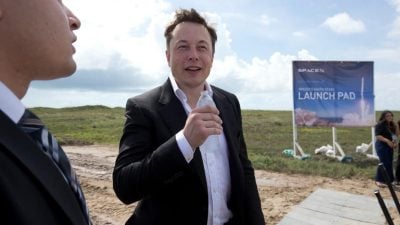
Elon Musk used a Sunday thread on X to post one of the bleakest forecasts yet for neoclouds, the companies that rent out GPUs to AI developers and often fund them with borrowed money.
On October 25, 2026, while responding to venture investor Chamath Palihapitiya’s posts on neoclouds, Musk wrote: “Pretty much. As of the past few weeks, debt markets have almost entirely shut off access to money for any company that doesn’t have substantial revenue independent of AI data centers. SpaceX closed $40B of debt for GPUs, but we’re investment grade and have Starlink & launch revenue. That means the 200+ neoclouds are going to see guppy-level death and consolidation. Some will make it through, but not many.”
Palihapitiya had called neoclouds “disorganized and poorly capitalized” and added that some are better than others. Later on Sunday, Musk added: “SpaceX is not buying any neoclouds. Pointless.” He did not name any specific company.
CoreWeave Stock Drops About 38% in a Single Month
CoreWeave (NASDAQ:CRWV) is the largest neocloud. It closed Oct. 23 at $54.24, down 37.75% from its Sept. 30 close of $87.12. That leaves the stock about 38% lower for October through Oct. 23, and the figure will change once markets reopen. Startup Fortune reported that CoreWeave’s market value fell to roughly $30 billion from a 2025 peak near $90 billion. Startup Fortune also reported the shares closed about 62% below their high of the past year. The decline started well before Musk’s posts. Other drivers included a Gartner report, a selloff in CoreWeave’s bonds and concerns about interest rates and inflation.
Bond Prices Show How Worried Lenders Are
Startup Fortune reported that CoreWeave’s unsecured notes, issued in June with a 9.625% coupon, fell below 80 cents on the dollar. That pushed the yield above 15%, according to Startup Fortune. Credit default swaps work like insurance contracts that pay out if a borrower defaults. Per Startup Fortune, CoreWeave’s five-year swaps reached 1,115 basis points, a rise of 36% in October. Prices at that level suggest investors see a significant risk of default.
Startup Fortune estimates that about 80% of CoreWeave’s debt is backed by GPUs, and those chips lose value each time a newer generation arrives. Startup Fortune also cited a second-quarter net loss of $626 million and net interest expense of $640 million, both of which appear in CoreWeave’s second-quarter results filed with the SEC.
On Oct. 14, Gartner said more than 80% of neocloud providers may stop operating independently by 2030, a count that includes acquisitions and consolidation, according to Startup Fortune and roic.ai. Gartner also warned that more than $3.5 trillion of AI infrastructure spending could face impairment. Nebius Group (NASDAQ:NBIS | NBIS Price Prediction) and IREN (NASDAQ:IREN) also fell in October. On Oct. 18, The Information reported that NVIDIA (NASDAQ:NVDA) has acted as a lender and financial backer for neoclouds. According to Startup Fortune, NVIDIA’s filing disclosed $36 billion in AI cloud purchase commitments and $20 billion in data center leases signed for third parties.
Why Musk Says SpaceX Can Still Borrow
Musk credits SpaceX (NASDAQ:SPCX) with having an investment-grade rating and Starlink and launch revenue, and he says that is why it could close its $40 billion GPU financing. The rating, lenders, interest rate, maturity and closing date have not been disclosed. In another reply, Musk said the debt is mostly callable and will pay for GPUs arriving in the first and second quarters. He added: “Not a major factor this quarter.” Earlier on Sunday, he argued that accounting depreciation is irrelevant, that true depreciation does matter, and that delivering on projected cash flow is what counts.
On its Oct. 20 earnings call, SpaceX reported third-quarter capital expenditures of $19.6 billion. SpaceX guided fourth-quarter capex to $35 to $40 billion. TeslaNorth reported that the Super Intelligence unit accounted for $16.4 billion of third-quarter spending. Per TeslaNorth, SpaceX ended September with $51.3 billion in cash and $38.6 billion in marketable securities.
CoreWeave’s Counterargument Rests on a $104 Billion Backlog
CEO Michael Intrator says CoreWeave’s contracted backlog of about $104 billion more than covers its roughly $35 billion in debt, according to roic.ai. Backlog is revenue that customers have contracted for but have yet to pay. It turns into cash only as CoreWeave delivers the capacity. According to roic.ai, second-quarter revenue reached $2.575 billion, up 112%, and CoreWeave reported more than $25 billion in additional net customer commitments early in the third quarter. Startup Fortune reports that analysts are split on the outlook. Demand for AI computing has held up.
CoreWeave’s November Earnings Could Answer the Credit Question

CoreWeave is expected to report third-quarter results on November 9, though the company has not confirmed the date. When it does, investors will want to see:
- how quickly the backlog is turning into cash
- the trend in interest expense
- whether any new financing comes with tighter terms
Outside the report, the best signal will be whether credit markets reopen to the sector. If CoreWeave’s bond prices and swap spreads ease, that would suggest lenders are coming back. If they stay where they are, Musk’s warning about consolidation will look more likely.
Contact [email protected] for any questions or corrections.
AJ spent 10 years writing about financial markets at The Motley Fool. His coverage centers on technology stocks and the broader macroeconomic trends, from interest rates to geopolitics, that shape where markets are headed next. AJ is drawn to the stories where big-picture economics and individual companies collide.