He’s 52 and $24,000 Behind on His FHA Mortgage. A 401(k) Hardship Withdrawal Can Stop the Foreclosure, but Netting $24,000 Takes About $35,300 Out, and He Can Never Pay It Back

This post may contain links from our sponsors and affiliates, and Flywheel Publishing may receive compensation for actions taken through them.
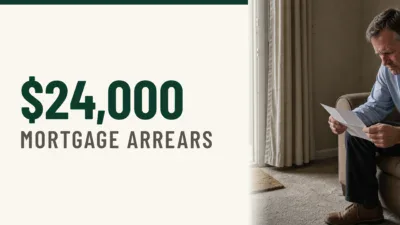
Picture a 52-year-old single filer with about $640,000 in his 401(k). Imagine he is $24,000 behind on his FHA mortgage, and his servicer’s letters have moved from reminders to legal notices.
Plenty of people are in the same spot. The FHA delinquency rate reached 11.74% in the third quarter, up 96 basis points from a year earlier.
FHA foreclosures hit 1.89%, the highest level since early 2017, according to the Mortgage Bankers Association’s National Delinquency Survey.
His plan offers hardship withdrawals, and thwarting foreclosure on a main residence is one of the reasons allowed by the IRS for taking one. The rule covers payments needed to stop a foreclosure, so it applies to a mortgage in arrears. He is in arrears, so he qualifies. What matters now is the price.
Why $24,000 of Arrears Burns Through About $35,300 of Retirement Money
Every dollar of the withdrawal is ordinary income. He is under 59½, so 26 U.S.C. § 72(t)(1)[1] adds a 10%[1] tax on top. Assume his salary leaves him with $65,000 of taxable income (illustrative). In 2026, the 22% bracket for single filers covers taxable income from $50,400 to $105,700.
He needs about $35,300 gross to net $24,000 after a 22% federal rate and the 10% penalty.
That raises his taxable income to $100,300, just below the 24% line.
The bill comes to $7,766 in federal income tax plus a $3,530 penalty, for a total of $11,296. In a state with an income tax, the gross figure goes higher.
Withholding hides part of that cost. On a lump-sum hardship payout, the plan by default withholds only 10%[2] under 26 U.S.C. § 3405(b)(1).
On $35,300 that comes to $3,530, which leaves $7,766 due in April. A homeowner who just used every spare dollar to cure a delinquency is the person least able to cover that bill.
A Withdrawal That Can Never Go Back In
The tax code leaves hardship payouts out of the definition of an eligible rollover distribution under 26 U.S.C. § 402(c)(4)(C)[3]. That rules out a 60-day rollover and any repayment to the plan. SECURE 2.0’s emergency personal expense distribution can be paid back, but it is capped at $1,000[1] per year, which barely covers a $24,000 gap.
That permanence drives the real cost. Left invested at an illustrative 7% for the 13 years until he turns 65, $35,300 would have grown to about $85,000. He is giving up that $85,000 to clear $24,000 of missed payments.
Two Cheaper Ways to Clear the $24,000 Before Foreclosure
Start with the FHA partial claim. Servicers of FHA-insured loans are required to provide options to borrowers facing a hardship. A partial claim moves the missed payments into a zero-interest subordinate lien, and nothing is owed on it until the loan is paid off, the home is sold, or certain refinances occur. That cures the full $24,000 at 0% and leaves the 401(k) untouched. He may first have to complete a three-month trial payment plan.
Timing matters under the HUD’s newer rules. Mortgagee Letter 2026-08, which servicers had to implement by September 21, 2026, treats a borrower’s third failure to accept a trial plan as a plan failure. It also limits repeated re-review requests that would otherwise delay foreclosure.
A 401(k) loan is the next stop. The limit is the lesser of $50,000[1] or half his vested balance, and at $640,000 the $50,000 cap is the one that applies. Borrowing $24,000 triggers no tax and no penalty, and the payments and interest go back into his own account. The main risk: if he leaves his job, the remaining loan balance can come due quickly.
Three Moves to Make Before the Next Servicer Letter
- Ask for a partial claim by name. Call the servicer, request a loss mitigation review, and bring in a free HUD-approved housing counselor if the call stalls. Accept the trial payment plan the first time it is offered, because HUD now counts a third refusal against you.
- Check your plan’s loan provision before filing a hardship request. A $24,000 loan costs nothing in tax and can be paid back. A hardship withdrawal for good takes about $35,300 from the account.
- If hardship is your only option, set withholding at 32% plus your state rate. Then confirm the extra income keeps your taxable income under $105,700. Every dollar above that line is taxed at 24%, and the gross withdrawal grows again.
Contact [email protected] for any questions or corrections.
Gerelyn Terzo is the author of dividend investing handbook "Dividend Investing Strategies: How to Have Your Cake & Eat It Too." A veteran financial journalist, she covers agri-finance for outlets like Global AgInvesting and the broader stock market and personal finance for 24/7 Wall Street. She began at CNBC and later helped launch Fox Business in New York. Gerelyn currently resides in Woodland Park, Colorado and dabbles in nature photography as a hobby.