Wes Moss Calls Structured Notes “Financial Burritos of Destruction.” Here’s Why

This post may contain links from our sponsors and affiliates, and Flywheel Publishing may receive compensation for actions taken through them.

A listener’s financial advisor suggested parking money in structured notes as “dry powder.” Wes Moss replied with a food metaphor. On a replayed episode of The Clark Howard Podcast titled BEST Of: What Are The Money Green Zones? & The Happy Retiree Super Power, he said:
“I call structured notes the financial burritos of destruction: all these layers of options backed by a bank, wrapped up into a product, not a solution. I remember Lehman Brothers going out of business and all that money in structured notes becoming burritos of mass destruction.”
Money sold as safe and ready to deploy can end up locked in a contract that pays only if one bank makes it. You also pay for that contract up front, often without seeing the bill.
Moss Has It Right, and the Math Backs Him
Moss’s verdict holds up. A structured note is a bank IOU with an options contract attached. The SEC says these notes have a fixed maturity and two parts: a bond component and an embedded derivative[1]. The bank promises to repay you. The derivative links your return to an index or a stock.
Every layer costs you something. The SEC warns that a note’s estimated value “is likely lower than the issuance price”[1] because issuers build in their selling costs. Picture a $1,000 note with an estimated value of $960 (illustrative figures). You start 4% behind on day one.
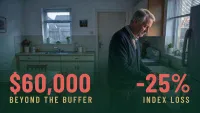
Then there’s the cap. Say you put $100,000 into a five-year note linked to a stock index, with full principal protection and returns capped at 30% (an illustrative example).
If the index grows 50%, an index fund holder ends up with $150,000. The note pays $130,000.
The $20,000 difference is what the protection cost you. Many notes also skip the index’s dividends, which makes the gap even wider.
The protection is only a promise. When the SEC and FINRA issued a joint warning, they noted that some notes protect as little as 10% of principal. Any guarantee is only as good as the issuer’s financial strength.
How Lehman’s “Protected” Notes Collapsed
Lehman Brothers proved that warning right. Its notes were linked to stock indexes and were sold to retail investors as “principal protected.” Legally, they were unsecured debts of Lehman. After the bank’s Sept. 15, 2008 bankruptcy filing, the notes traded as low as 6 cents on the dollar. A $100,000 position was worth $6,000.
FINRA later fined one brokerage $2.5 million over how it sold the notes. The regulator found that some of its advisors “did not even understand the complex products they were selling.”
Your Exit Date Decides Whether the Burrito Bites
Moss is a CERTIFIED FINANCIAL PLANNER® and Chief Investment Strategist at Capital Investment Advisors. His sharpest objection was to calling these notes dry powder, meaning cash you can put to work right away. A structured note is designed to be held until it matures.
Moss, who takes listener questions at wesmoss.com/ask, lays out his retirement framework in The Retire Sooner Method.
If you hold to maturity and the bank makes it, the protection works. Say the index falls 20% over five years. An index investor has $80,000, while the note returns the full $100,000. That trade is why some investors near retirement use these notes. They give up part of the upside in exchange for a known floor on money they won’t touch for years, the same early-drawdown problem we walked through in a free guide on defending the first five years of retirement.
If you sell early, that floor goes away. The SEC warns that even when a buyer exists, a note “may be quite illiquid and you could receive substantially less than your purchase price.”[2] Money you can only reach by selling at a discount is the opposite of dry powder.
Questions That Expose a Bad Pitch
If an advisor recommends a structured note, ask these questions before you sign:
- What is the estimated value compared with my price? The pricing supplement lists both numbers. The difference is the fee built into the note, and you pay it even if you never see a separate charge.
- Which bank issues it, and what happens if that bank fails? You become an unsecured creditor. Look up the issuer’s credit rating, and remember that Lehman’s notes were also sold as protected.
- What does the note pay in three cases? Ask for the payout if the index grows 50%, stays flat, or falls 30%. If the advisor can’t show you the cap and the floor in dollars, treat that as a red flag.
- What would I get if I sold in year two? Ask whether the issuer commits to buying the note back, and at what estimated discount.
- How are you paid on this sale? Commissions are often built into the issue price. That cost cuts your return, and it gives the advisor a reason to recommend the product.
- Why is this better than doing it myself? Combining Treasuries with an index fund can produce a similar floor. You get daily liquidity, keep the dividends, have no cap on profits, and don’t depend on one bank’s credit.
Before you buy a structured note, find out which bank backs the promise and what it will cost to get your money out early.
Contact [email protected] for any questions or corrections.
Chris Lange is a financial and geopolitical writer with more than a decade of experience covering a myriad of topics. He has published thousands of articles for 24/7 Wall St., with past coverage focused heavily on stocks, IPOs, healthcare, defense, global affairs, and technology.
His work has been quoted, or referenced by a number of outlets including Business Insider, USA Today, Yahoo Finance, MSN, The Motley Fool, and many other publications. A graduate of Southwestern University, he studied business with a focus on investments and has previous experience in banking and startups.
When not reading or writing the news, he is following his passion for Lacrosse, playing chess, or building solar projects with his dad.