At 69 With $900,000, She’ll Want to Make Sure Her Dog Is Cared For After She’s Gone. A Pet Trust Can Pay a Caregiver to Do It

This post may contain links from our sponsors and affiliates, and Flywheel Publishing may receive compensation for actions taken through them.
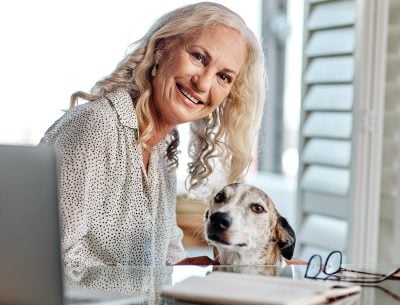
At 69, with about $900,000 saved, she is updating her will. One question in that will still has no answer, and nobody in the family has offered one: if she dies first, who takes the dog, and who pays for its care? If you’re a pet owner updating your plan, you’ve probably faced the same question. A pet trust answers that question: how it compares with a simple request in a will and how to decide how much money to set aside.
Why Your Dog Can’t Inherit a Dime
The law treats pets as property, and property can’t own property. If you leave money “to my dog,” the gift has nowhere to go. The dog passes to whoever inherits the rest of your belongings, just like the couch.
The usual workaround is to leave the dog and a sum of cash to a trusted friend, with a written request to use the money for care. That request can’t be enforced. Once probate is over, the cash legally belongs to the friend. If that person moves, gets sick, or spends it on a roof repair, no one has standing to step in.
A Pet Trust Puts Someone in Charge of the Money
A pet trust fixes that gap. By 2016, all 50 states had recognized pet trusts, although the details differ by state. A typical pet trust names four parties and spells out your instructions:
- Caregiver: the person who houses, feeds, and walks the dog every day.
- Trustee: the person who handles the money and pays or reimburses the bills. Making this a different person from the caregiver gives you a built-in check, because the trustee can ask for vet receipts before paying.
- Remainder beneficiary: whoever gets the leftover funds after the dog dies, such as a relative or a local shelter.
- Written care standards: your instructions on diet, medications, vet choice, and end-of-life decisions, which the trustee can hold the caregiver to.
For most people in her position, a pet trust is a better choice than a request in a will. The difference is enforcement, and enforcement is what she’s actually worried about.
Sizing the Trust Without Inviting a Court Fight
An oversized trust can invite a court challenge. When Leona Helmsley left a fortune for her Maltese, Trouble, a Manhattan Surrogate Court judge reduced the trust fund for the little dog from $12 million to $2 million. Courts can cut amounts that look excessive, and an inflated figure gives unhappy heirs a reason to challenge it.
Base the number on three things: what the dog costs each year (food, grooming, routine vet care, insurance), a cushion for the larger vet bills that tend to come in a dog’s senior years, and how many years your dog is likely to live given its breed and current age. Your vet can help with the last two. Multiply the annual cost by the expected years, add the cushion, and add a modest stipend if you want to pay the caregiver for their time. With $900,000 saved, that total will almost always be a small piece of the estate.
How the trust is funded matters as much as the amount. A trust created inside a will gets no money until probate finishes, and that can take months. A pet trust set up within a revocable living trust, or funded by a payable-on-death account, can pay for care much sooner. Fund it with cash or taxable investments and leave IRA money to human heirs. Retirement dollars paid into a trust can be taxed at trust income tax rates, which reach the top bracket at much lower income than individual rates.
Her Estate Sits Far Below the Federal Tax Line
The federal estate basic exclusion is $15,000,000 for 2026, so a $900,000 estate won’t owe federal estate tax. A handful of states set lower thresholds, so check your state’s rules. For her, the pet trust is about care and control, and taxes barely factor in.
She has some time to set this up while her accounts are still simple. Since she was born in 1957, her required minimum distributions begin at age 73, with the first RMD year in 2030.
Backups and Updates Keep the Plan Working
Name at least one backup caregiver and one backup trustee, and get a yes from each of them before you sign. Have the trust take effect if you become incapacitated as well as at death, because a stay in a nursing facility can leave a dog without care as quickly as a funeral can. Review the plan whenever your dog’s health changes, a caregiver moves, or you get a new pet.
An estate attorney can help because pet trust rules vary by state, and the trust has to work with your will or living trust so the money arrives right away. A trust drafted that way avoids the months-long funding gap that a do-it-yourself will provision can create. The pet piece is one line on a longer checklist of beneficiary forms, ownership, and trust paperwork that decides whether your money goes where you want, and we put that whole checklist in a free estate guide here.
What to Do Before Anything Else
Start by lining up the people before the money. Ask your first-choice caregiver directly, then choose a separate trustee you trust to say no to a padded bill. With those two names settled, an attorney can draft the trust around them and your instructions.
Contact [email protected] for any questions or corrections.
David Beren has been a Flywheel Publishing contributor since 2022. Writing for 24/7 Wall St. since 2023, David loves to write about topics of all shapes and sizes. As a technology expert, David focuses heavily on consumer electronics brands, automobiles, and general technology. He has previously written for LifeWire, formerly About.com. As a part-time freelance writer, David’s “day job” has been working on and leading social media for multiple Fortune 100 brands. David loves the flexibility of this field and its ability to reach customers exactly where they like to spend their time. Additionally, David previously published his own blog, TmoNews.com, which reached 3 million readers in its first year. In addition to freelance and social media work, David loves to spend time with his family and children and relive the glory days of video game consoles by playing any retro game console he can get his hands on.