3 Signs It’s Time to Break Up With Your Bank
Your savings account probably earns less in a year than a cup of coffee costs, and your bank is counting on you not doing the math. Three overlooked signs reveal whether the place holding your money is quietly working against…

This post may contain links from our sponsors and affiliates, and Flywheel Publishing may receive compensation for actions taken through them.

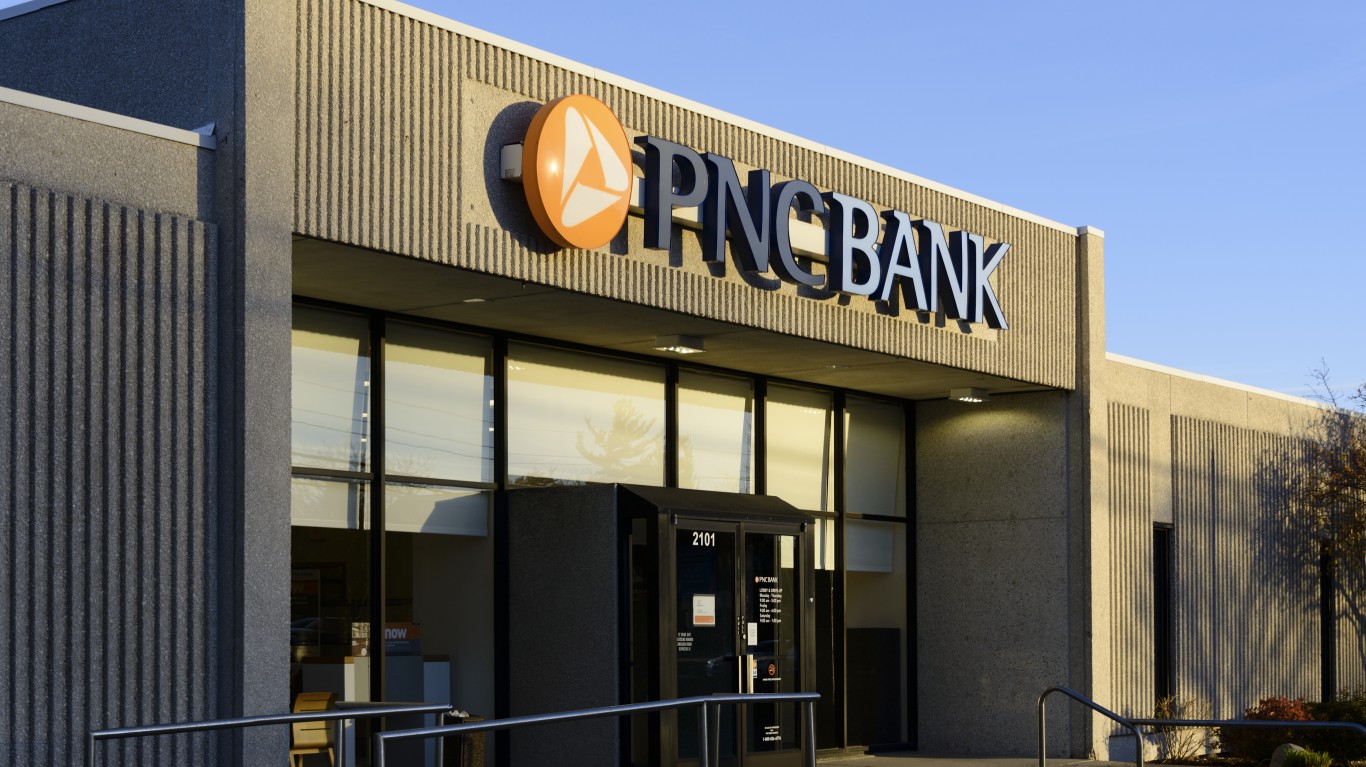
Your bank is a business, and if it’s paying you almost nothing on your savings while charging fees for the privilege, the relationship has run its course.
The FDIC’s national average savings rate is around 0.38%, and big traditional banks pay closer to 0.01% to 0.02%. Competitive online high-yield savings accounts (HYSAs) are paying around 4.00% APY. APY is the annual interest rate your money earns.
Put $10,000 in a big-bank savings account at 0.02% and you’ll earn about $2 in a year. Put that same $10,000 in a solid HYSA at 4%, and you’ll earn roughly $400. That’s about $400 a year on one balance, for filling out one online form.
Sign 1: Your APY Starts With a Zero
If your savings account rate begins with “0.0-something,” you’re being underpaid on purpose. The Fed funds rate, which anchors every consumer deposit rate in the country, currently sits at 3.75%, and it’s been there since December 2025.
Online banks pass most of that through to you. Traditional banks pass through almost none of it. Here’s what the gap looks like on real balances:
| Balance | Big Bank (0.02%) | HYSA (4.00%) | The Gap |
|---|---|---|---|
| $5,000 | ~$1/year | ~$200/year | ~$199 |
| $10,000 | ~$2/year | ~$400/year | ~$398 |
| $25,000 | ~$5/year | ~$1,000/year | ~$995 |
Even the national average 12-month CD pays 1.68%. If your savings account can’t beat that, something’s off.
Sign 2: You’re Paying to Store Your Own Money
Monthly maintenance fees, minimum balance fees, paper statement fees, out-of-network ATM fees. A $5 monthly fee is $60 a year to hold money that’s already yours.
The same institution may charge you a credit card APR currently averaging 20.94%, which the Fed considers record territory. The best HYSAs charge no monthly fee, have no minimum balance, and are FDIC insured up to $250,000 per depositor, per bank. That’s the floor to look for.
Sign 3: Your Rate Hasn’t Budged in Years
Rates change. Yours should too. The Fed cut 0.75% between August and December of 2025, and CD rates have already ticked back up recently, from a March low of 1.52% to 1.68% in July. Banks that never move are hoping you never look.
The Cost Compounds While You’re Not Looking
One year of $400 stings a little. Ten years of it, with compounding, is where it gets loud. Ten grand parked in an HYSA at 4% grows to roughly $14,800 over a decade. The same $10,000 in a big-bank account rounds to, well, still basically $10,000.
That’s thousands of dollars from a 10-minute decision, which matters more now that the personal savings rate has fallen to 2.8% in Q2 2026, from 6.2% in early 2024. Every dollar of savings is working harder because there are fewer of them.
The Caveat
HYSA rates float. When the Fed cuts, your yield drops. A CD or Treasury can lock in a rate, and there are times a CD wins, like when you know you won’t touch the money for 12 months and rates look poised to fall.
Even a floating 3.5% beats a stuck 0.02% by a mile. Your emergency fund shouldn’t be locked up anyway. Savings accounts are for money with a job: emergency fund, down payment, next year’s tax bill. Long-term money belongs in low-cost index funds, not any savings account.
How To Switch (It Takes About 10 Minutes)
- Pick an online bank with the basics right. Look for an APY in the ~3.50% to 4.15% range, no monthly fee, no minimum balance, and FDIC insurance.
- Open the account online. You’ll need your ID, Social Security number, and your current bank’s routing and account numbers.
- Link and transfer. ACH transfers usually clear in 1 to 2 business days.
- Automate a monthly deposit. Even $50 or $100 a month means the habit runs itself.
- Keep your checking account if you love it. Just move the savings.
The Bottom Line
You don’t have to break up with your bank completely. Just stop letting the savings side cost you about $400 a year per $10,000 you hold there.
Consumer sentiment sits at 49.5, which is a polite way of saying people are anxious about money. Fixing where your savings live is one of the few financial moves you can make today, from your phone, that pays you back every month for as long as the account stays open.
Contact [email protected] for any questions or corrections.
I am a long time investor and student of business, and believe finding good companies that can become great investments is the best game on earth. After 20 years of writing and researching the public markets it is clear that individuals have never had more tools and information to take control of their financial lives. From ETFs and $0 commissions to cryptos and prediction markets there has never been a greater democratization of access to investing.
I write to help people understand the investments available to them so they can make the best choice for their portfolio, whether they're starting out or looking for income in retirement.