The Fed Might Cut Rates Again This Year. Here’s What Savers Should Do Before It Happens
Before the next Fed meeting, there is a quiet window where savers can still capture rates most banks hope you never notice. The gap between what your bank pays and what it could pay might surprise you.

This post may contain links from our sponsors and affiliates, and Flywheel Publishing may receive compensation for actions taken through them.
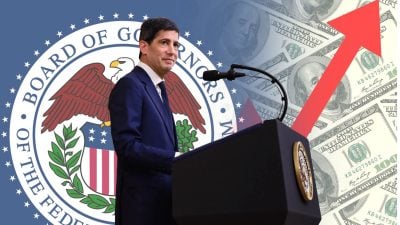
The Fed has held its target rate at 3.75% for about 7.5 months now, and a lot of savers are quietly wondering the same thing: is another cut coming before year-end?
Nobody knows for sure. But with unemployment ticking down to 4.2% and consumer sentiment sitting at a pessimistic 44.8, the Fed has cover to keep easing. The market is already pricing that in.
Here’s what that means for you in plain dollars. A high-yield savings account paying around 4% APY earns roughly $400 a year on a $10,000 balance. The FDIC national average savings rate of about 0.38% earns you around $38 on the same balance. That’s a gap of about $362 a year for doing nothing more than opening the right account.
If rate cuts do arrive, HYSA yields will drift down with them. Locking in what’s available now, or at least moving your money to a bank that competes on rate, is the easy win most people never take.
What “Average” Is Really Costing You
The big traditional banks (the ones with branches on every corner) typically pay 0.01% to 0.02% on standard savings. Competitive online HYSAs are paying in the neighborhood of 3.50% to 4.15% right now, roughly in line with short-term Treasury yields like the 6-month at 4.1% and the 1-year at 4.14%.
Here’s the knowing-vs-seeing table. Assume 4.00% APY on the HYSA side and 0.38% on the national-average side:
| Balance | HYSA at 4.00% | Average at 0.38% | The Gap |
|---|---|---|---|
| $5,000 | ~$200 | ~$19 | ~$181 |
| $10,000 | ~$400 | ~$38 | ~$362 |
| $25,000 | ~$1,000 | ~$95 | ~$905 |
Those aren’t projections. That’s one year of interest that either shows up in your account or doesn’t.
The Cost Compounds While You’re Not Looking
Stretch that $10,000 balance out over 10 years, leaving the interest to compound. At 4%, you’d end up with roughly $14,800. At 0.38%, closer to $10,400. That’s more than $4,400 of difference on money you would’ve saved anyway.
Meanwhile, personal saving as a share of income has slipped from 6.2% in early 2024 to 3.9% in the first quarter of 2026. Every basis point of yield matters more when the savings pool is shrinking.
The Caveat Worth Naming
HYSA rates float. If the Fed cuts again, your 4% could drift toward 3.5% or lower. That’s real. But the average bank rate will drift down too, and the gap between top HYSAs and the national average tends to stay wide because online banks compete on rate to win deposits.
The one place I’d still consider a CD: money you know you won’t touch for 12 months. The national average 12-month CD sits at 1.68%, but top online CDs pay meaningfully more, and they lock the rate in. I-bonds are another option, currently paying a 4.26% composite rate through October, though you’re locked out for the first 12 months.
For your emergency fund and near-term savings, though, liquidity wins. That’s HYSA territory.
How to Make the Switch (It Takes About 10 Minutes)
- Pick an FDIC-insured online bank. Look for 3.50%+ APY, no monthly fee, no minimum balance, and standard FDIC insurance up to $250,000 per depositor.
- Open the account. You’ll need your ID, Social Security number, and your current bank’s routing and account numbers. Ten minutes, tops.
- Link and transfer. ACH transfers usually clear in 1 to 2 business days. Move your emergency fund first.
- Automate it. Set a recurring transfer, even $50 or $100 a month, so the habit runs itself.
- Keep your checking account if you love it. This isn’t a breakup. Just move the savings.
Act Before the Fed Moves
The $362 a year gap on a $10,000 balance is the number to remember. It’s the interest banks are counting on you never asking for.
Whether the Fed cuts again in September, December, or not at all this year, the move is the same: park money you might need soon in an account that actually pays you. The window to do it is open right now.
Contact [email protected] for any questions or corrections.
I am a long time investor and student of business, and believe finding good companies that can become great investments is the best game on earth. After 20 years of writing and researching the public markets it is clear that individuals have never had more tools and information to take control of their financial lives. From ETFs and $0 commissions to cryptos and prediction markets there has never been a greater democratization of access to investing.
I write to help people understand the investments available to them so they can make the best choice for their portfolio, whether they're starting out or looking for income in retirement.