A GM Executive Built This Michigan Cow Farm in the 1920s. At $3.5 Million, Selling It Could Make More of Her Social Security Taxable
Selling a historic Michigan estate tied to a General Motors executive sounds like a windfall, but the tax ripple from a multimillion-dollar gain can quietly pull more of a retiree's Social Security benefits into taxable income than most sellers ever…


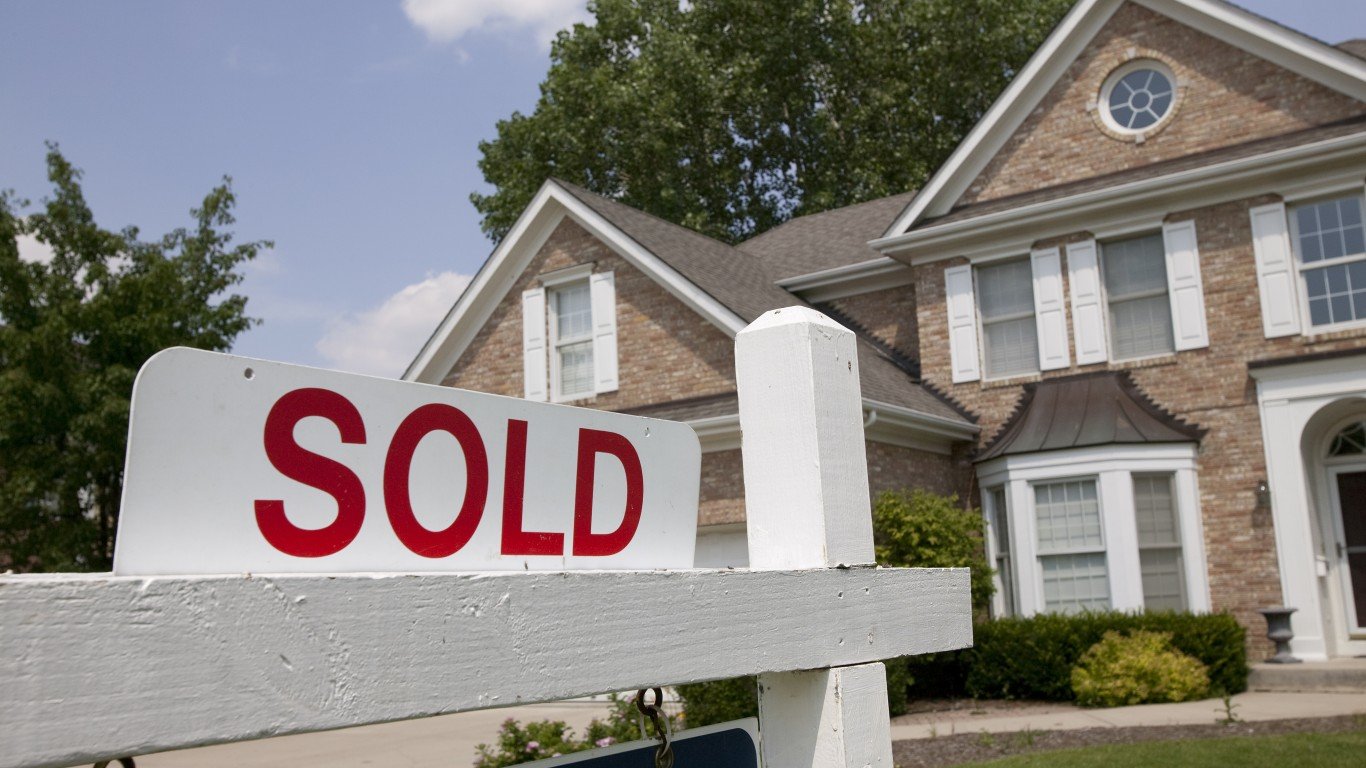
The Ann Arbor estate known as Oaklands was built in the early 1920s for General Motors (NYSE:GM | GM Price Prediction) executive Arnold Goss, who later ran a dairy farm there with award-winning Jersey cattle. The asking price today is $3.5 million.
Decades of rising values have turned an old farmstead into a multimillion-dollar asset. National home prices are near their recent peak, and housing market dynamics are shifting once again.
The house may qualify for one of the most generous breaks in the tax code. Any gain left after that break goes straight into the formula that determines how much of her Social Security gets taxed.
Up to $500,000 of Gain Can Vanish Before Taxes Apply
Say a retired woman owns a home like this one and has lived in it for at least two of the five years before the sale. In that case she can usually exclude up to $250,000 of gain as a single filer, or $500,000 for a qualifying married couple filing jointly.
The exclusion comes off her profit, meaning the sale price minus what she has put into the home. An investment property, a second home or an inherited house she never lived in as her main residence may not qualify at all.
How a $3.5 Million Sale Still Leaves a $1.55 Million Gain
Say she sells for $3.5 million. Her adjusted basis is $1.5 million (what she paid plus qualifying improvements). Selling costs are $200,000.
That leaves a gain of $1.8 million. After the single-filer exclusion, about $1.55 million is still taxable.
Where That Gain Meets Her Social Security Check
The IRS uses combined income to determine how much Social Security to tax: adjusted gross income, plus tax-exempt interest, plus half of benefits. A taxable capital gain counts toward adjusted gross income. For a single filer, taxes on benefits begin when combined income passes $25,000, and up to 85% can be taxed above $34,000.
Suppose she receives $2,000 monthly ($24,000 yearly) and withdraws $20,000 from an IRA. Combined income reaches $32,000.
Normally, only about $3,500 of her benefits would be taxable. In the sale year, the gain drives her to the 85% ceiling, so $20,400 of benefits counts as income, $16,900 more than usual, on top of the tax on the gain itself.
The 85% threshold represents the share of benefits counted as income, then taxed at her regular rate. Income thresholds aren’t adjusted for inflation, while benefits are. The 2027 COLA is currently tracking around 3.5%-3.6%, drawing more retirees toward those lines over time.
A sale creates a one-year income spike. The next year, combined income typically returns to normal. Living on sale proceeds instead of taking IRA withdrawals that year keeps those withdrawals from adding to the spike. If she is on Medicare, the sale could also raise her premiums later because IRMAA generally uses income from two years earlier.
Her Basis Could Be the Most Valuable Number on the Property
Every dollar added to basis is a dollar of gain that never reaches the Social Security formula. Basis includes:
- The original purchase price, usually found in closing papers from decades ago.
- Some closing costs paid at purchase, such as title and recording fees. Many owners forget these.
- Major improvements like additions, structural renovations, new roofs, or replaced mechanical systems. On older properties, these accumulate over years.
Routine repairs and maintenance generally don’t count. Inherited homes follow very different basis rules, so this example assumes she bought the property herself.
Why a Dairy Farm History Calls for Separate Math
If a separate part of the property was used for farming, rental, or another business, the gain on that portion may need separate treatment and may not qualify for the home-sale exclusion. The exclusion comes off her gain, after adjusted basis and selling costs are accounted for.
Gather These Five Records Before Accepting an Offer
- Adjusted basis: purchase documents and receipts for every major improvement.
- Residence history: proof of the two-out-of-five-year test, like tax returns or voter registration.
- Selling costs: commissions and other qualifying expenses, which reduce gain dollar for dollar.
- Business use: whether any part was depreciated or reported separately on past returns.
- Other income: IRA withdrawals, pensions, and investment gains already counting toward combined income that year.
The $3.5 million price makes headlines. For Social Security taxes, what matters is the gain after basis, selling costs, and the exclusion. Every seller’s records, land use, and filing status differ, so run the numbers with her own documents before signing.
Contact [email protected] for any questions or corrections.
Gerelyn Terzo is the author of dividend investing handbook "Dividend Investing Strategies: How to Have Your Cake & Eat It Too." A veteran financial journalist, she covers agri-finance for outlets like Global AgInvesting and the broader stock market and personal finance for 24/7 Wall Street. She began at CNBC and later helped launch Fox Business in New York. Gerelyn currently resides in Woodland Park, Colorado and dabbles in nature photography as a hobby.