His Well Ran Dry at 68. The $25,000 IRA Withdrawal Made More of His Social Security Taxable.
A broken well forces a retired homeowner to pull $25,000 from his IRA, but the repair that was supposed to solve one problem quietly triggers a cascade of tax consequences he never saw coming.

This post may contain links from our sponsors and affiliates, and Flywheel Publishing may receive compensation for actions taken through them.
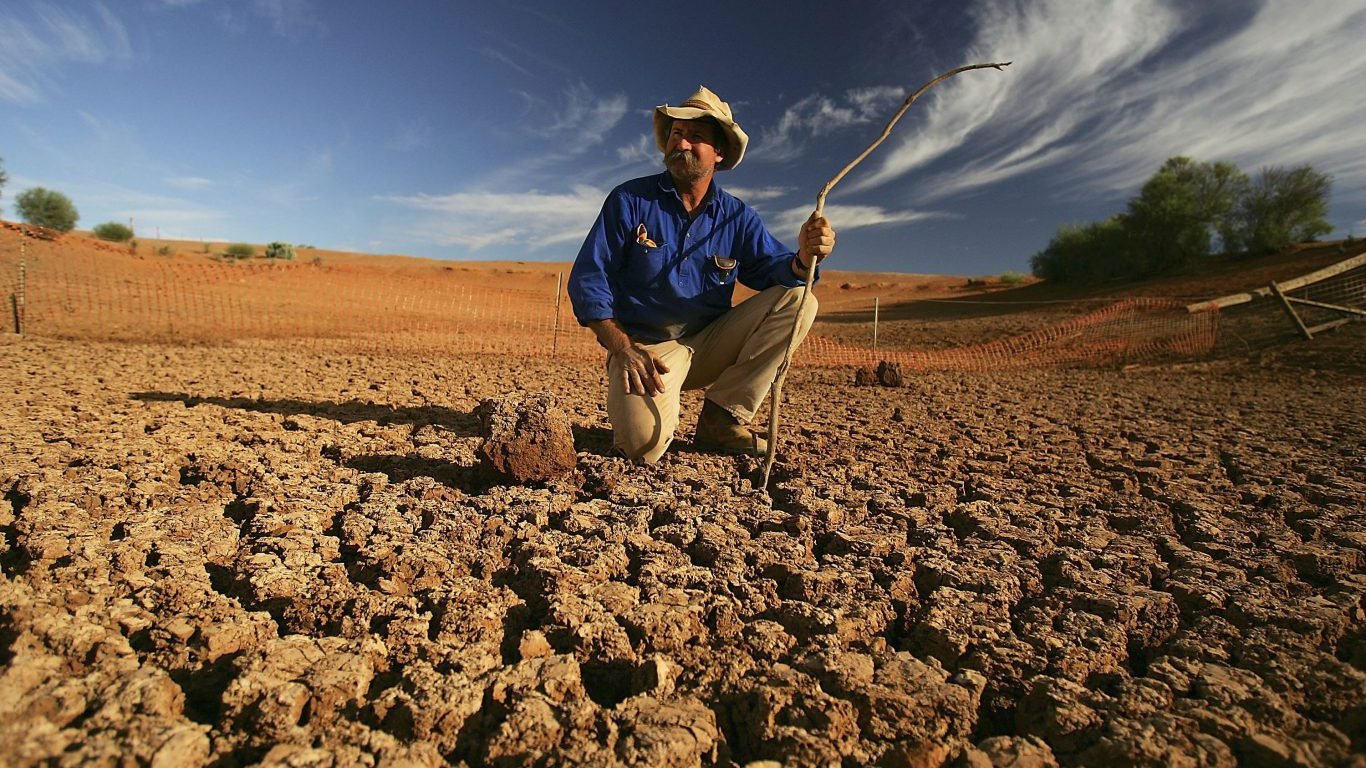
Picture a retired homeowner, age 68, living over an aquifer that has been dropping for years. One morning the tap sputters. The diagnosis is grim. The well must be drilled deeper, or the property must connect to a municipal water line several hundred feet away. The bill comes to roughly $25,000. That figure is illustrative, but costs in the low-to-mid five figures are hardly unusual for major well work or a long utility connection. With most of his available money sitting in a traditional IRA, he withdraws enough to pay the contractor.
He assumes the expense will soften the tax hit. Instead, the repair and the withdrawal land on two different calendars. The $25,000 comes out of the IRA as taxable income now. The well may not help him until he sells the house, if it ever helps at all.
One Emergency, Two Tax Calendars
A deeper well, new pump system or permanent municipal connection is generally a capital improvement. It does not produce a current deduction on a personal residence. The cost is added to the home’s basis, which can lower the taxable gain when the property is eventually sold. Smaller repairs receive even less help. Replacing a pressure switch or fixing a cracked pipe is generally a personal expense. It is not deductible and usually does not increase basis.
A federally declared disaster can open a different path for certain casualty losses, but ordinary aquifer decline generally does not qualify. It is gradual, not the sudden event the casualty rules contemplate. The basis increase may eventually prove useful. It also may not. If the home-sale exclusion already shelters his entire gain, another $25,000 of basis changes nothing. If he remains in the house for life, the improvement provides no income-tax benefit to him during retirement.
The IRA Withdrawal Reaches Social Security Now
The traditional IRA distribution is generally taxable as ordinary income. At 68, he no longer faces the 10% early-withdrawal penalty, but the money still enters adjusted gross income (AGI). That matters because the IRS uses combined income to determine how much of his Social Security is taxable. The calculation includes AGI, tax-exempt interest and half of annual benefits.
Once combined income passes $25,000 for a single filer or $32,000 for a married couple filing jointly, some benefits can become taxable. Above $34,000 and $44,000, respectively, as much as 85% can enter the taxable column. If he was near one of those lines, the $25,000 withdrawal can pull more of his Social Security into the tax bill. It may also raise his Medicare Part B and Part D premiums two years later through IRMAA. The basis increase does not offset any of this. It sits with the house while the IRA withdrawal moves through this year’s return.
The Account Paying the Bill Matters
Had he used cash, loan proceeds or a qualified Roth IRA withdrawal, the Social Security calculation could look different. Those choices carry their own costs and limitations, but they generally do not create the same immediate taxable income as a traditional IRA distribution.
Assistance may also exist. USDA-backed rural programs can help eligible rural homeowners finance well construction or repairs, sometimes through low-interest revolving loans. Very-low-income homeowners age 62 and older may also qualify for Section 504 repair assistance when the work addresses a health or safety hazard. State agencies, counties and rural water districts may have separate programs.
Before the Drill Rig Arrives
The contractor may need an answer quickly, but the source of the money deserves a closer look.
- Ask the county health department, rural water district and local USDA Rural Development office about assistance before withdrawing retirement funds.
- Compare cash, traditional IRA, Roth and borrowing options with the Social Security and Medicare effects included. Keep every invoice, permit and drilling report with the home’s basis records.
The contractor only cares that the invoice gets paid. The tax return cares where the money came from. Get that decision right, and the $25,000 can solve the water problem without quietly creating another one for his retirement income.
Contact [email protected] for any questions or corrections.
Gerelyn Terzo is the author of dividend investing handbook "Dividend Investing Strategies: How to Have Your Cake & Eat It Too." A veteran financial journalist, she covers agri-finance for outlets like Global AgInvesting and the broader stock market and personal finance for 24/7 Wall Street. She began at CNBC and later helped launch Fox Business in New York. Gerelyn currently resides in Woodland Park, Colorado and dabbles in nature photography as a hobby.