Did Sprouts Sell Off Too Much on the Secondary Offering?
ThinkstockSprouts Farmers Market, Inc. (NASDAQ: SFM) reported earnings last week, and the stock managed to not keep falling. Then news broke on Monday night that Apollo Global Management, LLC (NYSE: APO) and other selling shareholders were selling more shares of…

 Sprouts Farmers Market, Inc. (NASDAQ: SFM) reported earnings last week, and the stock managed to not keep falling. Then news broke on Monday night that Apollo Global Management, LLC (NYSE: APO) and other selling shareholders were selling more shares of the high-end specialty grocery chain. This is what really took some wind out of the shares, and there is the notion that Sprouts is fighting some of the same trends as Whole Foods Market Inc. (NASDAQ: WFM).
Sprouts is selling 15 million shares in a secondary public offering, with sale proceeds going to the selling shareholders. As you would normally see when shareholders sell out, the selling stockholders will receive all of the proceeds from the offering.
The underwriting group is led by Goldman Sachs, Credit Suisse, Apollo Global Securities, Deutsche Bank, Guggenheim, UBS, and Wolfe Research Securities. The underwriters will have the option to purchase up to an additional 2,250,000 shares.
The question to ask now is whether or not the stock was sold off too much on this news. In late Tuesday trading, Sprouts’ shares were down 6.7% at $30.41. This stock has already been hit hard with a 52-week trading range of $25.73 to $49.45.
The first take is that this is a severe drop on the surface. The second look is unfortunately different still – risks of further insider selling along with premium valuations. The case with the Whole Foods overhang just cannot be ignored.
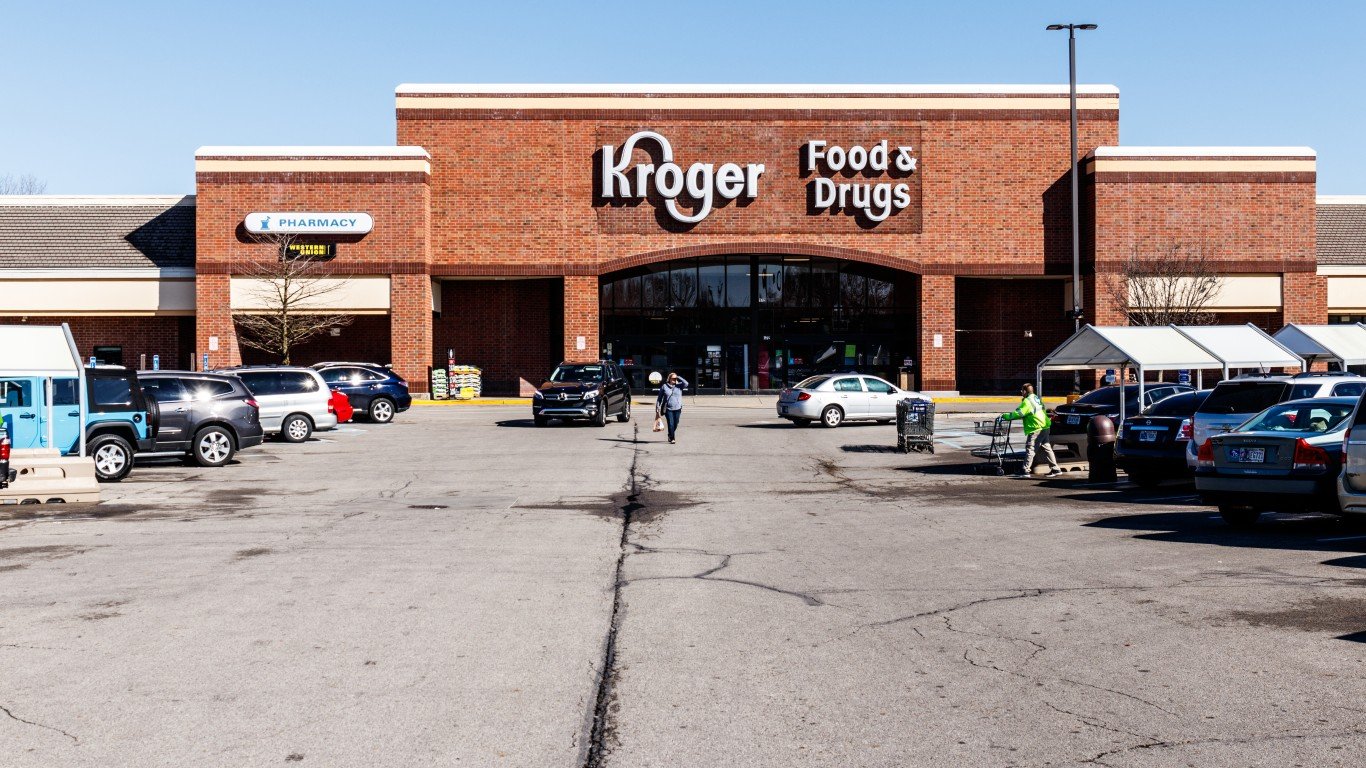
The rise of competition among the Whole Foods, Sprouts, Trader Joe’s, and others have all led to a crowding in developed markets. Also, the likes of Kroger and traditional grocery chains are now into organic and specialty food offerings – even Walmart is in the game.
What we would point out is that the offering shows that Apollo will be selling almost 11 million shares. This takes their position of 45.6 million shares down to 34.6 million shares. its stake will fall from 30.5% down to 23.0%. The rest of the shareholders selling shares in the secondary are simply too many to mention.
Unfortunately, Sprouts still trades at about 45-times expected 2014 earnings and about 35-times expected 2015 earnings. That high valuation also comes with a likely chance that insiders are likely to continue selling shares when they can.
Whole Foods has also been crushed in its share price. At $38.40, its 52-week range is $36.08 to $65.59. The difference is that Whole Foods trades at 25-times expected 2014 earnings, and only about 22-times expected 2015 earnings.
Sprouts came public just in time to catch the reality check of the high-end and organic grocery store trade getting crowded. This segment is still going to grow, but it seems impossible to expect the growth trends of the last decade to be anywhere close to reality in the decade ahead. That is particularly the case if the economy softens up again – and despite the drop is Sprouts and Whole Foods, neither stock has priced in another recession nor an economic soft patch.
Contact [email protected] for any questions or corrections.
Jon Ogg has been a financial news analyst since 1997. Mr. Ogg set up one of the first audio squawk box services for traders called TTN, which he sold in 2003. He has previously worked as a licensed broker to some of the top U.S. and E.U. financial institutions, managed capital, and has raised private capital at the seed and venture stage. He has lived in Copenhagen, Denmark, as well as New York and Chicago, and he now lives in Houston, Texas. Jon received a Bachelor of Business Administration in finance at University of Houston in 1992. www.247wallst.com.