Best Jim Cramer Investment Advice for People in Their 60s
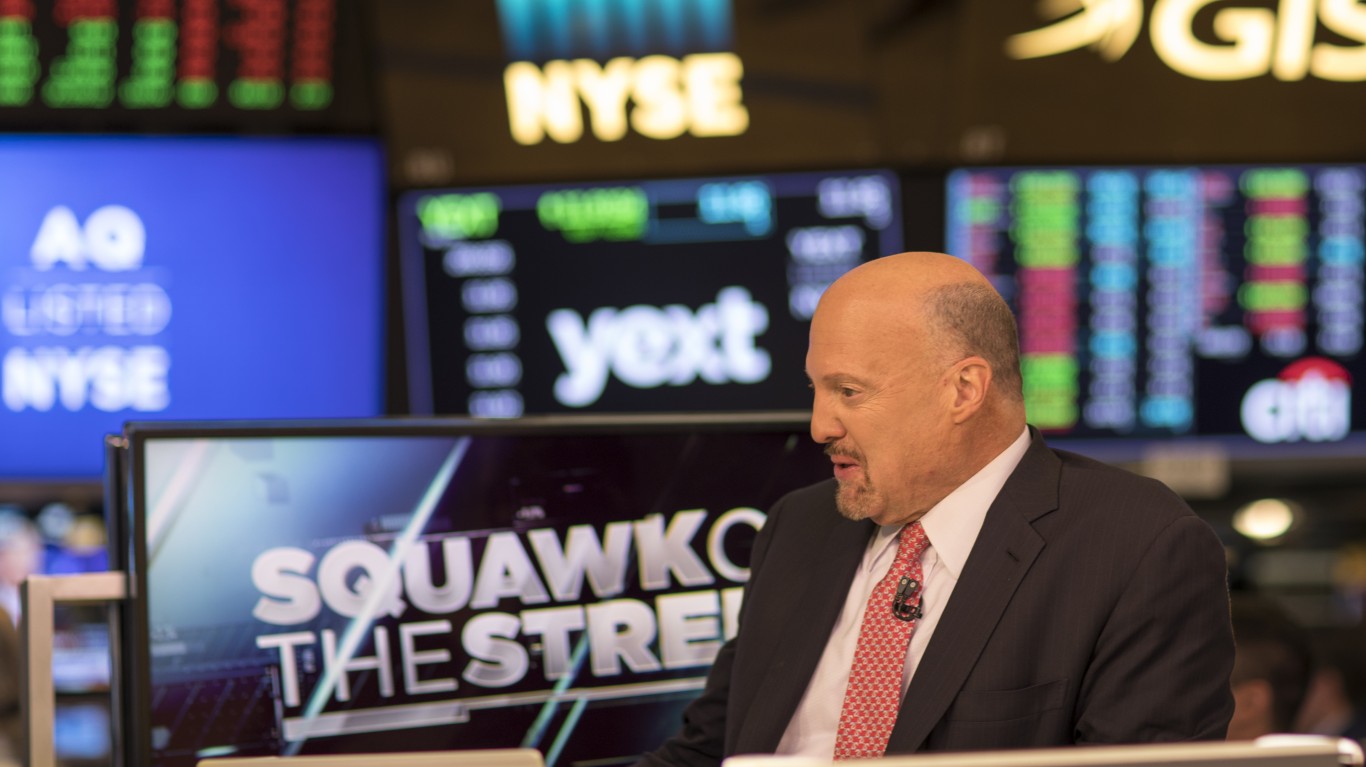
Jim Cramer has built a career translating complex Wall Street jargon into advice that everyday investors can actually use. Before becoming the high-energy host of CNBC's Mad Money, he ran a successful hedge fund and co-founded TheStreet, establishing a track…

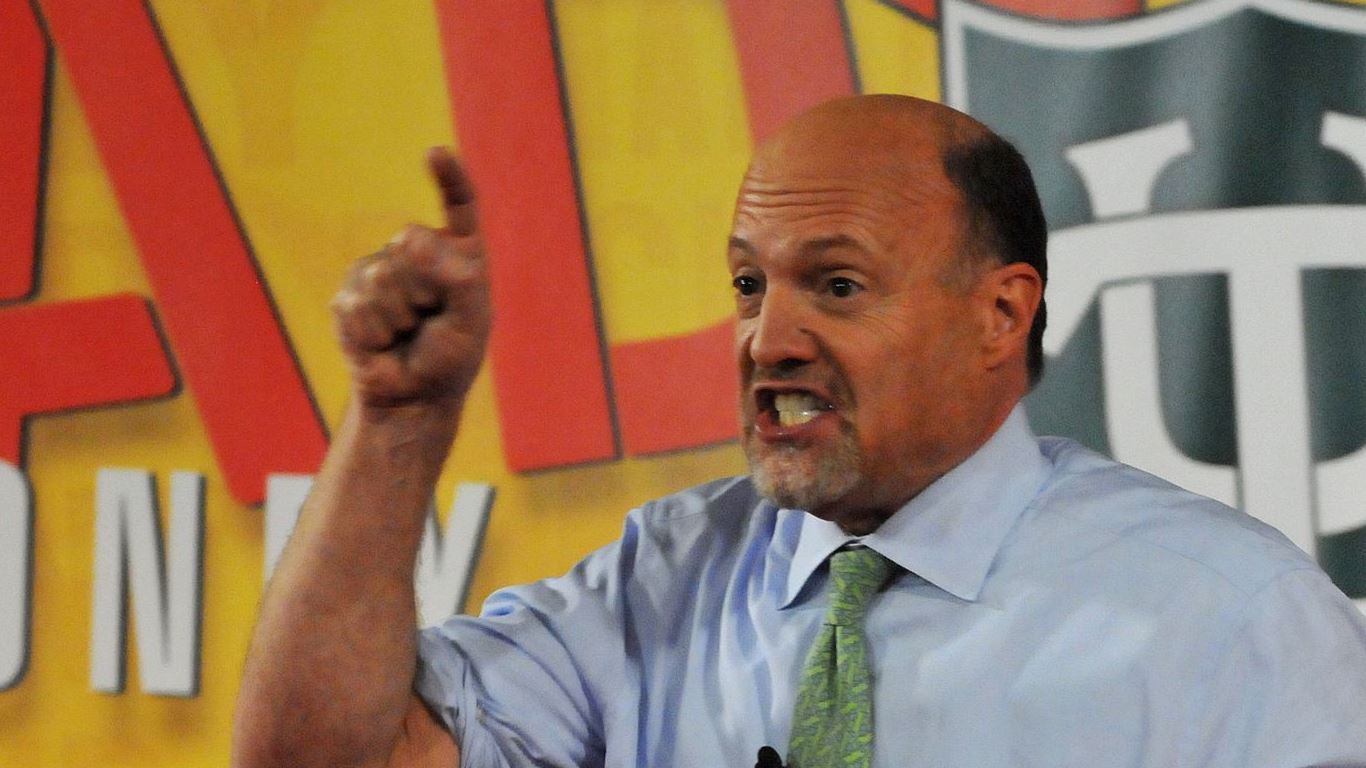
Jim Cramer has built a career translating complex Wall Street jargon into advice that everyday investors can actually use. Before becoming the high-energy host of CNBC’s Mad Money, he ran a successful hedge fund and co-founded TheStreet, establishing a track record that goes well beyond television theatrics. Now in his twentieth season hosting Mad Money, Cramer also co-hosts Squawk on the Street and leads the CNBC Investing Club. On September 30, 2025, Simon & Schuster published his latest work, How to Make Money in Any Market, an instant New York Times bestseller that distills his decades of market experience into a practical guide for everyday investors. What distinguishes him is his ability to make the stock market feel accessible and immediate, turning abstract financial concepts into concrete, actionable decisions.
For people in their 60s, that accessibility carries special weight. Retirement is close, the margin for error is narrow, and a poorly timed decision can take years to reverse. Cramer’s guidance for this age group circles back to a handful of durable principles: understand what you own, stay engaged with your holdings, respect the limits of risk, and never let your portfolio run on autopilot. Even if you never follow a specific stock pick of his, the lessons below push investors toward greater discipline and clearer thinking about what comes next.
Jim Cramer’s smartest investing lessons for your 60s
Among the most recognized voices in financial media, Jim Cramer delivers advice that stays straightforward and actionable. His approach combines disciplined research, broad diversification, and a genuine commitment to staying engaged with the market. As retirement draws closer, having reliable principles to anchor your financial decisions becomes increasingly critical.
Here are 16 Jim Cramer quotes and lessons that resonate with people in their 60s:
1. The Short Term Doesn’t Matter (As Much)
- “The intrinsic value of stocks is not influenced by what happens to them in the short term.” (Jim Cramer)
Your Stocks Are Here to Stay
Stock market investing is fundamentally a long-term commitment. Short-term volatility is inevitable, but the market has historically trended upward over long stretches. Fidelity data shows the S&P 500 averaged roughly 11% annually over the 20 years through December 2025, and approximately 10.4% over the prior 30 years, with dividends reinvested. That compounding effect is what rewards patient investors. Even in your 60s, your investment horizon may still span two or three decades, which means time remains a genuine asset.
2. Aim for 60%
- “In this business, if you’re good, you’re right six times out of ten.” (Jim Cramer)
Things Aren’t Always in Your Favor
No investor achieves a perfect record. Markets are inherently unpredictable, and even the most seasoned fund managers regularly misjudge opportunities. That reality reinforces the importance of diversification: spreading risk across multiple positions rather than depending on flawless market timing. The discipline of never over-concentrating becomes especially critical near retirement, when a concentrated mistake leaves little time for recovery.
3. Diversify Your Portfolio
- “Invest at least 20% of your portfolio in an index fund.” (Jim Cramer)
Why Index Funds
Index funds provide broad market exposure that naturally manages risk through diversification. They require minimal active oversight and carry lower fees than most actively managed alternatives, which translates directly into higher net returns over time. The data makes a compelling case. The SPIVA Year-End 2024 scorecard found that 89.5% of actively managed large-cap funds failed to beat the S&P 500 over the 15 years through December 2024. The SPIVA Year-End 2025 scorecard reinforced that verdict: 79% of large-cap active managers underperformed in 2025 alone, the fourth-worst annual result in the scorecard’s 25-year history. For investors in their 60s, index funds offer the potential for continued long-term growth without demanding constant attention or costly adjustments.
4. Bears Can Be Friendly
- “Don’t move money from Bear, that’s just silly.” (Jim Cramer)
Especially When Left Alone
This quote has its own infamous history. Cramer said it about Bear Stearns in March 2008, shortly before the firm collapsed. The broader lesson that survives the context is straightforward: selling during a market downturn locks in losses, whereas holding quality investments through volatility creates the opportunity for recovery and rebound. The key discipline is distinguishing a healthy pullback from a genuinely broken investment thesis. Panic selling solves neither situation and typically makes both worse.
5. Making Money Isn’t Scary
- “The key to making money in stocks is not to get scared out of them.” (Jim Cramer)
When You Know What You’re Doing
Knowledge built through thorough research is the most effective antidote to fear-driven decisions. Staying focused on long-term objectives helps you maintain conviction when markets turn volatile. Rather than reacting impulsively to short-term fluctuations, experienced investors treat downturns as potential opportunities to add to positions in quality companies at attractive prices. Cramer’s book underscores this point: every bear market in history has eventually given way to a new bull market, making patience a core investing skill rather than a passive waiting game.
6. Don’t Confuse Good with Cheap
- “Don’t confuse a cheap stock with a good stock.” (Jim Cramer)
Know the Difference
A low stock price is tempting, but price alone tells you nothing about value. Determining whether a cheap stock represents genuine opportunity requires fundamental homework: examining financial health, realistic growth prospects, debt levels, and competitive positioning before drawing any conclusions about true value. A stock trading at $5 can be far more expensive than one at $500 if the underlying business is deteriorating. Price is a fact; value is a judgment call backed by research.
7. Be Your Own Boss
- “I don’t want you to take advice from me or anyone else. Do your homework.” (Jim Cramer)
Take the Reins
Cramer’s self-reliance message runs throughout his work. In his 2025 book, he argues that the financial system has long favored wealthy clients with premium advice while steering everyday investors toward index funds without explanation. Becoming an informed investor is the remedy. Understanding financial terminology and economic indicators helps you avoid costly mistakes. Professional guidance can add valuable perspective, but you must ultimately take ownership of your portfolio decisions and understand the reasoning behind every position you hold.
8. Have Fun with It
- “I’ve always said that investing should be fun, not stressful.” (Jim Cramer)
You Deserve It
Consider allocating a portion of your portfolio to companies aligned with your personal interests and areas of genuine knowledge. Staying current with economic trends deepens your understanding and supports informed decisions that reduce long-term stress. Cramer suggests using everyday observations as a starting point: the products you rely on, the services you trust, and the industries you understand firsthand give you a real analytical edge that purely quantitative models often miss.
9. Stick to Your Goals
- “Your investing goals don’t mean anything unless you can follow through with them.” (Jim Cramer)
Like Glue
Consistency and patience are foundational. Staying invested means avoiding loans against your retirement accounts. Major expenses such as vehicles, vacations, and education should come from separate savings, keeping your retirement nest egg protected for its intended purpose. Writing down your goals and revisiting them regularly makes it far easier to resist the impulse to redirect funds when short-term needs arise.
10. No Degree Is Necessary
- “Credentials, schmedentials.” (Jim Cramer)
Enough on Your Own
You do not need a finance degree to succeed as an investor. Successful investing comes down to discipline, patience, and diligent research. Anyone with genuine curiosity and a willingness to learn can develop the skills needed to navigate markets and build long-term wealth. Cramer’s own career, from Goldman Sachs to hedge fund management to media, was built on exactly that foundation.
11. Know Value, Not Just Price
- “The stock market is filled with individuals who know the price of everything, but the value of nothing.” (Jim Cramer)
Educate Yourself
Price is what you pay. Value is what you get. True value lives in a company’s fundamental earnings power and realistic growth prospects. Grasping that distinction allows you to make decisions based on long-term sustainability rather than short-term price movements or shifting market sentiment. A rising stock price is a data point. A durable business model is the thesis that justifies holding it.
12. Adjust Your Risk as You Age
- “The older you get, the more difficult it becomes to replace sizable losses.” (Jim Cramer)
As you enter your 60s, your risk tolerance must shift accordingly. Maintaining stock exposure remains important for growth and inflation protection, but moving a meaningful portion of assets into positions with less downside volatility (high-quality bonds, dividend-paying equities, or stable income-producing securities) helps protect accumulated wealth. The goal is matching the portfolio’s risk profile to your actual time horizon and spending needs rather than abandoning growth entirely.
13. Prioritize Debt Before Investing
- “Pay off any credit card debt you have before you start investing.” (Jim Cramer)
Even in your 60s, high-interest debt represents a guaranteed negative return on your net worth. Federal Reserve G.19 data, as tracked by LendingTree, shows the average APR for credit card accounts accruing interest climbed to 22.36% in Q3 2026, while new card offers averaged 23.96%. Carrying balances at those rates quietly wipes out potential market gains. Before increasing late-stage retirement contributions, confirm that you are not simultaneously paying interest that silently erodes your overall financial position.
14. Watch the “Magnificent” AI Economy
- “Is it in your retirement account, or only on the sidelines?” (Jim Cramer, 2026)
In the current market environment, Cramer emphasizes that retirees cannot afford to ignore the compute-driven AI economy. The semiconductor sector now drives market leadership, and companies providing AI infrastructure represent structural growth trends reshaping entire industries. Maintaining exposure to these technological leaders through diversified index funds helps keep pace with inflation and earnings expansion, even as you reduce overall portfolio risk. Cramer’s 2025 book also advises keeping a small allocation to gold or other store-of-value assets as a hedge against macroeconomic disruption, treating it as insurance rather than a growth vehicle.
15. The “One-Two Punch” of Diversification
- “No more than 20% of your portfolio should be in the same sector.” (Jim Cramer)
To navigate modern market volatility, Cramer advocates a strict sector concentration limit. A balanced approach pairs exposure to high-growth technology with defensive sectors such as healthcare, consumer staples, and utilities, which together mitigate concentration risk and provide stability during market rotations. Sector diversification becomes even more important in your 60s, when a deep drawdown in a single over-weighted area could meaningfully delay your retirement timeline.
16. Earnings Growth is the Bottom Line
- “Earnings growth is the single most important determinant of direction.” (Jim Cramer)
As you review your portfolio in your 60s, look past headlines and surface narratives. When a company stops growing its earnings, the fundamental investment thesis has changed. Verify performance by reviewing quarterly reports to ensure your holdings continue earning their place in your retirement portfolio, rather than being held out of habit or loyalty to a story that no longer holds up. Regular review is what separates a managed retirement portfolio from one left to drift.
Editor’s note: This article corrects the publication date of Cramer’s book “How to Make Money in Any Market” to September 30, 2025, per Simon & Schuster’s official product listing, and refreshes the credit card APR figures to Federal Reserve G.19 data showing that accounts accruing interest averaged 22.36% in Q3 2026 and new card offers averaged 23.96%, per LendingTree.
Contact [email protected] for any questions or corrections.