He Wants to Spend Retirement Restoring Classic Cars. How Large a Portfolio Does He Need?
A couple in their mid-60s has retirement largely solved. The mortgage is gone, Social Security is a few years away, and the portfolio is big enough to cover ordinary living expenses. The complication is sitting in the garage. One spouse…

This post may contain links from our sponsors and affiliates, and Flywheel Publishing may receive compensation for actions taken through them.
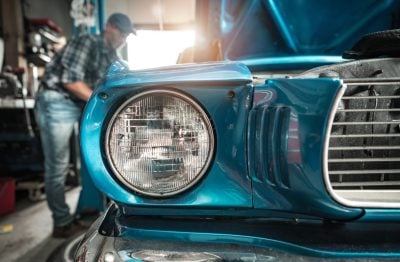
A couple in their mid-60s has retirement largely solved. The mortgage is gone, Social Security is a few years away, and the portfolio is big enough to cover ordinary living expenses. The complication is sitting in the garage. One spouse has spent decades stopping at car shows, reading auction results, and telling themselves that someday there would be time for a real restoration project. Retirement is that someday.
The dream sounds simple enough: buy a classic American car, bring it back to life, and spend the next twenty years cruising local roads, attending shows, and chasing parts. The reality is that restoring vintage cars can consume money almost as efficiently as raising children or owning horses. Paint, bodywork, engines, transmissions, upholstery, storage, tools, trailers, and labor all have a way of turning a hobby into a second retirement budget. This article looks at what classic-car restoration actually costs in a small Midwestern city, how much portfolio income should be dedicated to the hobby, and the line item most couples forget until the first major restoration bill arrives.
Clarifying the Goals
One question deserves an honest answer before the first tool is purchased: is this a hobby or a business? Many retirees begin with dreams of restoring cars, selling them for a profit, and using the proceeds to fund the next project. A small number succeed. Most discover that restoration is closer to woodworking, boating, or golf than it is to a reliable source of income. Labor is routinely undervalued, projects take longer than expected, and buyers rarely pay full price for the hundreds of hours invested. A hobby can justify spending money because enjoyment is the return. A business has to justify itself on cash flow. Confusing the two is how a retirement pastime quietly turns into an expensive investment thesis. If the occasional profitable sale happens, treat it as a bonus rather than part of the retirement plan.
The Hobby Costs Most Couples Forget to Budget
The first surprise is that the car is often not the biggest expense. Many retirees already have a garage and a collection of tools accumulated over a lifetime. That eliminates tens of thousands of dollars in startup costs. A realistic hobby budget is usually less about building a professional workshop and more about upgrading an existing one. Better lighting, additional storage, a quality air compressor, specialty tools, and a few major equipment purchases can easily consume $3,000 to $10,000 before a single bolt comes off the car.
Then comes the project itself. A driver-quality 1967 Camaro, 1969 Mustang, or square-body C10 can cost $25,000 to $45,000 before any restoration begins. A rougher project car may cost much less, but those savings often disappear once rust repair, bodywork, paint, upholstery, engine work, and missing parts enter the picture. Even a retiree performing much of the labor personally can spend $10,000 to $30,000 on parts and outside services over several years. A more ambitious restoration can easily exceed $50,000.
The expense most couples underestimate is outsourced labor. Many retirees picture themselves doing nearly everything. Then a shoulder surgery, knee replacement, or simple reality intervenes. Paint work, machine shop services, upholstery, electrical troubleshooting, and bodywork often end up in professional hands. The restoration budget may start with parts, but it frequently ends with labor.
Three Versions of the Same Dream, Priced Out
Once the workshop is set up, the ongoing costs become much easier to predict.
- The Casual Hobbyist keeps a single project moving slowly, attends a few local shows, and spends most weekends tinkering rather than buying. Annual spending typically runs around $3,000 to $7,000.
- The Active Hobbyist always has a project underway, attends regional shows, upgrades tools occasionally, and outsources some specialty work. Annual spending generally lands between $10,000 and $15,000.
- The Dedicated Enthusiast maintains multiple vehicles, purchases parts continuously, attends larger events, and regularly pays for professional paint, body, upholstery, or machine-shop work. Spending of $25,000 to $40,000 per year is not unusual, and some years can exceed that.
The Portfolio Math
Assume the couple receives $42,000 annually from Social Security and owns their home outright in a Midwestern city where the cost-of-living index sits around 87 to 90. Their baseline retirement spending runs about $55,000 per year, leaving a gap of roughly $13,000 that the portfolio must cover before a single dollar goes toward the hobby.
That means the Casual Hobbyist may need portfolio support of roughly $16,000 to $20,000 annually, the Active Hobbyist closer to $23,000 to $28,000, and the Dedicated Enthusiast anywhere from $38,000 to more than $50,000. At a 4% withdrawal rate, every additional $10,000 of annual hobby spending requires roughly $250,000 of additional portfolio assets behind it.
Stacking the hobby on top, at a 4% withdrawal rate the casual hobbyist needs about $187,500 of dedicated capital for the cars plus around $325,000 for the living gap, call it $510,000 total. The active hobbyist needs $450,000 for the cars and the same living cushion, near $775,000. The dedicated enthusiast is at $1 million for the hobby alone, $1.3 million all in.
A 6% blended yield, dividend ETFs alongside a treasury ladder built around the 4.56% 10-year, drops those hobby numbers to roughly $125,000, $300,000, and $667,000. An 8% yield-focused portfolio, mortgage REITs, BDCs, covered-call funds, shrinks the dedicated number to $500,000, but that math only works if you accept that high-yield income vehicles tend to erode principal in real terms. With CPI running from 314 in May 2024 to 335 in May 2026 and core PCE still grinding higher, a flat-dollar income stream loses purchasing power on parts and paint every year. For a hobby measured in decades, a slower-yielding dividend-growth portfolio usually wins the long arithmetic.
Workshop Now, or Capital Later?
The most common mistake is overbuilding the workshop. Retirees often start with a simple goal, restoring a classic car, and end up designing the garage they would build if they were opening a restoration business. A dedicated paint booth, custom cabinetry, and every tool imaginable can consume tens of thousands of dollars before the first project even begins. The goal is to build a workshop that supports the first project rather than every project you might someday dream about.
For most couples, the sweet spot is a modest but well-equipped garage paired with a portfolio large enough to support the hobby for decades. The casual and active versions of the dream are often achievable with a paid-off home, Social Security, and a portfolio in the mid-six figures. The dedicated enthusiast lifestyle, especially one involving multiple vehicles and significant outsourced labor, may require substantially more assets. The key is recognizing that classic-car restoration is not a one-time purchase. It is a recurring retirement expense, no different from travel, golf, boating, or a second home. Treat it as its own budget, and both the cars and the retirement plan are far more likely to stay on the road.
Contact [email protected] for any questions or corrections.
Drew Wood has edited or ghostwritten nine books and published more than 1,500 articles on investing, business, politics, travel, world cultures, wildlife, and earth science. He holds a doctorate and four master's degrees and has nearly 30 years of college teaching experience. His travels have taken him to 25 countries, including three years living in Ukraine.