3 of World’s Leading Smartphone Vendors Are Now Chinese
The reasons for Apple and Samsung to look over their shoulders in the smartphone business have increased as their product lines have aged. Now, three of the world's top smartphone vendors are Chinese.

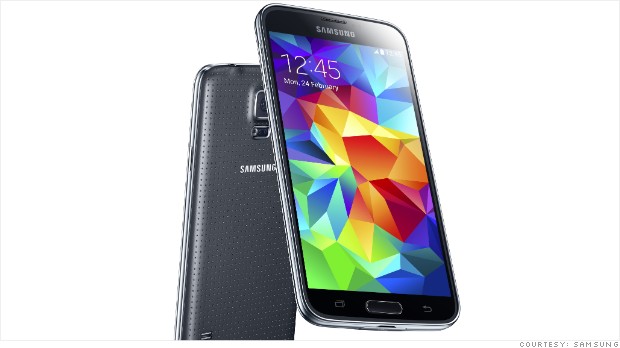 The reasons for Apple Inc. (NASDAQ: AAPL) and Samsung to look over their shoulders in the smartphone business have increased since their current product lines have aged. Each has another reason for anxiety. According to research firm Strategic Analytics, three of the world’s top smartphone vendors are Chinese.
In specific, the firm’s researchers wrote:
- Xiaomi became the world’s 5th largest smartphone vendor for the first time ever in Q2 2014;
- Three of the world’s top 6 smartphone vendors are now Chinese brands (Huawei, Lenovo and Xiaomi);
- Huawei reached a record 7% global smartphone marketshare.
The industry continues to expand very rapidly:
Linda Sui, Director at Strategy Analytics, said, “Global smartphone shipments grew 27 percent annually from 233.0 million units in Q2 2013 to 295.2 million in Q2 2014. Smartphone growth was mixed on a regional basis during the quarter, with healthy demand in Asia and Africa counterbalanced by sluggish volumes across North America and Europe due to changes in the operator subsidy mix.”
ALSO READ: Huawei Success Threatens iPhone Sales
Samsung and Apple are still the top two vendors, but their dominance is slipping. In the second quarter of this year, Samsung shipped 74.5 million smartphones, down from 76.0 million in the same quarter a year ago. The numbers have caused experts and investors to believe that Samsung’s hot hand in the business has disappeared. Apple did not do much better in the period. Its shipments in the second quarter of 2013 were 31.2 million, and rose to only 35.2 million in the most recent quarter. Samsung’s market share was 32.6% in the second quarter of last year, and it has dropped to 25.2%. Apple’s was 13.4% and has fallen to 11.8%.
In the meantime, Huawei’s unit sales rose from 11.1 million to 20.2 million, Lenovo’s were up from 11.3 million to 15.8 million and Xiaomi’s rose from 4.1 million to 15.1 million. The information shows that the smartphone market is better analyzed as a regional business than a global one, with China at the center of the world, due to its population and the expansion of 4G service. Strategic Analytics pointed this out:
Woody Oh, Director at Strategy Analytics, said, “Xiaomi was the star performer in the quarter, capturing a record 5 percent marketshare and rising into fifth place in the global smartphone rankings for the first time ever. Xiaomi’s Android smartphone models are wildly popular in the Chinese market and it shifts millions of them every quarter through its extensive online and operator channels. Xiaomi’s next step is to target the international market in Asia and Europe, where it will have to invest big money to familiarize western consumers with its unfamiliar brand name. LG held sixth place for 5 percent global smartphone share and a record 14.5 million units shipped. LG is performing relatively well in the United States and Europe, but it continues to lag in the huge China and India markets.”
So, even if the iPhone 6 is a massive success as measured by global sales, it needs to do well in China to be a complete success.
ALSO READ: 450 Million Chinese Never Go Online
Global Smartphone Vendor Shipments and Marketshare in Q2 2014
| Global Smartphone Vendor Shipments (Millions of Units) | Q2 ’13 | Q2 ’14 |
| Samsung | 76.0 | 74.5 |
| Apple | 31.2 | 35.2 |
| Huawei | 11.1 | 20.1 |
| Lenovo | 11.3 | 15.8 |
| Xiaomi | 4.1 | 15.1 |
| LG | 12.1 | 14.5 |
| Others | 87.2 | 120.0 |
| Total | 233.0 | 295.2 |
| Global Smartphone Vendor Marketshare % | Q2 ’13 | Q2 ’14 |
| Samsung | 32.6% | 25.2% |
| Apple | 13.4% | 11.9% |
| Huawei | 4.8% | 6.8% |
| Lenovo | 4.8% | 5.4% |
| Xiaomi | 1.8% | 5.1% |
| LG | 5.2% | 4.9% |
| Others | 37.4% | 40.6% |
| Total | 100.0% | 100.0% |
| Total Growth Year-over-Year % | 48.9% | 26.7% |
| Source: Strategy Analytics |
Contact [email protected] for any questions or corrections.
Douglas A. McIntyre is the co-founder, chief executive officer and editor in chief of 24/7 Wall St. and 24/7 Tempo. He has held these jobs since 2006.
McIntyre has written thousands of articles for 24/7 Wall St. He is an expert on corporate finance, the automotive industry, media companies and international finance. He has edited articles on national demographics, sports, personal income and travel.
His work has been quoted or mentioned in The New York Times, The Wall Street Journal, Los Angeles Times, The Washington Post, NBC News, Time, The New Yorker, HuffPost USA Today, Business Insider, Yahoo, AOL, MarketWatch, The Atlantic, Bloomberg, New York Post, Chicago Tribune, Forbes, The Guardian and many other major publications. McIntyre has been a guest on CNBC, the BBC and television and radio stations across the country.
A magna cum laude graduate of Harvard College, McIntyre also was president of The Harvard Advocate. Founded in 1866, the Advocate is the oldest college publication in the United States.
TheStreet.com, Comps.com and Edgar Online are some of the public companies for which McIntyre served on the board of directors. He was a Vicinity Corporation board member when the company was sold to Microsoft in 2002. He served on the audit committees of some of these companies.
McIntyre has been the CEO of FutureSource, a provider of trading terminals and news to commodities and futures traders. He was president of Switchboard, the online phone directory company. He served as chairman and CEO of On2 Technologies, the video compression company that provided video compression software for Adobe’s Flash. Google bought On2 in 2009.