Elon Musk Wanted Trillions Cut From Washington. Now He Says Treasury Should Send People Checks
The man who made his name slashing federal spending just told a global audience that Washington should start sending people money. The reasoning behind that apparent reversal is stranger and more radical than it sounds.

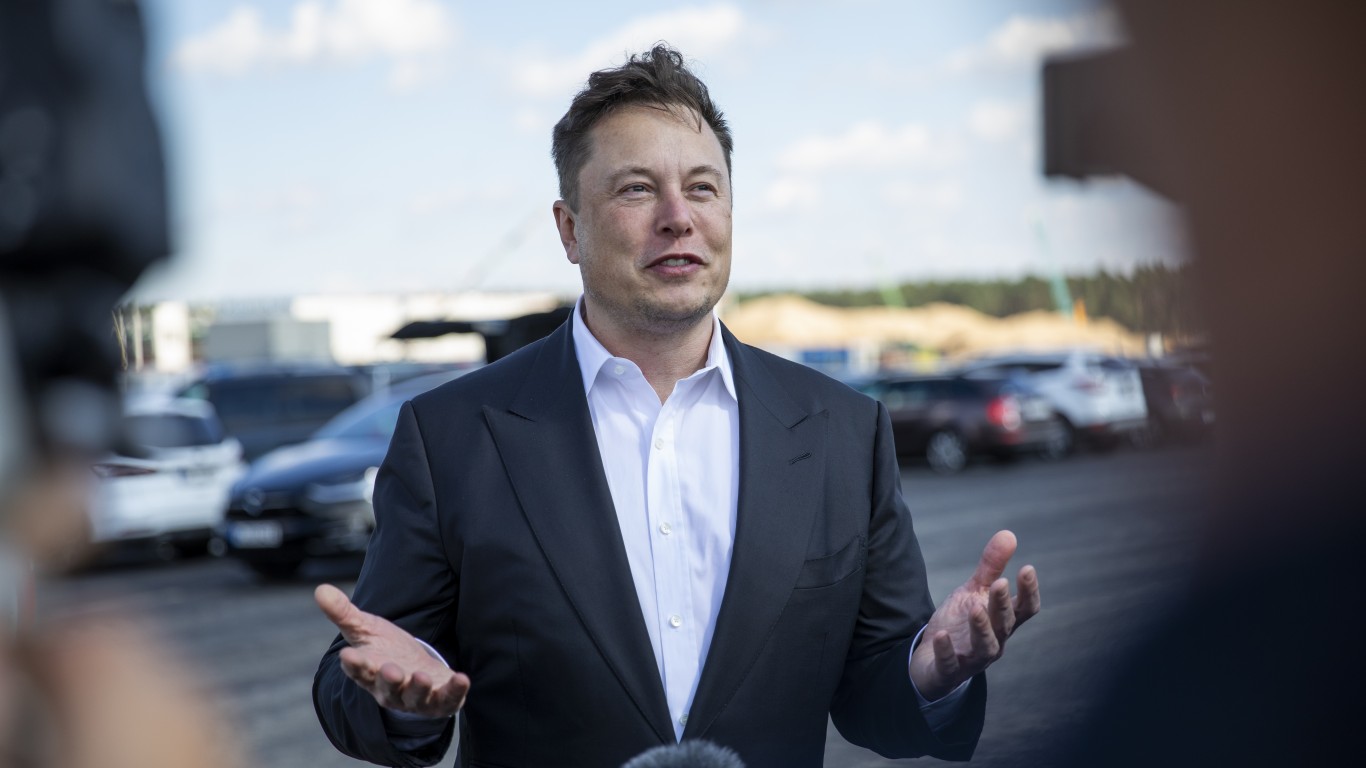
Elon Musk has spent the past two years warning that artificial intelligence could radically reshape the economy. Now he is taking that prediction to a place that sounds almost surreal coming from the former public face of the federal government’s cost-cutting campaign.
During a July 2026 interview with The Economist’s Zanny Minton Beddoes at Tesla’s Gigafactory in Texas, Musk said the Treasury should “issue people checks” if AI eventually eliminates much of the need for human labor. Coming from a man closely associated with DOGE and its push to slash federal spending, the comment sounds like a complete reversal. It is more complicated than that.
Musk is describing a theoretical future where AI and robots produce so much that traditional ideas about jobs, money, inflation, and government payments begin to break down. Here is what he actually said, what DOGE actually accomplished, and just how far the economy remains from the world Musk is imagining.
Yes, Musk Really Said Treasury Should “Issue People Checks”
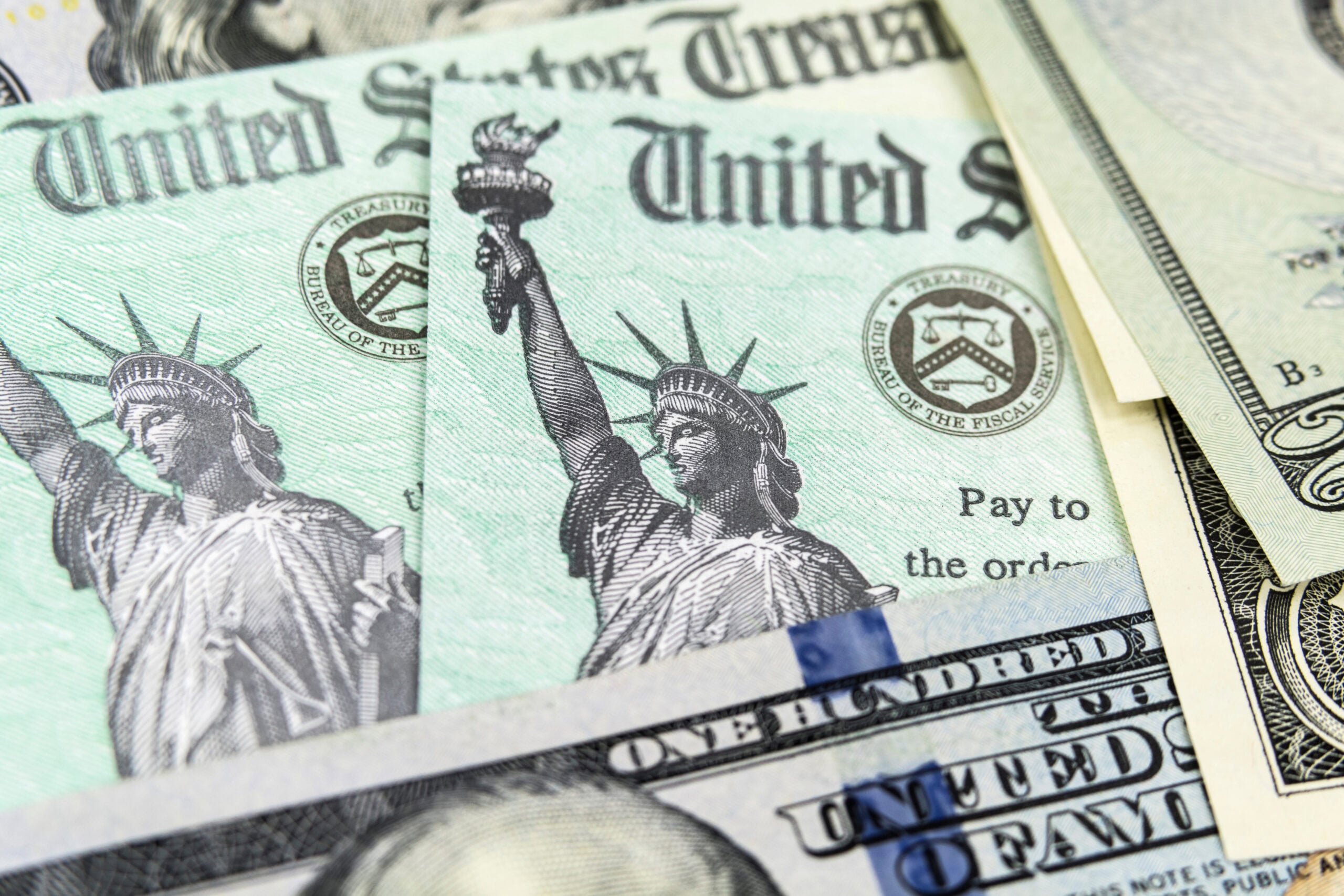
The line came while Musk was discussing what happens to ordinary workers if artificial intelligence and robotics eventually become capable of doing most economically useful work. His answer was that the Treasury could simply “issue people checks.” That sounds a lot like a call for direct government payments, but Musk did not lay out a dollar amount, eligibility rules, funding mechanism, timetable, or actual legislative proposal. The comment was part of a much broader prediction about an AI-driven economy, not the unveiling of a ready-to-go federal benefits program.
The Check Idea Actually Has a DOGE-Era Prequel
This was not the first time Musk had been connected to the idea of sending Americans money. In February 2025, President Donald Trump said his administration was considering using 20% of DOGE savings for payments to Americans and another 20% to reduce federal debt. The proposal circulating at the time imagined payments of as much as $5,000 per tax-paying household, but only if DOGE somehow achieved its original $2 trillion savings target. Musk responded that he would check with the president. That proposal never became law, but it makes the 2026 comment less abrupt than it initially appears.
This Is Not Another Stimulus-Check Proposal
The important difference is where Musk thinks the money would come from and why people would need it. The 2025 DOGE-dividend idea was based on returning a portion of claimed government savings to taxpayers. His 2026 argument is much more radical. Musk is imagining an economy where AI and robots create goods and services faster than people can consume them. In that world, he argues, governments could distribute more money without automatically producing the inflation people normally associate with printing or spending more of it. That is an economic thought experiment, not current U.S. policy.
Treasury Cannot Simply Start Mailing Everybody Money
There is also a rather large legal step between Musk’s idea and reality. The U.S. Constitution gives Congress control over federal appropriations, meaning money generally cannot be drawn from the Treasury unless Congress has authorized the spending. Treasury therefore could not simply decide on its own to create a new nationwide payment program because a billionaire suggested it during an interview. A real version of Musk’s idea would require legal authority, funding and a mountain of decisions about who qualifies, how much people receive and how those payments interact with taxes and existing benefits.
Musk’s Entire Argument Depends on an Explosion in AI Productivity

Musk’s economic logic starts with one enormous assumption: artificial intelligence and robotics eventually become extraordinarily productive. He argues that if machines can create goods and services much faster than the supply of money grows, prices could fall rather than rise. In other words, more dollars would be chasing an even faster-growing mountain of stuff. That is why Musk expects deflation to eventually become a bigger concern than inflation. The catch is obvious. The productivity boom required to make that scenario work would have to be enormous, and the United States has not reached anything resembling that kind of economy yet.
He Calls the Destination “Universal High Income”
Musk deliberately uses the phrase “universal high income” rather than universal basic income. The distinction matters to him. UBI generally refers to a guaranteed payment intended to provide people with a basic financial floor. Musk is imagining something more extreme: an economy so productive that material goods and services become abundant and people can maintain a high standard of living without traditional employment. He has not provided a detailed formula for how income would be distributed or how the transition would work. “Universal high income” is better understood as his name for the destination than as a finished economic policy.
Musk Thinks Work Eventually Becomes Optional

The prediction gets even stranger from there. Musk told The Economist that “work is going to be optional,” comparing future employment to activities people choose to do because they enjoy them rather than because they need the paycheck. Digital work would theoretically be the first to change because advanced AI does not need a physical body to write software, analyze documents or perform other computer-based tasks. Replacing construction workers, mechanics, nurses and other hands-on jobs would require major advances in robotics as well. Musk believes those advances are coming. Whether they arrive on his timeline is another question entirely.
Eventually, He Thinks Money Itself Could Lose Its Importance

Musk takes the abundance argument all the way to its logical extreme. He told The Economist that “money won’t matter in 2036” if artificial intelligence and robotics make goods and services sufficiently abundant. That is an extraordinary prediction, and it should be treated as exactly that: a prediction. Scarcity is the reason money performs such an important economic role in the first place. If virtually everything became cheap and plentiful, Musk argues that money would matter less. Getting from today’s economy to that world within roughly a decade would require technological and productivity gains on a scale that nobody can guarantee.
Now Put All of That Next to Musk’s DOGE Era
This is where the story gets interesting. Musk spent the opening months of the Trump administration as the most visible figure associated with the Department of Government Efficiency, or DOGE. Created through a January 20, 2025 executive order, the initiative targeted federal contracts, leases, staffing and other expenses. Musk served as a special government employee and became the public face of the effort before announcing in late May that his government service was ending. Less than 14 months later, he was publicly discussing a future in which the government might distribute money because technology has made traditional employment increasingly unnecessary.
DOGE’s Savings Goal Kept Getting Smaller

The numbers attached to DOGE changed dramatically. Before Trump took office, Musk said federal spending could be cut by at least $2 trillion. By January 2025, he was describing $2 trillion as a best-case outcome and suggested that aiming for it might produce about $1 trillion in cuts. In April, the expectation had fallen again, with Musk saying DOGE anticipated about $150 billion in savings during fiscal 2026. Cutting $150 billion would still be a lot of money by normal standards. It is also less than one-tenth of the figure that originally helped turn DOGE into a national talking point.
DOGE Now Claims About $215 Billion in Total Savings
DOGE’s official website currently estimates that its actions produced about $215 billion in savings through contract and grant cancellations, lease changes, asset sales, workforce reductions, regulatory changes and other measures. There is an important qualifier attached to that number. DOGE itself says the individual receipts shown publicly account for only a portion of its overall estimate. That makes the $215 billion figure a government estimate, not $215 billion that outside auditors have independently traced dollar by dollar into the Treasury. That distinction becomes especially important when looking at what federal auditors found.
GAO Found Serious Problems With Some DOGE Savings Receipts

In August 2026, the Government Accountability Office reviewed DOGE’s public “Wall of Receipts,” which then listed about $110 billion in claimed savings from contracts, grants and leases. GAO found that some calculations were unsupported, inconsistent or impossible to verify from the information provided. Auditors said they lacked enough information to determine whether DOGE followed its stated methodology for 96% of the grant savings they examined. In one striking example, DOGE listed roughly $1.7 billion in savings from a Defense Health Agency technology contract even though GAO found no action had been taken on the contract and no savings had been achieved.
The Federal Workforce Really Did Get Much Smaller

DOGE-era changes were not merely numbers on a website. GAO reported that employment across 22 major federal agencies fell by nearly 256,000 workers, or more than 11%, between December 2024 and January 2026. Nearly 378,000 employees separated from those agencies during 2025 while roughly 127,000 were hired. Those reductions reflected a broader administration-wide push that included DOGE recommendations, deferred resignations, layoffs, retirements and other personnel actions, so it would be misleading to attribute every departure directly to Musk. Still, the reduction in federal staffing was substantial and measurable.
Shrinking the Workforce Came With Costs of Its Own

Cutting payroll did not mean every personnel action immediately produced savings. In a September 2026 report, GAO estimated that federal agencies incurred about $9.5 billion in salary costs for employees on paid administrative leave during 2025, although the watchdog cautioned that data limitations may have caused the estimate to overstate actual costs. About $6.7 billion of the estimate was associated with employees participating in the administration’s Deferred Resignation Program. Those figures do not prove that the workforce reductions ultimately cost more than they saved. They do show why calculating DOGE’s net financial impact is considerably more complicated than adding up canceled contracts and closed offices.
Musk’s Tax Comments Need Some Context, Too
Musk also used the interview to discuss his own taxes, saying taxes consume roughly 45% of certain income and estimating that another similar share of his wealth could ultimately go to taxes at death. He also predicted that he would pay “many trillions” in taxes over his lifetime. Those figures are Musk’s estimates, not publicly verifiable tax records. The federal estate tax itself has a top statutory rate of 40%, and the basic federal estate and gift tax exclusion is $15 million per person in 2026. Actual estate-tax liability can vary substantially depending on deductions, ownership structures, transfers, charitable giving and other factors.
For Now, America Is Still a Long Way From Musk’s AI Economy

Whatever DOGE ultimately saved, total federal spending did not fall. Federal outlays reached about $7.01 trillion in fiscal 2025, up from roughly $6.73 trillion in fiscal 2024. Through August 2026, spending was also about $147 billion higher than during the same period a year earlier. Prices are not falling either. Consumer prices were 3.4% higher in August 2026 than a year earlier. That does not mathematically disprove Musk’s prediction, because he is talking about a future economy transformed by AI. It does show how big the gap remains. Musk has gone from asking how much government can cut to asking what happens when technology produces more than society knows what to do with. The answer, in his view, may eventually include checks from Washington.
Contact [email protected] for any questions or corrections.