Elon Musk Spent Months Trying to Cut Government Spending. Now He Says The Treasury Should Just “Issue People Checks”
The man who spent months wielding a chainsaw against federal spending just told The Economist the Treasury should start writing checks to everyone. What happened between DOGE and that Gigafactory interview is a stranger story than the headline suggests.

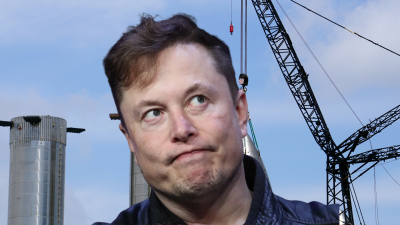
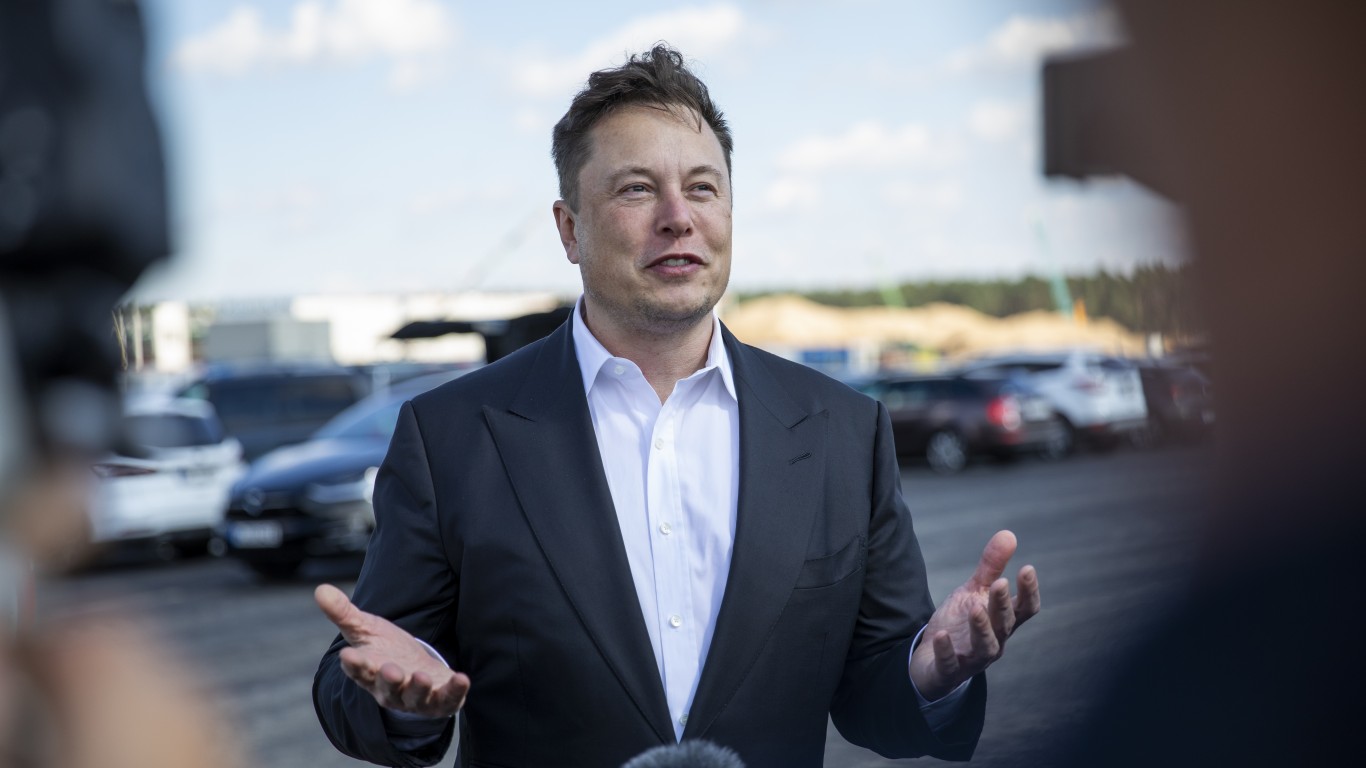
In a new interview with The Economist’s Zanny Minton Beddoes, filmed at the Tesla (NASDAQ:TSLA | TSLA Price Prediction) Gigafactory in Texas, Elon Musk offered a prescription for the American economy that would have been unrecognizable coming from him a year ago. “I think the treasury should just simply issue people checks,” he said. This is the same person who, from January 20, 2025 until his May 28, 2025 departure, ran the Department of Government Efficiency with a mandate to take a chainsaw to federal outlays.
From $1 Trillion in Cuts to a Universal Payout
DOGE launched with an audacious target: $1 trillion in federal spending cuts. That ambition was later scaled back to $150 billion. By the time Musk walked away roughly four months in, DOGE was claiming $214 billion in total savings through workforce cuts and canceled office leases, but analysts found many of those figures overstated, temporary, or unverifiable. For fiscal year 2026, only about $5.02 billion in savings could be independently verified.
The macro scoreboard was worse. During the relevant period, federal outlays rose from roughly $7.135 trillion to $7.558 trillion, about a 6% increase, because most federal spending is entitlement-driven and requires congressional action DOGE could not unilaterally make. DOGE did produce what has been described as the largest peacetime federal workforce reduction on record, but it did not bend the spending curve. By November 2025, DOGE was effectively dissolved, with the Office of Personnel Management absorbing most of its remaining functions.
The New Frame: “Universal High Income”
The reasoning behind the check-writing pitch is technological. Musk told The Economist that “work is going to be optional” and that artificial intelligence “will be able to do any job better than any person can do that job.” He labeled the endpoint “universal high income,” explicitly distinguishing it from universal basic income. He also predicted “deflation will be the issue, not inflation” as AI reshapes production.
That deflation call runs against the current data. M2 money supply sits at $23.05T as of May 1, 2026, in the 90.9th percentile historically. The personal savings rate has fallen from 6.2% in 2024Q1 to 3.9% in 2026Q1. Consumer sentiment printed at 44.8 in May 2026, below the 60 recessionary threshold. The Treasury General Account, from which any such checks would flow, closed at $877,201 million on July 23, 2026.
His Own Tax Bill
Musk framed his own relationship to redistribution in the same interview. He said he currently pays about 45% in taxes, that another roughly 45% will go to taxes at death, leaving him “a quarter of whatever I have.” He also claimed to have “set a record for the most amount of taxes ever paid by a human,” predicted he would ultimately “pay many trillions in tax,” and added that he is “fine with that.”
What Changed
The through line is the shift in frame. In 2025, Musk approached the federal budget as an efficiency problem: too much spending, too many employees, too many leases. In the Economist interview, he approaches it as a distribution problem in a post-scarcity economy: too much output, not enough claimants. The signal to watch is whether that logic gains traction in Washington’s fiscal 2027 budget debate, or remains a Gigafactory soliloquy from the world’s richest AI investor.
Contact [email protected] for any questions or corrections.
AJ spent 10 years writing about financial markets at The Motley Fool. His coverage centers on technology stocks and the broader macroeconomic trends, from interest rates to geopolitics, that shape where markets are headed next. AJ is drawn to the stories where big-picture economics and individual companies collide.