America’s Debt Just Shattered a WWII Record. Elon Musk Says Only One Thing Can Save Us.
Federal debt just crossed a threshold not seen since soldiers were coming home from World War II, and the math shows spending cuts cannot close the gap. Elon Musk says only one force in the world is large enough to…

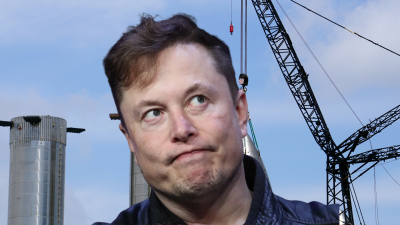
The U.S. national debt has crossed a line unseen since World War II, and Elon Musk says there is exactly one way out.
Gross federal debt crossed $39 trillion in March 2026, and according to a Brookings Institution chart book by economist Jessica Riedl, federal debt held by the public is on track to surpass its wartime record. That WWII record, 106% of GDP, was set in 1946 as the nation paid off global war costs. Under current policy, Brookings projects debt will reach roughly 137% of GDP within a decade. Peacetime America is about to owe more, relative to the size of its economy, than it did after defeating the Axis powers.
The speed is alarming. Gross debt crossed $38 trillion and then $39 trillion in under five months, an accumulation the Peter G. Peterson Foundation called “staggering,” with few precedents outside wartime.
The Math That Makes Cuts Alone Impossible
Interest payments run about $1 trillion a year, already exceeding the entire U.S. military budget, a milestone first hit in 2024 and now structurally permanent. Under the current-policy baseline used in the Brookings chart book, net interest is projected to overtake Social Security and become the single largest line item in the federal budget by 2040. Under CBO’s current-law baseline, which assumes expiring tax cuts lapse on schedule, that crossover comes later, in fiscal 2047.
Markets are pricing the strain in real time. The 10-year Treasury yield sits at 4.57%, near the top of its 12-month range, while the 30-year yield holds above 5%. Every basis point ratchets the interest bill higher.
Spending cuts cannot close the gap alone. According to Brookings, balancing the 2036 budget purely by cutting programs outside Social Security, Medicare, defense, and veterans’ benefits would require slashing them by 117%. Even zeroing those programs entirely would still leave a shortfall. The arithmetic has outrun the tools most politicians reach for.
Enter Elon Musk
That impossible math is the backdrop for Musk’s blunt prediction. On the Dwarkesh Patel podcast in February 2026, the Tesla (NASDAQ:TSLA | TSLA Price Prediction) and SpaceX CEO argued that only technology can save the country from insolvency.
“It’s the only thing that could solve the national debt,” Musk said of AI and robotics. “We are 1000% going to go bankrupt as a country and fail as a country.” “Without AI and robots, nothing else will solve the national debt.”
His reasoning tracks the fiscal picture. “In the absence of AI and robotics, we’re actually totally screwed, because the national debt is piling up like crazy,” Musk said, noting that “the interest payments to national debt exceed the military budget, which is a trillion dollars.” His thesis rests on growth: AI and robotics can scale economic output fast enough to outgrow the debt in a way that tax hikes and spending cuts cannot.
Musk flagged a risk in his own solution. A wave of AI and robotics could be deflationary, making the real burden of existing debt heavier before growth catches up.
Not Everyone Is Convinced
Musk’s claim remains a stated view open to debate. JPMorgan (NYSE:JPM) CEO Jamie Dimon has warned of a coming “bond crisis,” a scenario in which markets, not policymakers, force the reckoning. Federal Reserve Chair Jerome Powell has said the debt path “will not end well if we don’t do something fairly soon.” Neither is betting the country can invent its way out.
The data is undisputed: the debt has breached a historic wartime benchmark, the interest bill already tops the Pentagon’s, and cuts alone cannot close the gap. What is in dispute is the fix. Musk offers a technologist’s answer: exponential growth from AI and robots is the only force large enough to matter. His critics counter that hoping for a productivity miracle amounts to a wish, not a plan they can score.
Whether Musk is right may be the most consequential economic question of the decade. The clock and compounding interest are still running.
Contact [email protected] for any questions or corrections.
Joel South covers large-cap stocks, dividend investing, and major market trends, with a focus on earnings analysis, valuation, and turning complex data into actionable insights for investors.
He brings more than 15 years of experience as an investor and financial journalist, including 12 years at The Motley Fool, where he served as an investment analyst, Bureau Chief, and later led the Fool.com investing news desk. He has also co-hosted an investing podcast and appeared across TV and radio discussing market trends.