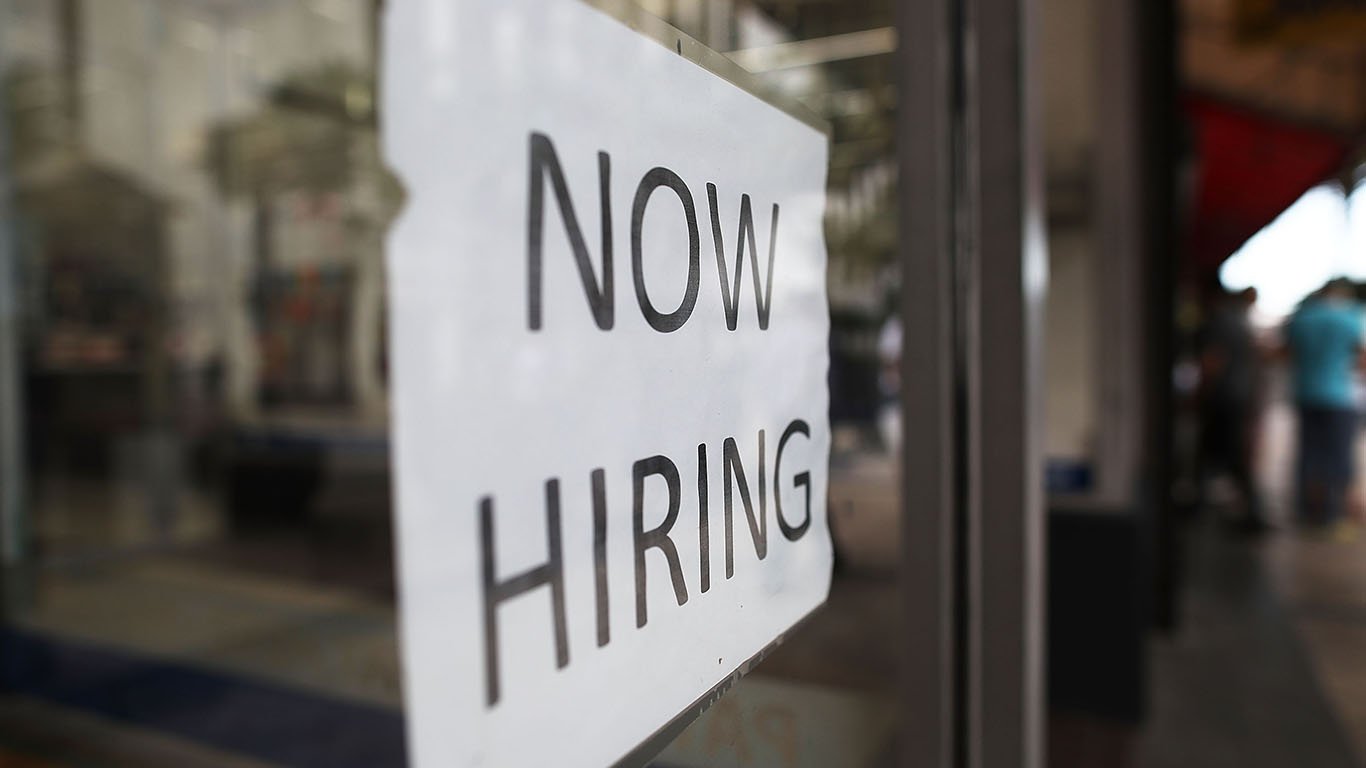
ADP Reports Jump in Hiring (ADP)
Employment in the private sector rose by 217,000 in February, according to the latest report from Automatic Data Processing Inc. (NYSE: ADP). The reported increase of 187,000 new jobs in January was increased to a final 189,000. The US Department…


The wide variations in the January report from ADP and the Labor Department has been attributed to the way workers are counted. ADP counts everyone on a payroll, whether or not the worker was paid during that month or not. The Labor Department only counts workers who are paid during a vary narrow sample period. Thus, people who worked during the month but were either sick or snowed-in and couldn’t pick up their paychecks are not included in the Department of Labor counts.
Analysts are expecting the Labor Department to report non-farm payroll gains of 200,000 in February, along with an unemployment rate of 9.1%, slightly higher than the 9.0% rate for January. Again, the unemployment rate could have been affected by the snowy January weather.
The good news on new jobs and employment could be moderated by the current demands in the US Congress and in many state legislatures to cut government spending. Because governments spend a lot of money on people, for spending cuts to have any impact at all means that government workers will have to be laid off.
In most states, the largest number of public employees are teachers and other school staff. Police officers, firefighters, and corrections officers make up the bulk of the rest. These workers are represented by public employee unions in many states, and, as we’ve seen in Wisconsin, the desire to cut spending can lead to a battle over union representation.
The impact on the recovering economy by the firing of hundreds of thousands of public employees shouldn’t be to difficult to figure out. At the very least, economic growth will slow down, and estimates of 3%-4% US economic growth in 2011 will surely fall, probably by half a point, and in the worst case by a full point.
It’s a little difficult to square the supposed benefits of government spending cuts with the reality of what that will mean for the US economy. The US economy is set to experience yet another dose of be-careful-what-you-wish-for medicine.
Paul Ausick
Contact [email protected] for any questions or corrections.
Douglas A. McIntyre is the co-founder, chief executive officer and editor in chief of 24/7 Wall St. and 24/7 Tempo. He has held these jobs since 2006.
McIntyre has written thousands of articles for 24/7 Wall St. He is an expert on corporate finance, the automotive industry, media companies and international finance. He has edited articles on national demographics, sports, personal income and travel.
His work has been quoted or mentioned in The New York Times, The Wall Street Journal, Los Angeles Times, The Washington Post, NBC News, Time, The New Yorker, HuffPost USA Today, Business Insider, Yahoo, AOL, MarketWatch, The Atlantic, Bloomberg, New York Post, Chicago Tribune, Forbes, The Guardian and many other major publications. McIntyre has been a guest on CNBC, the BBC and television and radio stations across the country.
A magna cum laude graduate of Harvard College, McIntyre also was president of The Harvard Advocate. Founded in 1866, the Advocate is the oldest college publication in the United States.
TheStreet.com, Comps.com and Edgar Online are some of the public companies for which McIntyre served on the board of directors. He was a Vicinity Corporation board member when the company was sold to Microsoft in 2002. He served on the audit committees of some of these companies.
McIntyre has been the CEO of FutureSource, a provider of trading terminals and news to commodities and futures traders. He was president of Switchboard, the online phone directory company. He served as chairman and CEO of On2 Technologies, the video compression company that provided video compression software for Adobe’s Flash. Google bought On2 in 2009.