America’s High Corporate Tax
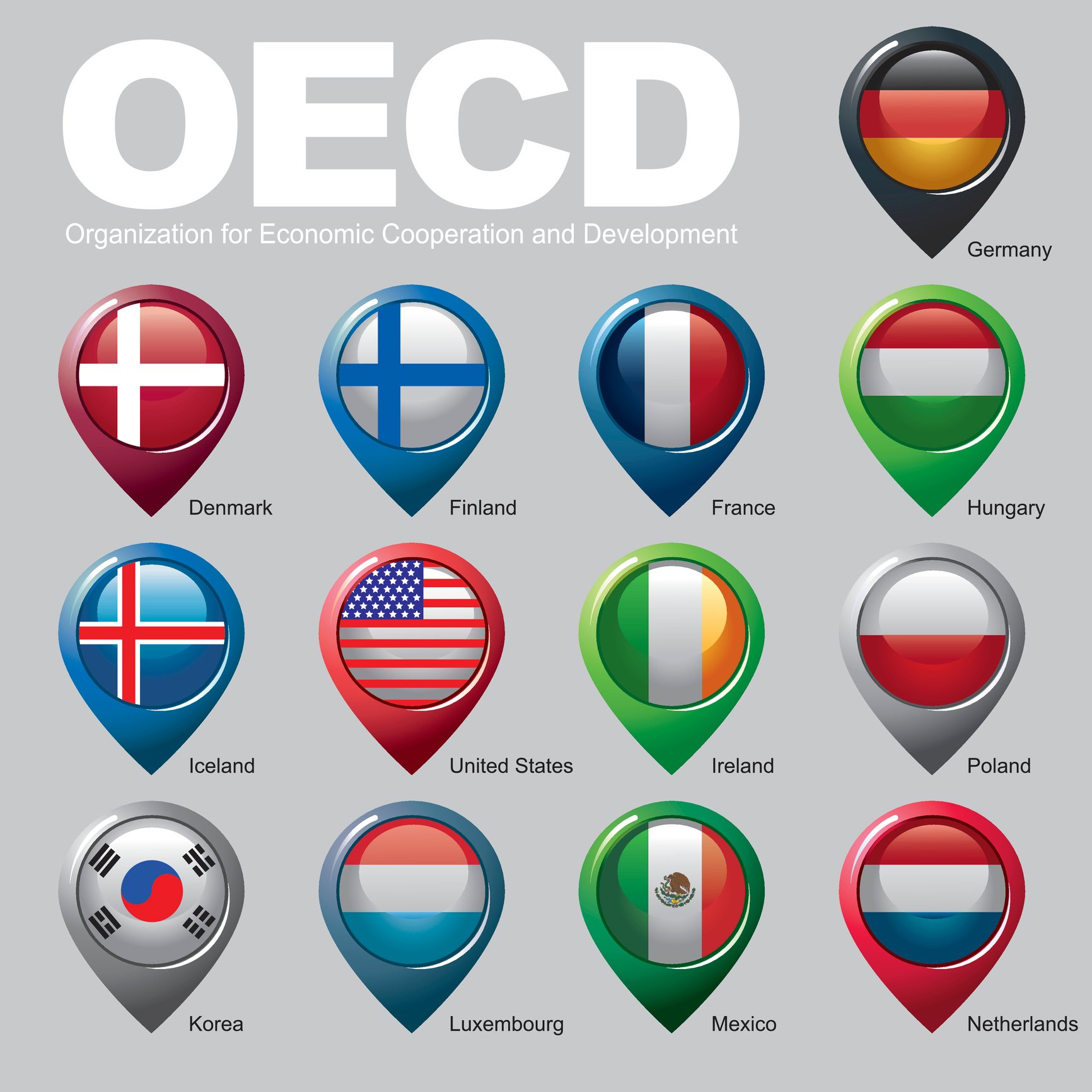
Many members of Congress and business executives voiced alarm when the Organisation for Economic Co-operation and Development’s 2012 Statutory Corporate Tax Rates were released. Of course, some of the alarm was too great. Many large U.S. companies pay no corporate…

This post may contain links from our sponsors and affiliates, and Flywheel Publishing may receive compensation for actions taken through them.

First, it has to be admitted that the ability of companies to avoid these taxes varies from country to country, so the OECD study is flawed, perhaps entirely.
Second, if the tax rates are to be taken at face value, the weighted non-U.S. rate among OECD countries is 29.3%, which makes the American rate of 32.9% very high by comparison. But the American rate has been steady since 2002, which includes a period of great economic expansion before the great recession. Tax rates do not appear to have hurt that expansion. Or, if they did, the U.S. economy might have grown at an all-time record pace. But that would be difficult for a nation with such a large gross domestic product.
The tax rates of the truly healthy economies that made it through the recession close to unscathed are below the OECD average. The rate in Norway is 28%. In Sweden it is 26.3% and in Finland 26%. Germany, the largest economy in the European Union, and currently the only one that is expanding much, has a tax rate of 30.2%. That is down from 38.9% some 10 years ago — a huge drop.
Many of the economies that have been most badly damaged economically also have low tax rates. Greece’s is 20%. Iceland’s is 20% and Ireland’s 15%. Based on these numbers, corporate taxes hardly helped these nations at all.
The OECD tax rate analysis does not say much that is useful. In part, this is because corporations have ways to avoid taxes. Also, it is because there is no reasonable relationship between tax rates and national economic health.
Douglas A. McIntyre
Contact [email protected] for any questions or corrections.
Douglas A. McIntyre is the co-founder, chief executive officer and editor in chief of 24/7 Wall St. and 24/7 Tempo. He has held these jobs since 2006.
McIntyre has written thousands of articles for 24/7 Wall St. He is an expert on corporate finance, the automotive industry, media companies and international finance. He has edited articles on national demographics, sports, personal income and travel.
His work has been quoted or mentioned in The New York Times, The Wall Street Journal, Los Angeles Times, The Washington Post, NBC News, Time, The New Yorker, HuffPost USA Today, Business Insider, Yahoo, AOL, MarketWatch, The Atlantic, Bloomberg, New York Post, Chicago Tribune, Forbes, The Guardian and many other major publications. McIntyre has been a guest on CNBC, the BBC and television and radio stations across the country.
A magna cum laude graduate of Harvard College, McIntyre also was president of The Harvard Advocate. Founded in 1866, the Advocate is the oldest college publication in the United States.
TheStreet.com, Comps.com and Edgar Online are some of the public companies for which McIntyre served on the board of directors. He was a Vicinity Corporation board member when the company was sold to Microsoft in 2002. He served on the audit committees of some of these companies.
McIntyre has been the CEO of FutureSource, a provider of trading terminals and news to commodities and futures traders. He was president of Switchboard, the online phone directory company. He served as chairman and CEO of On2 Technologies, the video compression company that provided video compression software for Adobe’s Flash. Google bought On2 in 2009.