Apple Bond Yield Near Treasuries, So Buffett Drops Out
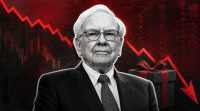
Wikimedia CommonsWarren Buffett will stay away from Apple Inc. (NASDAQ: AAPL) bonds for the same reason many investors have shunned them. These fixed income instruments barely yield anything at all. The Apple debt issue demonstrates why money has streamed into…

This post may contain links from our sponsors and affiliates, and Flywheel Publishing may receive compensation for actions taken through them.
 Warren Buffett will stay away from Apple Inc. (NASDAQ: AAPL) bonds for the same reason many investors have shunned them. These fixed income instruments barely yield anything at all. The Apple debt issue demonstrates why money has streamed into the stock market this year and has, depending on the point of view, made equities a phenomenal or extremely dangerous investment.
Bloomberg covered the comments by Buffett, CEO of Berkshire Hathaway Inc. (NYSE: BRK-A):
“We’re not buying bonds of Apple — we’re not buying bonds of anybody,” Buffett said on May 4. “It has nothing to do with them being a tech company. The yields are too low.”
The news service made the following calculation:
Apple’s debt sale included $4 billion of 1 percent, 5-year notes that pay 40 basis points, or 0.4 percentage point, more than similar-maturity Treasuries (USGG10YR); $5.5 billion of 2.4 percent, 10-year securities with a relative yield of 75 basis points and $3 billion of 3.85 percent, 30-year bonds paying an extra 100 points.
This continues a trend whereby large successful American companies can borrow at super low prices, often to buy up shares and increase dividends. A number of analysts have pointed out that the strategy only works if the cash flow of these public companies can cover their borrowings year in and year out. A downturn in cash flow because of a recession, or a drop in earnings because of competition or rising expenses, could drive dividend payments back down.
The search for higher yields and increases in equity value have pushed many stocks higher. Buffett has elected to invest in equities and derivative instruments. It would be ironic if low yields that lead to borrowing to increase corporate dividends eventually overwhelms company treasuries and becomes a cause for pulling the stock market back down. At that point, Buffett might look back and decide those Apple bonds were a good deal.
Contact [email protected] for any questions or corrections.
Douglas A. McIntyre is the co-founder, chief executive officer and editor in chief of 24/7 Wall St. and 24/7 Tempo. He has held these jobs since 2006.
McIntyre has written thousands of articles for 24/7 Wall St. He is an expert on corporate finance, the automotive industry, media companies and international finance. He has edited articles on national demographics, sports, personal income and travel.
His work has been quoted or mentioned in The New York Times, The Wall Street Journal, Los Angeles Times, The Washington Post, NBC News, Time, The New Yorker, HuffPost USA Today, Business Insider, Yahoo, AOL, MarketWatch, The Atlantic, Bloomberg, New York Post, Chicago Tribune, Forbes, The Guardian and many other major publications. McIntyre has been a guest on CNBC, the BBC and television and radio stations across the country.
A magna cum laude graduate of Harvard College, McIntyre also was president of The Harvard Advocate. Founded in 1866, the Advocate is the oldest college publication in the United States.
TheStreet.com, Comps.com and Edgar Online are some of the public companies for which McIntyre served on the board of directors. He was a Vicinity Corporation board member when the company was sold to Microsoft in 2002. He served on the audit committees of some of these companies.
McIntyre has been the CEO of FutureSource, a provider of trading terminals and news to commodities and futures traders. He was president of Switchboard, the online phone directory company. He served as chairman and CEO of On2 Technologies, the video compression company that provided video compression software for Adobe’s Flash. Google bought On2 in 2009.